Worldviews — and not a few egos — clashed strongly...
Read MoreReal development has eluded most African countries due to a shortage of transformative knowledge in both public and private sectors. Public policy often remains basic, lacking depth and rigor. Without strong policy expertise, good governance and broad economic growth will remain unattainable, despite political promises. Consequently, governments frequently choose poor priorities, apply unsuitable solutions, or fail to implement the right policies effectively

Today in Africa, the private sector has struggled to create inclusive prosperity for Africa ’ s 1.4 billion people. Research shows four African billionaires hold as much wealth as 750 million Africans. To change this, Africa needs institutions that deliver practical public policy education and support. An executive academy for public, private, and social sector leaders could provide the foundation and guidance needed for effective policy design and execution.
The Institute for Governance and Economic Transformation (IGET) is a think tank dedicated to effective governance, inclusive growth, and structural transformation in Africa. IGET partners with governments, businesses, civil society, and global actors to develop policies that foster prosperity and promote democracy.
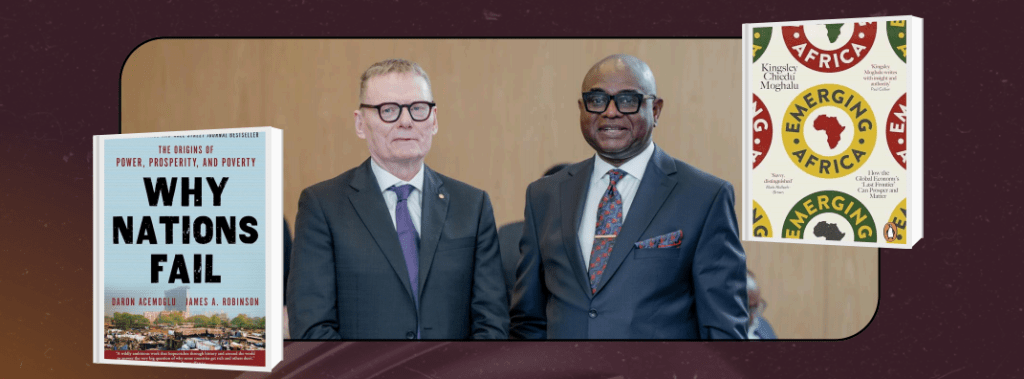
IGET Founder and President, Professor Kingsley Moghalu, former Deputy Governor of the Central Bank of Nigeria, inaugural President and Vice-Chancellor of the African School of Governance (ASG), and author of the critically acclaimed book Emerging Africa: How the Global Economy’s ‘Last Frontier’ Can Prosper and Matter, has partnered with Professor James Robinson, Co-Winner of The Nobel Prize for Economic Sciences (2024) and co-author of the best-selling book Why Nations Fail: The Origins of Power, Prosperity and Poverty, to present the IGET Academy to meet this need. The two global thinkers will lead the IGET Academy and its offerings to support Africa’s leadership elite.
The Academy builds on IGET’s mission by serving as the Institute’s flagship platform for high-impact executive education, applied research, policy innovation, and convenings. Designed to empower leaders and policymakers with the knowledge, skills, and tools to drive meaningful change, IGET Academy operates at the vital intersection of inclusive economic policy, entrepreneurship, governance reform, and the relationship between democracy and growth.
IGET Academy is a world-class, independent institution blending global best practices with African realities to advance governance and inclusive economic transformation. Through executive education, policy analysis, and advocacy, it serves governments, legislatures, central banks, businesses, civil society, the public, and international entities. Programs are delivered in-country and online to reach leaders across Africa. Unlike siloed models, its integrated approach places inclusive prosperity at the core of governance, recognizing that competent state policy must complement private sector efforts. With bases in Washington, D.C., and Abuja, Nigeria, the Academy drives knowledge, leadership, and partnerships to shape Africa ’ s future.
Worldviews — and not a few egos — clashed strongly...
Read MoreKingsley Moghalu is a political economist and strategic global leader who has led transformations across public, private, and non-profit sectors and across continents. He is the Founder of IGET Academy and was the Inaugural President and Vice-Chancellor of the African School of Governance (ASG) in Kigali, Rwanda. He was the Oxford Martin Visiting Fellow at the University of Oxford, and Professor of Practice in International Business and Public Policy at The Fletcher School of Law & Diplomacy, Tufts University in Boston, USA. Professor Moghalu previously served as Deputy Governor of the Central Bank of Nigeria and had earlier worked for the United Nations for 17 years, with assignments in strategic planning, legal, and external affairs at duty stations in New York, Cambodia, Croatia, Tanzania, and Switzerland.
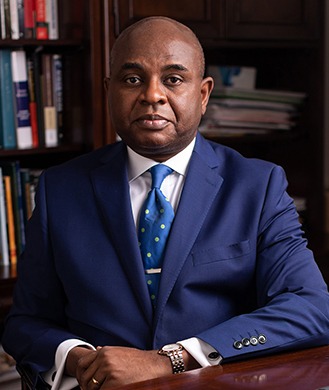
He obtained his Ph.D. in International Relations at the London School of Economics (LSE), an M.A. from The Fletcher School at Tufts University, an LL.B. from the University of Nigeria, Nsukka, and is a certified risk management expert trained at the Institute of Risk Management (IRM) in London. Professor Moghalu is also an alumnus of executive education programs at Harvard Business School, Harvard Kennedy School, Wharton, IMD, Columbia Business School, and the International Monetary Fund (IMF) Institute. He is the author of several books, including Emerging Africa and Build, Innovate and Grow (BIG)
James Robinson is a University Professor at the Harris School of Public Policy at the University of Chicago. In 2024, he was honored as a Co-winner of the Nobel Prize for Economic Sciences for work on the connection between institutions and prosperity. He was previously the David Florence Professor of Government at Harvard University. He is the co-author of several books with Daron Acemoglu, including Why Nations Fail, The Narrow Corridor, and Economic Origins of Dictatorship and Democracy. Professor Robinson obtained a B.Sc. in Economics at the London School of Economics, an M.A. at the University of Warwick, and a Ph.D. in Economics at Yale University
Mahmud Hassan is a Nigerian economist and banker with over three decades of experience in financial sector regulation, policy research, and public service. He was the Director of the Trade and Exchange Department and the Director of the Monetary Policy Department of the Central Bank of Nigeria (CBN), coordinating policy implementation of Nigeria ’ s foreign exchange management, money market regulation, and banking sector supervision. As Director of the Monetary Policy Department, Dr. Hassan coordinated the Bank’ s collaboration with regional and international monetary, regulatory, financial and multilateral agencies including the Economic Community of West African States (ECOWAS), West African Monetary Agency (WAMA), European Central Bank (ECB), International Monetary Fund (IMF) and the World Bank Group, and coordinated the IMF’ s Article Consultative Missions to Nigeria.
Prior, Dr. Hassan served as the Group Head of Macroprudential Analysis in the Financial Policy and Regulation Department of the CBN, appraising banking industry financial soundness indicators and coordinating country sovereign risk rating missions to Africa ’ s largest economy. He was previously Special Advisor to the Governor of the CBN. Dr. Hassan obtained a Ph.D. in Economics and an M.Sc. in Energy Economics and Policy at the University of Surrey, UK, an MBA (Finance), and a B.Sc. Economics from Ahmadu Bello University, Nigeria. He is a Certified Bank Examiner, an AML/CFT Certified Analyst, and holds a Harvard University Executive Policy Certificate. He has also served as a Non-Executive Director of the Africa Finance Corporation (AFC).
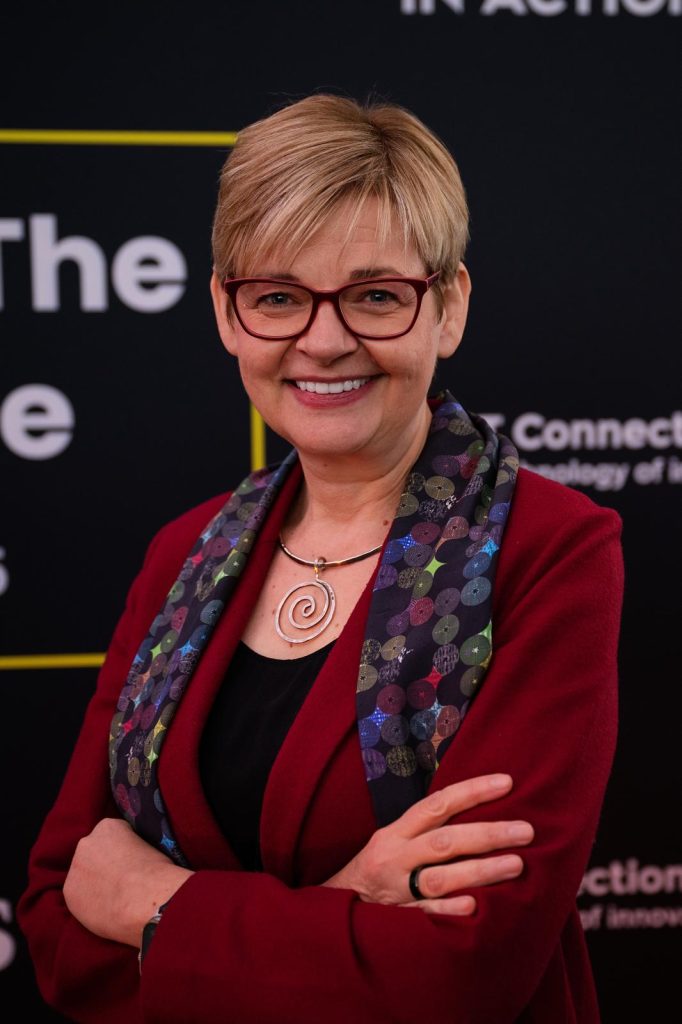
Professor Maria Ivanova is Director of the School of Public Policy and Urban Affairs and Co-Director of The Plastics Center at Northeastern University, where she leads initiatives that bridge research, policy, and real-world impact from the local to the global level. A globally recognized scholar of international environmental governance, sustainability, and the science-policy interface, she is the author of The Untold Story of UNEP at Fifty (MIT Press, 2021) and has published widely in leading journals. Her work sits at the center of international efforts to strengthen environmental multilateralism, including active engagement in negotiations for the global treaty on plastic pollution. She has served on the UN Secretary-General’s Scientific Advisory Board, co-chaired major global research prizes, and regularly advises governments and international organizations. A recipient of the 2025 Engaged Scholar Award, Professor Ivanova is deeply committed to mentoring future public service leaders and advancing climate action and sustainability worldwide.
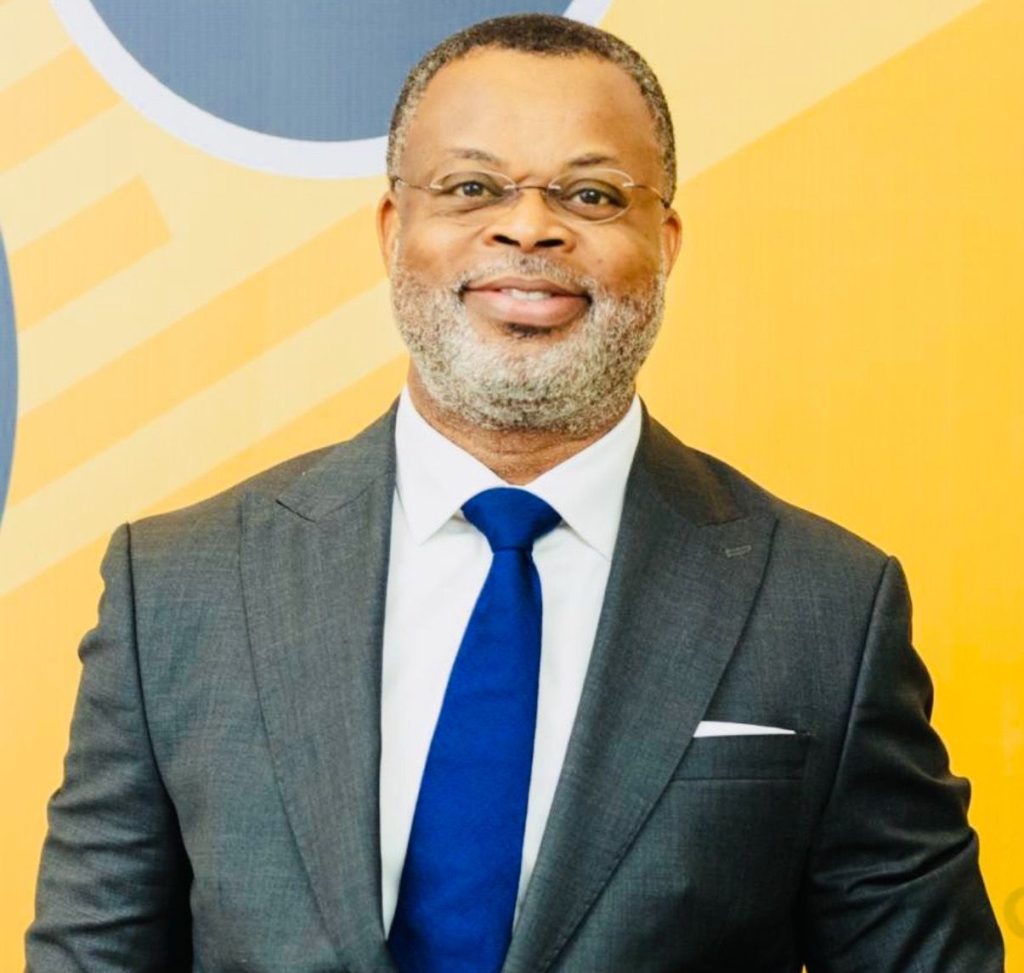
Dr. Aloy Chife
Dr. Chife is Managing Partner & CEO of Saana Capital, a family-owned venture capital firm based in Princeton, USA. Saana Capital actively invests in high-growth technology ventures across the U.S., Europe, and Africa, with a focus on consumer aggregation, digital financial services, and financial intermediation. The firm’s latest venture, Brij, is revolutionizing digital financial services in Kenya, Nigeria, Ghana, Tanzania and beyond, contributing to a more integrated African digital economy.
Dr. Chife was Director of Information Systems and Technology at Enron Corp., before transitioning to Silicon Valley, where he became a Director at Apple.
Following his tenure at Apple, he,founded two pioneering tech ventures, Socketworks Ltd and SW Global, with backing from the nternational Finance Corporation (IFC), the private sector arm of the World Bank. These ventures were instrumental in digitizing public sector services across Nigeria, Africa, and Asia. Dr. Chife’s work has been featured in major international publications, including The Wall Street Journal, Foreign Affairs, and The Economist.
A scholar as well as a business leader, Dr. Chife holds a Ph.D. in International Political Economy from the London School of Economics (LSE), where he was a Foreign and Commonwealth Office Scholar. He is also the author of The Political Economy of Post-Cold War Africa (NY: Edwin Mellen Press, 1997).
Andrew S. Nevin
Andrew S. Nevin is the inaugural Director of the Brainomics Venture at the University of Texas at Dallas’ Center for BrainHealth, the global authority in the economics of brain health.
Dr. Nevin was a Partner and Chief Economist with PwC Nigeria. He has lived and worked in Asia, Africa, North America, and Europe, and has valuable experience responding to global crises and shaping the future of financial services.
He is also a leader in the emerging concept of Flourishing, which focuses on shifting public policy from a GDP lens to a broader Flourishing lens. He is the author of the book (co-authored with Dr. Elizabeth Neill), Flourishing in Canada: How to Get the Good Life.
Andrew Nevin holds a PhD in economics from Harvard University and an MA in philosophy and politics from Oxford, where he studied as a Rhodes Scholar. He graduated at 17 with a Bachelor of Science fromWestern University, Canada as a Gold Medalist in Computer Science.