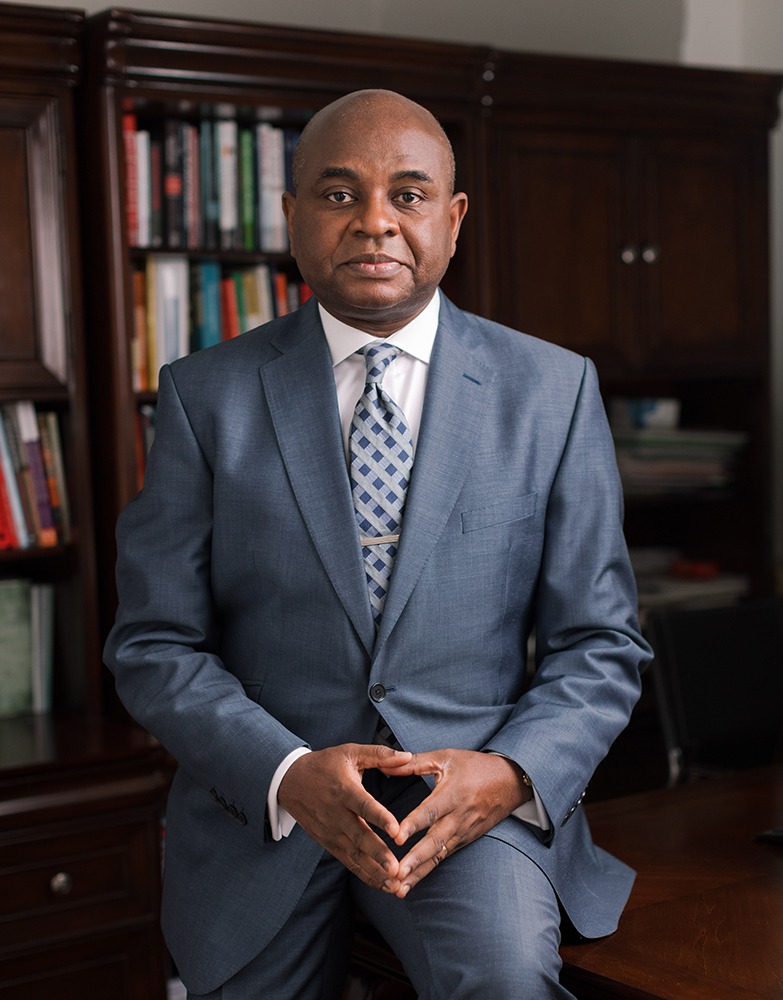
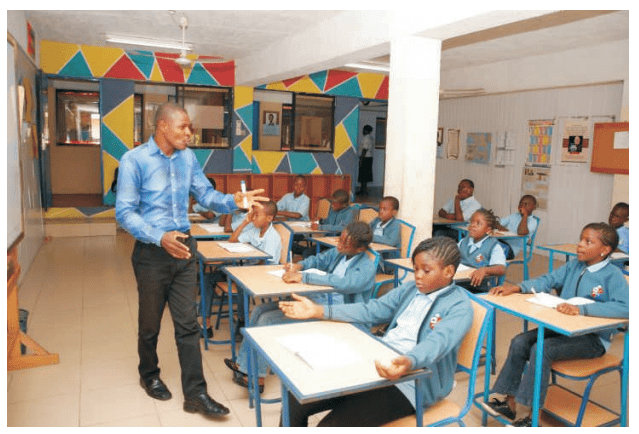
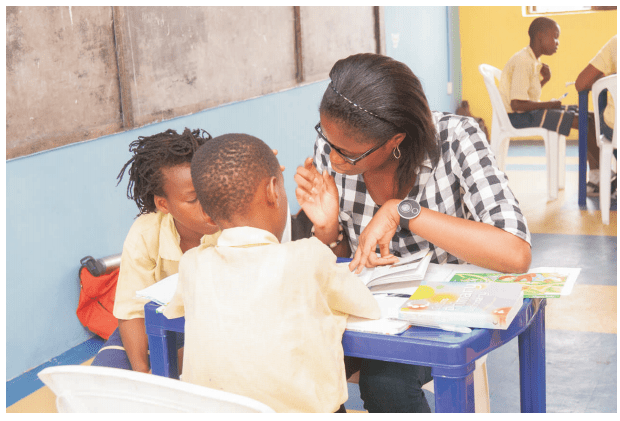
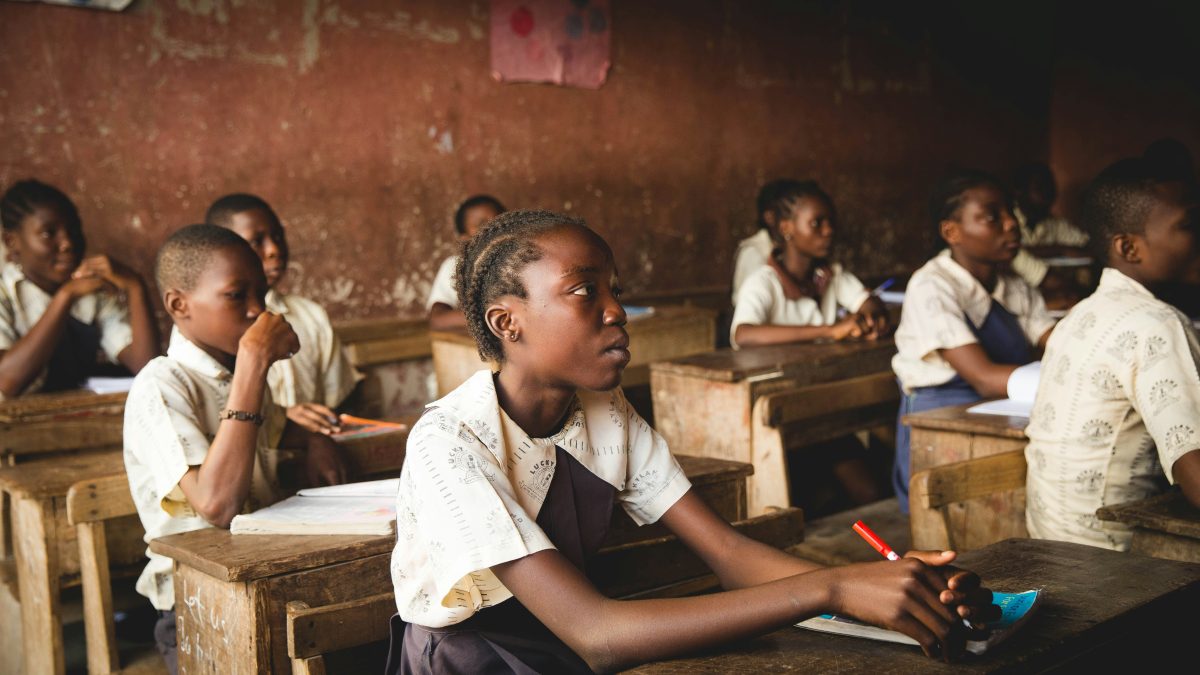
funds donated by its Old Boys. The institution, which first had to be closed in order to reposition it, has now been reopened as a modern, 21st century secondary school under private and non-profit ownership. This Guest Lecturer happens to be an Old Boy of this institution and contributed his widow’s mite to the school’s restoration. Several other secondary schools in Nigeria are undertaking similar efforts at revival under alumni initiatives. There is a need and space for the active engagement of alumni, including those in the diaspora, in providing structured and systematic financial support for education initiatives.
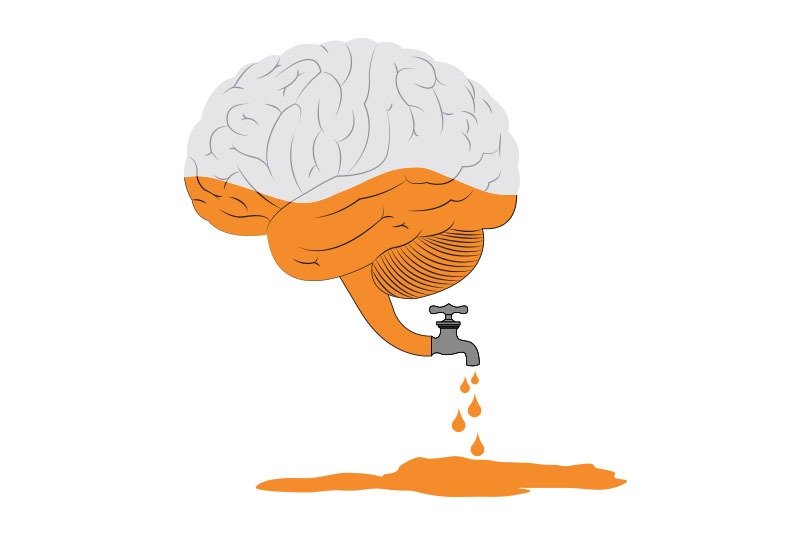
Foreign investment in education in Nigeria should be encouraged and strategically pursued. This approach will serve three functions – enhance the pool of human capital needed for broad-based economic productivity, limit the drain on Nigeria’s foreign reserves created by the demands of paying for tertiary education abroad, and reverse the brain drain. An example Nigeria can look at is the EduCity Iskandar in Malaysia, a multi-campus education city with 305 acres of universities, higher education institutions, research and development centers that has Malaysian campuses of foreign universities such as Newcastle University, Maastricht University, and University of Reading. Another example is Rwanda, which hosts a campus of the prestigious Carnegie Mellon University headquartered in Pittsburgh, Pennsylvania in the United States Pittsburgh, Pennsylvania in the United States.
- Tackling Access to and Quality of Foundational Learning (Lessons from Burundi)
The World Bank blog, 2024 reported that the Government of Burundi made strides in the quality of foundational learning by investing in high-quality instruction in children’s mother tongue, Kirundi, in early grades. There has also been a commitment to building teams of qualified and dedicated teachers and to nurturing community engagement and support. The results of these initiatives are underscored by the ‘Programme d’analyse des systèmes éducatifs de la CONFEMEN’ (PASEC) student assessment, which shows that Burundian children shine in reading and mathematics, particularly in early grades, outperforming their peers in other Sub-Saharan African Francophone countries. The World Bank-funded Burundi Early Grade Learning Project (PAADESCO) has played a pivotal role in maintaining the quality of education by bolstering the primary school curriculum, enhancing teaching, and learning resources, extending school feeding programs, and providing essential school kits. Building on the successes of PAADESCO, the Human Capital Development Project, currently under preparation, aims to further advance reforms of the curriculum. It will concentrate on facilitating a smooth transition from Kirundi to French as the language of instruction, helping ensure uninterrupted learning.
To effectively tackle the issue of the access-quality conundrum within Nigeria’s education system and emphasize the importance of investment in primary and secondary education, the subsequent recommendations can be derived from the model set forth by Burundi, which includes the need for infrastructure improvement, curriculum review and development, teacher recruitment and training, ensuring equity of access, and appropriate community/stakeholder engagement. The nature of education expenditure also matters greatly. Most countries in Sub-Saharan Africa spend 10 times more on university students than on primary school pupils, according to UNESCO. Burundi offers an interesting example. The country brought down its numbers of out of school children from 723,000 in 1999 to 10,000 in 2009, increasing its investment in education from 3.2% to 8.3%. Burundi dedicated a much larger portion of its education budget to primary education than secondary schools and universities. By adopting these recommendations and learning from the experiences of countries like Burundi, Nigeria can make significant strides in addressing the access-quality conundrum in primary and secondary education. Investing in these foundational levels of education is essential for building a skilled workforce, promoting social mobility, and driving sustainable development and prosperity across the nation.
Given the rapidly evolving global landscape and the increasing importance of technology, science, entrepreneurship, and teacher training in driving economic growth and innovation, Nigeria must realign its education curriculum, particularly at the tertiary level, to prioritize these areas. By allocating 70% of the curriculum to technology, science, entrepreneurship, and teacher training, Nigeria can better equip its youth with the skills and knowledge needed to compete in the 21st-century economy, foster entrepreneurship, and improve the quality of education across the board. I also recommend that Ethics becomes a compulsory subject in the education curriculum in Nigeria at both primary (in a simplified and elementary form) and secondary school in a more comprehensive form. This will help achieve the educational objective of creating good and responsible citizens.
There is also a need to shift the pedagogical practices of the Nigerian classroom from one that emphasizes rote memorization to more intellectual engagement, creative thinking, and experiential learning. For instance, in tertiary education, it is imperative to foster the connection between academia and industry to improve the socio-economic impact of education. Tertiary students require exposure to real-world challenges that their education is designed to help them address. Edem Ossai (2023) put forth two models to assist students in applying abstract concepts learned in the classroom to practical situations. The first model suggests the establishment of discipline-based incubation spaces. In STEM fields, these spaces can function as Innovation Centers where students use STEM principles to tackle local issues. For non-STEM disciplines like arts, social sciences, and law, these incubation spaces can serve as Thinking Clinics where students engage with real-life case studies that necessitate the application of their knowledge.
The second model recommends the implementation of Experiential Capstone Projects to replace the current theoretical undergraduate thesis model. These projects would require students to develop solutions to community problems, marking the culmination of their academic journey. These models draw on existing practices in higher education and have been successfully implemented by universities in Africa, notably the African Leadership University in Rwanda. This successful implementation showcases the feasibility of such approaches even within the intricate African educational landscape.
Enhancing pedagogy reform in primary and secondary schools involves investing in comprehensive teacher training programs to equip educators with modern pedagogical techniques, subject matter expertise, and effective classroom management skills. Provide ongoing professional development opportunities to keep teachers updated on best practices and innovative teaching methods. It is also imperative to integrate technology into the classroom to enhance teaching and learning experiences and to provide teachers with access to educational resources, interactive multimedia tools, and online platforms for collaborative learning. Instruction strategies should also be catered to student’s learning systems and should accommodate diverse student needs. The classroom environment should encourage active participation, inquiry-based learning, and critical reflection while also fostering student engagement through cooperative learning structures, Socratic questioning techniques, and experiential activities. By implementing these strategies, primary and secondary schools can experience pedagogical reform, improve teaching and learning outcomes, and create a conducive environment for student success and academic excellence.
Finally, by investing in the practices and tools that foster creative thinking and innovation, Nigeria can create a more dynamic and resilient education system that meets the needs of students and the labor market, ultimately driving sustainable growth and prosperity for the nation.
Nigerian education policy revitalization should also prioritize building and implementing effective standards and regulatory measures that ensure the compliance of all forms of education institutions to the necessary quality of the educational system. Some of the paramount forms of standards necessary are:
i.Curriculum Standards: Establishing a framework for curriculum development that emphasizes relevance, flexibility, and alignment with national development goals. There’s a need for a broad-based curriculum that integrates academic, vocational, technical, and entrepreneurial skills.
ii.Assessment Standards: Developing guidelines to monitor student’s progress through continuous assessment and evaluation and ensure learning outcomes are achieved. It encourages the use of various assessment methods, including formative and summative assessments, to provide a comprehensive picture of student achievement.
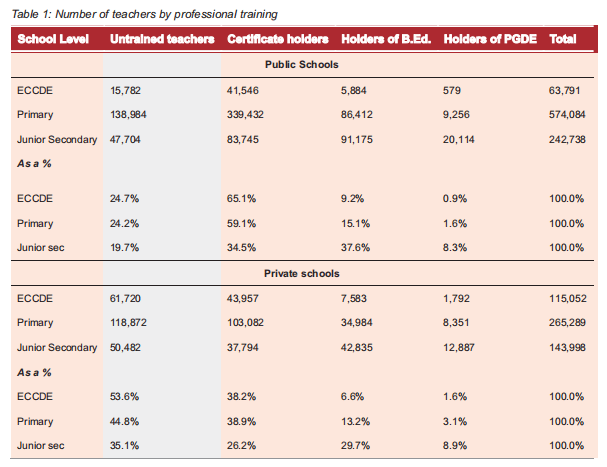
iii. Teacher Certification and Qualification Standards: Setting requirements for teacher education and professional development in ensuring quality teaching. It emphasizes the need for qualified and well-trained teachers and outlines requirements for teacher certification and licensure.
iv.Accreditation Standards: Accreditation by recognized bodies such as the National Universities Commission (NUC) and the National Board for Technical Education (NBTE) is a means to ensure quality assurance and improvement in educational institutions.
v.Accessibility and Inclusion Standards: This emphasizes the importance of providing equal access to education for all Nigerian citizens, regardless of gender, ethnicity, religion, or socio-economic status. It calls for measures to promote inclusive education and address barriers to learning, including those faced by marginalized and vulnerable groups.
V.CONCLUSION
Nigeria is urgently in need of educational policy that can enhance its human capital, make it globally competitive, and bolster its standing within the global community. This kind of education must prioritize access and quality by emphasizing literacy, skills, and national values. Our country has suffered a massive, progressive collapse of values over the past several decades. This has happened largely because we have taken our eyes off the ball of education, which is the foundation upon which every society rises or falls. The progressive loss of respect for ideas and education as a value naturally extended to a loss of priority for education as a national priority as the national focus shifted to the effects of Nigeria’s resource curse from the oil boom – easy money and illicit wealth from rent-seeking activities. The domino effect of this decline in values was felt in the death of a drive for access to education and the quality of education. As the private sector became increasingly involved in education through the establishment of both elite and pseudo-elite private schools, Nigeria’s public education system increasingly faced a struggle for survival and relevance.
We have not lacked education policy in Nigeria. Implementation, however, has always been our big weakness. But even the policies we have are out of date and out of place if we seek to transform Nigeria to become a nation, not just a country, to become a global power and not just a “potential” power. We can do it. Just look at how our compatriots thrive in foreign lands where the right philosophies drive education, making it a true national priority in terms of purpose, strategy, and investment.
We must return to education as a national priority, and to education that has a clear objective and purpose. There is no alternative but to reform our public education system and make it world class.
No country in the world has risen with a reliance on private sector educational institutions alone. The reason is obvious: private education is expensive, and only a tiny percentage of citizens can afford it. Education is a fundamental human right. If that right is to be respected, then education must be a national public good – accessible, qualitative, and affordable. This is the path to Nigeria’s rise in the 21st century.
References
Emily Markovich Morris and Ghulan Omar Qargha (2023), “In the Quest to Transform Education, Putting Purpose at the Center is Key”, Brookings Institution Commentary, www.brookings.edu/articles
Ezeyi, V.N., Ene, N.N.S., & Nwosu, R.Y. (2013). National Policy on Education in Nigeria [Article]. In: Historiological Dimensions of Nigerian Education. Equity Ventures in Conjunction with Mega Atlas Projects Limited, pp. 91-150. ISBN 978-978-49195-0-4.
OECD (2022), Education at a Glance 2022: OECD Indicators. OECD Publishing, Paris, https://dx.doi.org/10.1787/69096873-en.
Ossai, Edem (2023, September 20) Redefining the Role of Tertiary Educator in Nigeria [Webinar]. The Education Partnership Webinar Series.
Euiryeong Jeong (2020). Education Reform for the Future: A Case Study of Korea. International Journal of Education and Development using Information and Communication Technology (IJEDICT). Vol. 16, Issue 3 (Special Issue), pp. 66-81