Categories
Uncategorized

Moghalu Briefs European Union in Nigeria on Economy, Named Fellow of the Academy of International Affairs

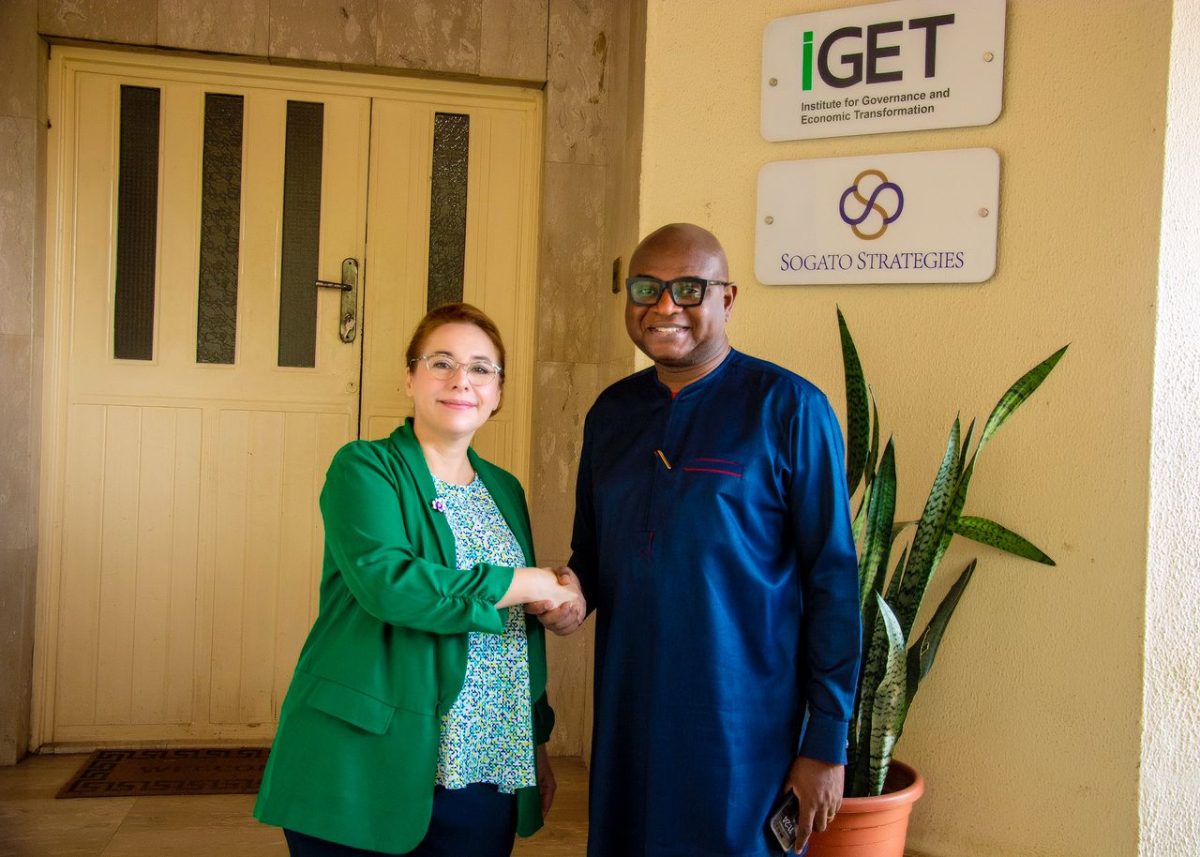
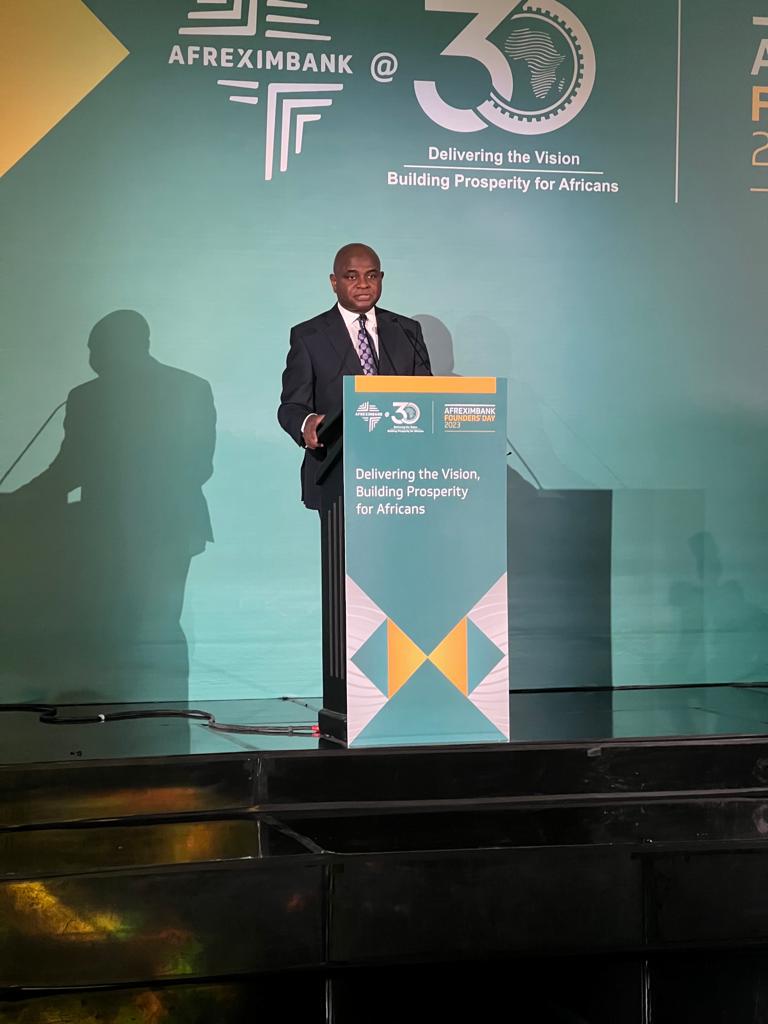
Abuja – At the invitation of the European Union Delegation to Nigeria, Professor Kingsley Moghalu, President of the Institute for Governance and Economic Transformation (IGET) and CEO of Sogato Strategies LLC, briefed the diplomatic missions of EU member countries in Nigeria on the Nigerian economy this morning at the EU Mission in Abuja.


The briefing, chaired by Zissimos Vergos,  Deputy Head of the EU Delegation to Nigeria and ECOWAS, had in attendance Ambassadors and senior diplomats of 19 EU countries represented in Nigeria – Austria, Belgium, Bulgaria, Czech Republic, Denmark, Finland, France, Germany, Greece, Italy, Hungary, and Netherlands. Others are Poland, Portugal, Romania, Slovakia, and Sweden. The event was held against the backdrop of economic reforms introduced by the administration of President Bola Tinubu and the cost of living crisis that has resulted as a consequence.


Professor Moghalu’s briefing, titled “Nigeria’s Economy in 2024: Prospects and Challenges”, included an independent assessment of the present inflationary trend in the economy, foreign exchange pressures, foreign investment, manufacturing and productivity, as well as steps taken by the Government of Nigeria to meet these challenges. The former Deputy Governor of the Central Bank of Nigeria also made recommendations on specific steps the EU countries can take to support Nigeria’s economic recovery. A robust dialogue between Moghalu and the European diplomats followed his briefing.


Professor Moghalu was also recently the keynote speaker at the LEADERSHIP Newspapers 2024 Conference and Awards with the theme “An Economy in Distress: Which Way Forward?”.


Separately, Moghalu was one of 24 distinguished Nigerians, mostly former Ministers of Foreign Affairs, retired Foreign Service Officers who served as Ambassadors, Professors of International Relations, and two retired military generals with extensive International security experience, who were inducted as Fellows of the Academy of International Affairs, Nigeria at the Academy’s official inauguration yesterday at the Ministry of Foreign Affairs in Abuja. The event was chaired by former Military Head of State Gen. Dr. Yakubu Gowon. Professor Benedict Oramah, President of the African Export Import Bank (Afreximbank), delivered the Keynote Address and was also inducted as Honorary Fellow of the Academy.


The Academy of International Affairs is a private think tank founded by former External Affairs Minister Professor Bolaji Akinyemi.  Its purpose is to provide advice to the Federal Government of Nigeria, and insight and education to the Nigerian public, civil society and the private sector on international affairs in order to strengthen Nigeria’s standing in the world.

Categories
Policy Briefs Featured

Nigeria’s Distressed Economy:Which Way Forward?

Nigeria’s Distressed Economy: Which Way Forward?

Leadership Newspaper Group 2024 Conference and Awards Congress Hall, Transcorp Hilton, Abuja March 5, 2024.

  1. INTRODUCTION

Every choice we make has consequences; but we have no choice over the  combined consequences of the choices we have made – Anonymous.

Nigeria’s economy today is, to use the title of the classic novel by Gabriel Garcia Marquez, the Chronicle of a Death Foretold. Will there be a resurrection? I believe so, but only if we fix the FUNDAMENTALS. There is nothing that is happening today – hyperinflation, the crisis of the value of the Naira, debt distress and the revenue challenge, unemployment, and extreme poverty etc – that should surprise any thinking citizen or professional observer of how our country’s economy has been mismanaged for a long time. Choices have consequences: there is hunger and anger in the land.

The past 10 years were particularly ruinous. They were the years of the locust, marked by unprecedented mismanagement of fiscal policy, unproductive external borrowing, unnecessary budget deficits, illegal Ways & Means lending by the Central Bank of Nigeria to the federal government to the tune of N30 trillion, and unprecedented corruption. Earlier, a combination of oil price shocks and an incompetent policy response from the CBN, in the form of an attempt to fix the exchange rate, all helped give us two recessions within seven years. Many of these things happened because, as we witnessed, there was a successful political assault on the independence of the central bank, with the storekeeper willingly handing over the store keys to the marauders.

We are in a crisis. Regardless of whatever short-term measures that are taken, and the success of those measures or lack of it, this crisis and its effects will be with us for a minimum of 3 -5 years. Although the immediate aspects of the Mexican peso crisis lasted for two years from 1994 to 1995, the effects lasted for about 6 years. The Asian crisis of 1997-1998 was relatively brief and over in two years. That crisis originated in Thailand after the Thai government floated the country’s currency, the baht, owing to a shortage of foreign currency to support its peg to the US Dollar. As with Nigeria, the Thai central bank stopped defending the baht after some months of pressure on the currency, and the baht fell quickly and deeply in value. The contagion spread to other Southeast Asian countries. But the increasingly strong economic fundamentals of these countries helped their relatively quick recovery.

We must not waste the present economic crisis. While we attempt to tackle our immediate problems, we must understand that these challenges today are simply symptoms of root causes we have long ignored. We should not repeat the cycle of past crises that did not force us to fix our economy for good, to be productive and create wealth and jobs for the average Nigerian. It is time to reposition our economy for the long term, out of the lessons of today’s challenges.

I maintain my position, which is a matter of record, that the decisions to remove the petrol subsidy and forex subsidy were bold and correct. We have lived a lie for 40 years and the chickens have come home to roost. Given the country’s revenue challenges in the crude oil production and export sector, Nigeria could no longer afford to subsidize the importation of refined petrol, at least fully, and could no longer afford to defend the value of the Naira artificially.

Nevertheless, there also are some immediate causes of today’s economic mess that can be traced to significant strategic errors by the present government early in its 7 months in office (so far). I point these out not as recrimination, but only so we can learn lessons for the future. The first error was the precipitate nature of the introduction of these policies without a thorough preparation for the morning after. Nigerians should first have been educated on the economics of why these subsidies had to go, and on what steps the government was taking to mitigate the anticipated impact, e.g., with a subsidized mass transportation system across the country. The forex reforms at the central bank should have benefitted from prior, in-depth consultations with institutional investors who are the movers of global capital and in the absence of robust revenues from oil, influence forex liquidity through capital importation.

Second, exchange rate unification and a further effort to “float” the naira in an environment awash with naira liquidity (a loose monetary environment) was a mistake. This contributed to the naira’s race to the bottom. The policy should have been accompanied, or preceded by, immediate monetary tightening. But we know that a substantive Governor of the CBN was appointed only several months later, and the Monetary Policy Committee was only just appointed and confirmed in office – last month, I believe. That these two important institutional props of Nigeria’s economic policy making were not in place for several months after the new administration was sworn in, created policy uncertainty and damaging gaps in investor confidence – even as investors were broadly in support of the reform direction. The CBN’s recent increase of the MPR by 400 basis points, and the cash reserve ratio by 12.5%, from 32.5% to 45%, although belated, is appropriate in our circumstances today. Better late than never.

Third, the appointment of the President’s cabinet took too long in a sensitive period of transition. When the appointments were finally made, the cabinet’s composition turned into a predominantly “political” one instead of a strong bench of apolitical technocrats to address the economic crisis, which investors had hoped for. This was a lost opportunity. It is always the case that when a government inherits an economic mess of humongous and fundamental proportions, the wiser course of action is to invest in the confidence of both the investor community and citizens with a clear departure from “politics as usual”, in favor of a stronger “technocratic quotient” (TQ) in constructing the highest echelons of the executive branch of government.

  1. ECONOMIC REVIVAL: THE FUNDAMENTALS WE MUST ADDRESS
  1. The Absence of Nationhood

Economic development and transformation can only be achieved if the quest for these outcomes is anchored on a shared understanding of nationhood. This is a task of nation-building. When a country’s population has a shared understanding of where they come from and where they are going, purpose and a common destiny, the unity of purpose leads to concentrated effort without the distraction of fundamental divisions. This usually yields economic progress over time. The United States is a remarkable example of the role of nation-building and nationhood in economic development. The Revolutionary War of 1776, the U.S. Constitution adopted in1787 which guaranteed property rights and the inviolability of contracts and the rule of law, provided the foundation for America’s exceptional growth in the 19th century. It is no surprise that an intellectual property clause that provides for patent and copyright systems was enshrined in the very first article of the United States Constitution, directing the U.S. Congress to “promote the progress of science and useful arts by securing the authors, and inventors the right to their respective writings and discoveries.” The same principle of nationhood as a prime driver of economic greatness applies in Singapore (expelled from the Malaysian Federation in 1965), China (civilizational pride), Taiwan (expelled from mainland China after a civil war), Japan (which dominated East Asia in the early 20th century before the rise of China).

In Nigeria, the absence of nationhood, the primacy of the primordial identities of ethnicity and religion, prevent a shared understanding of the purpose of the state and the unity of purpose without which transformational economic policy and management cannot be achieved. It is “every group for itself and God for us all”.

  1. Bad Governance

Because there is no shared understanding of the Nigerian State and its purpose, the real aims of politics, the contest for power and authority are not good governance to improve the welfare of its citizens. The absence of good governance marked by efficient, competent, effective, transparent, and accountable administration and the effective rule of law — is a foundational reason for Nigeria’s recurring economic crisis including the present one. When, as is the case in our country, the government is subverted to the service of entrenched self and vested interests, institutions cannot not strong and independent, and instead serve the parochial interests of political parties in power. Industrial scale corruption reigns, fiscal indiscipline and waste are the norm, and even basic security cannot be guaranteed. The state is fundamentally weakened and rendered unable to create an enabling environment for business and wealth creation.

A state that lacks capacity to protect its citizens and control its territory, administer taxation efficiently, and administer social services such as health, education, and social security (note: not “palliatives”) cannot create a strong economy. We have seen the impact of insecurity on food security and inflation.

Because Nigeria has weak governance systems, we run a crony economy in which a few oligarchs are stupendously wealthy, and use access to power to benefit themselves, while the vast majority live in poverty. The enthronement of nepotism and mediocrity means that competent policies cannot be framed and executed, and competent citizens have no opportunity to contribute to economic management because they are shut out by nepotism. Our national economy suffers as a result.

  1.  Ad Hoc-ism- Absence of Strategy

A nation that has been propelled to a stage where, to quote the Nobel Laureate Wole Soyinka, “almost every episode comes across as little more than a grand gesture subsisting for significance and substance” needs an economic strategy.

We lack a real strategy for governance and economic management in our country. We are permanently in ad hoc, reactive mode towards crisis, including the present one. This is an instinct to “be seen to be doing something” while not much is being done. “Create a committee!” Motion without movement. This is why Nigeria’s economy is permanently crisis prone. We make “plans” for the economy but rarely ever achieve it. Vision 2010, Vision 2020, “ERGP, etc are all dead and buried, with no tangible achievements.

Real strategy is what will make the difference, and is what Nigeria needs, rather than yet another committee of “stakeholders”. Strategy is first and foremost about thinking, far more than it is about planning. The way we as Nigerians think, or don’t think, determines whether we can make progress with our economy. Thinking is more important than we think (forgive the pun). We must THINK more deeply about our economy than mere ad hoc reactions that don’t move the needle. As the strategist Max McKeown writes in the context of corporate organization, but also applicable to countries, “Strategy is about outthinking your competition”. That is why it is so important that you think before you plan.”

In practice, formulating a coherent strategy for a country can be daunting, as macroeconomic challenges are often complex and interdependent. This is Nigeria’s case. However, without a clear destination and a plan to get from here to there, we cannot make progress. The difference between having a coherent strategy and not having one is that those countries without one are highly likely to be implementing numerous policies with no coherence to them (Nigeria’s case), while nations with a real strategy are more likely to achieve desired outcomes.

UAE is an example of a country with a strategy-based approach to economic transformation. A desert country, known previously for its production of dates, palms, UAE has transformed its economy over the past 50 years with a conscious strategy into a diversified and competitive economy, increasing its GDP more than 247 times, from AED 6.5 billion when the union was established to AED 1.6 trillionn today. In 1971 oil was 90% of GDP. Today it is less than 30%. The country invested large portions of its oil revenues in SWFs (Sovereign Wealth Funds) which today yield significant profits and invested the balance in tourism and industry.

  1.  Absence of Philosophy and Knowledge

Every successful economy in the world is anchored on a philosophical foundation.

Nigeria’s economic management suffers from philosophical confusion. Are we capitalist, mixed economy or socialist? We have oscillated from capitalism to faux socialism under different administrations and back to capitalist economic thinking as indicated by the reforms being instituted by the present government. But, if we are capitalists, we must be a productive capitalist economy, because capitalism is anchored on economic activities.

We need to understand the three requirements of successful capitalism- property rights, innovations, and access to capital. None of these three things drives the

Nigerian economy. Land (the most important property) is held by the state under the Land Use Act. Inventions do not drive productivity in Nigeria, whereas in the West and Asia productivity is anchored by science, tech, and innovation. Only the rich have access to capital in Nigeria, which many abuse and default on their loans with no consequence.


We also do not operate the Nigerian economy with any evident understanding and clarity as to whether we an entrepreneurial capitalist state like the USA, a welfarist capitalist state as in the Scandinavian countries of Europe, a crony capitalist state like Russia (which, is what we are, but a somewhat more primitive version), or a state capitalist country such as China.

This absence of philosophy and knowledge has resulted in our inability to balance the state and the market. This is why we hear policies about airport bans, border closures, price controls, fixing of forex rates and all sorts of artificial controls on market dynamics, well beyond responsible and appropriate regulation. A huge amount of arbitrage is the result, because in a capitalist economy, the state cannot play the role of the market. This is economic populism. It has failed in Nigeria, especially as we have seen in the past ten years.

Effective capitalism creates a free market with real competition. That is the incentive to get a reasonable price for goods and avoid price gouging. If we want any product to be cheap, we must have several companies that manufacture and sell that product! When only one or two companies do so, it is not a truly free market because there is little or no competition!

Real knowledge should drive the management of Nigeria’s economy but has not done so. This also includes an understanding of the relationships between human development (water, nutrition, health, education, etc.), economic growth (the sum of goods and services produced each year) and structural economic transformation (when an economy achieves prosperity by complex, value-added production than on the export of crude natural resources, such as oil or subsistence agriculture). This is why economic policy in Nigeria is fixated on GDP growth, while poverty rises, quality of life declines, and we have remained vulnerable to external shock from global oil prices for more than 40 years.

A knowledge-based management of the economy will understand that successful economies are managed at four different and interrelated levels- philosophical, institutional, macroeconomic, and human development. We tend to focus on the macro economy and ignore the rest. And we have not even managed our macroeconomy well.

  1.  Financialization and de-industrialization

According to the National Bureau of Statistics (NBS), the manufacturing sector’s contribution to GDP declined to 8.23% in Q4 of 2023. The ratio has hovered between this extremely low level and 13% over the past decade. In Malaysia, the manufacturing to GDP ratio is 23%. It is 24% in South Korea. Export as a percentage of GDP is 10.74% in Nigeria, in Malaysia, the ratio is 73.84% of GDP, and in Turkey it is 80.50%.

Nigeria has been progressively de-industrialized over the past 40 years. Instead, our economy has been increasingly “financialized” without a productive base. The banks and the bankers are kings, serving a rentier political class for healthy profit, while productive sectors suffer.

Productive, export-based economies can devalue competitively, to make their exports cheaper to attract more revenues and forex. But the Naira’s woes are simply a symptom of this underlying crisis. Until we fix the fundamentals, “quick fixes” to the current crisis may be only temporary and not sustainable. Nigeria must create a productive economy of diversified value-added exports, but our political cultures foster a rentier economy. Malaysia, Thailand, and Chile, all originally resource-based economies, all achieved “economic complexity”, manufacturing and exporting increasingly sophisticated goods over time. Nigeria’s leaders will need strong, sustained political will, and a measured implementation strategy to achieve this.

  1. Electricity

Let there be light! There is no way out of Nigeria’s economic quagmire without adequate electricity. Without this vital requirement, our economy cannot become productive. Nigeria needs to move to at least 20,000 megawatts of electricity within the next three years. It is doable, but only if we provide the private sector with the right business environment for private investments, at the levels of state governments. The priority for power investments should be manufacturing clusters, such as Lagos/Ogun state, Kano, Onitsha/Nnewi. The inauguration of Geometric Power in Aba is a hopeful breakthrough, after two decades of setbacks. It is a model that should be replicated.

  1. Population Crisis

Nigeria’s unchecked population growth over decades has contributed to the crisis of unemployment and poverty. The geometric growth of uneducated and unskilled youth in an already stressed and unproductive economic environment has negative implications for both economy and security. This is already evident in some parts of the country. The population crisis has gone on for too long because of a lack of political will to address it, flowing from sensitivities around culture, religion, and politics. I argue that these sensitivities are ultimately self-defeating for Nigeria as a country, more so, when our population growth trajectory is projected to climb to 400 million by 2050, making Nigeria the third most populous country in the world after China and India.

III. The Way Forward: Possible Solutions

  1. N20 Trillion Railway, Housing and Agriculture Nationwide Project

The challenge Nigeria faces today calls for the rollout of a bold, visionary, and engineered strategic project for FUNDAMENTAL ECONOMIC REBIRTH. This project, which we shall for the purpose of our discussion call Project “3-in-3”, should be aimed at the rebirth of three strategic sectors in three years. The project, to be scoped and commissioned within the next three months, is to be predicated on massive investment in the development of railway lines (linking all state capitals), housing (mortgage-ready and qualitative to incrementally reduce housing deficits), and agriculture (covering the value chain), to be delivered in the first phase over three years beginning in 2024.

Project 3-in-3 should target to create 5 million new direct and indirect jobs. It will create two new thriving economic sectors. The purpose is to stimulate productivity in agriculture and housing, two sectors that do not depend on foreign exchange, and depend on locally available resources across the 36 states. That resource is land.

The three project sectors are all outside of exclusive federal control, constitutionally. This will allow flexible and diversified intervention by subnational governments and the private sector under overarching federal coordination. State and local governments as anchor implementers should leverage their control of land assets as debt capital to create value chains under the project.

The federal government should commission a broad implementation framework, template, and target to be adapted by each subnational unit, according to their local circumstances; and also commit to provide seed credit guarantee through securitization of inventories and recoverable from project 3-in-3. RA-H-AG will raise sovereign bonds in the capital market at market-rated (but government subsidized single digits) medium tenor to the tune of 20 trillion naira for disbursement in predetermined tranches through commercial banks, to support sectional milestones through the project timeline.

The interest subsidies on the bonds will cease after the initial five years after which they will be priced and traded at competitive capital market rates without government underwriting. This is intended to be a creative avenue to not only mop up excess liquidity that drives galloping inflation, but also to reinvest those idle funds in the long-fenced productive sectors envisaged in the project, with multiplier effects.

I also recommend the issuance of a presidential executive order for mandatory engagement of indigenous academic and research institutions located close to the operational bases of the program as consultants. This will create a needed interface between “town and gown” as a model for the rest of the economy as obtained in the industrialized countries.

This proposal essentially seeks to use land as a borrowing base for reserve-based lending in the same manner as unproven reserves are used in Reserve-Based-Lending in the oil and gas industry. The Land Use Act is thus converted into an asset rather than a constraining factor in wealth creation for the broad masses of Nigeria. Atlantic City in Victoria Island, Lagos, and the Dangote Refinery Complex Corridor at Ibeju Lekki are examples of how this concept can be applied. Both projects were erected on expensively reclaimed land in collaboration with the host state government. The expected outcome of project 3-in-3 is a reflation and regeneration of the economy productively while taming cost-push and forex speculation driven inflation.

  1. Fiscal Policy Must Wake Up!

Revamp fiscal policy making. Fiscal policy in Nigeria has been extremely weak for many years. The failure of fiscal policy led to excessive reliance on the CBN by the government. Urban and interstate transport infrastructure such as roads should be private sector led. The federal government’s budgets are excessively politicized and fund too much recurrent expenditure that is unproductive and drives inflation, instead of capital projects targeted at opening the rural economy. constructed by private sector entities through PPPs, freeing up resources for appropriate social infrastructure such as health, education, and potable water as well as social security. Nigeria’s budget, including the 2024 budget of the FGN, is a set-piece of waste and corruption. All budgets must be subject to forensic audit before presentation to the National Assembly. The practice of lawmakers of NASS adding budget items on their own after presentation by the executive and before appropriation in my view is unconstitutional and should end. The appropriation power of the NASS is predicated on budget proposals by the executive branch of government. Deficit budgeting should be drastically reduced and contained within lawful limits. The Nass role in supporting illegal ways and means loans from the CBN to FGN must never be repeated if we are serious about getting out from our economic crisis in a sustainable manner.


  1. End Oil Theft and Reduce Corruption

The NNPC must be reformed to promote transparency and accountability to battle oil theft at source. The corporation remains too opaque. The level of oil production in Nigeria must be measured with the necessary meter equipment and transparently published, along with revenues received from crude oil sales. If the high level of crude oil theft that goes on in Nigeria is not truly and evidently curbed, fiscal balance, revenue generation and an exit from the current crisis will remain difficult, if not impossible in the short and medium term.

More generally, the government of Nigeria must wage war on systemic corruption in all spheres of the economy and rescue Nigeria from the vice grip of vested interests that appear to have become more powerful than the Nigerian state itself. It is imperative to publish the amounts of all funds recovered from those who have looted our country’s resources, and they must be brought to account by being named, shamed (based only on concrete evidence) and prosecuted.

  1. Continue Monetary Tightening

The Central Bank of Nigeria should continue its recently announced monetary policy stance of tightening the money supply for the next 24 months at least until inflation is brought under firm control in the single digits. At a moment of crisis such as this, a choice must be made between macroeconomic stability, in particular price stability and growth. Some have criticized the central bank’s rate hike by a dramatic 400 basis points (4%), noting that Nigeria’s present hyper-inflation is much cost-push in nature than demand pull. This criticism, while understandable, does take the full picture into consideration. First, forex instability is a major cause of cost-push inflation. Loads of Naira sloshing around in loose monetary conditions contributes to the huge demand pressure on the US dollar and other foreign currencies as capital flight intensifies. This vicious cycle must be broken. Doing so will help achieve both price stability and exchange rate stability in the medium term. It is also calculated to increase confidence among investors, who need attractive yields to bring in portfolio investments that will help stabilize the exchange rate and do not wish to invest in high-inflation environments that erode value.

The CBN must also keep an eye on financial stability, as high interest rates will stress the ability of businesses to repay or obtain loans. Non-performing loan rates will likely increase. The CBN must now proactively wear its risk management hat to manage the implication of its newfound hawkish monetary policy stance for the banking sector. Granted, the CBNs actions are geared more to the short or medium term, and the Bank needs to develop a longer-term perspective regarding its mandate. But the Bank’s efforts are part of a necessary multidimensional onslaught. Our weakest link in the financial sector, however, remains Nigeria’s fiscal management.

  1. Crack Down on Banks Playing Footsie

Beyond the current actions by the CBN, the Bank must demonstrate a willingness to go hard on forex speculation that is going on in Nigeria’s banking sector. It is not enough to focus on cryptocurrency P2P (peer to peer) platforms such as Binance who do not have political godfathers in Nigeria. The central bank must have the political will of a regulator to crack down on erring banks and bankers. Making examples of a few proven cases of forex hoarding will undoubtedly set heads straight and improve the forex situation. As is well known, the CBN under the overall leadership of Sanusi Lamido Sanusi (during which period I served as deputy governor) boldly and successfully cracked down on corruption in the banking sector after the global financial crisis. This approach helped save Nigeria’s banking sector, and thus the economy.

  1. Consider an IMF Stabilization Facility

To get out of Nigeria’s foreign exchange crisis, the FGN must very carefully CONSIDER whether it should take a formal stabilization package of $20-30 billion from the International Monetary Fund (IMF). This option should be subjected to a thorough analysis by experts, as opposed to any knee-jerk action or uninformed public opinion. While there is typically a strong emotional and substantive argument against this approach in our country, it has clear pros and cons. Regarding the pros, a substantive IMF facility (it would have no impact if it is not a big package) would markedly increase forex liquidity and our forex reserves in a more transparent manner. It will improve investor sentiment and attract a marked increase in foreign investment because of the confidence it will give investors, all of which will further stabilize the forex market while we pursue more fundamental and structural changes. It will also impose more fiscal discipline in the country’s fiscal management. In any case, the reforms (removal of subsidies) really are part of the Bretton Wood template. Why take all the pain that is creating anger, without the gain of robust inflows and improved investor sentiment?

On the cons, a major critique of IMF programs is that they do not solve the longer-term problems of borrowing countries, although they are helpful in the short to medium term – when the program is implemented in full. The experiences of Ghana and Sri-Lanka demonstrate the limitations of IMF programs. Both countries have borrowed from the IMF 17 times and 16 times respectively. Both have continued to experience economic crises in recent years. Perhaps one response to this dilemma is that the responsibility for any country’s economic transformation remains the country’s, not that of the IMF. Countries should plan well ahead of stabilization packages that create temporary relief. Another major risk of IMF borrowing is the debt sustainability challenge it can create. This is relevant to an already debt stressed country such as Nigeria. A default on an IMF loan will create a negative credit rating and restrict opportunities for future access to financing. IMF loans also affect a country’s sovereignty by dictating economic policies and choices of borrowing countries.

  1. Create a Full-Time Economic Advisory Council

The President of Nigeria should create, following careful consideration, a FULL-TIME, high-level, and professional Economic Advisory Council of 7 economists. The Tripartite Economic Advisory team he appointed recently has some important limitations. The most important thing is that it is a part time assignment. Nigeria’s economic crisis today needs far more than part time advisers to be effectively managed. The distinguished members of the group all have full time business and political commitments that will limit their availability, concentration, and consistency.

This was the same approach taken by President Muhammed Buhari in his appointment of an Economic Advisory Council whose members worked part time on the assignment and met infrequently. Predictably, the Council could not influence economic management. In addition, the appointment of serving elected politicians and full-time corporate business leaders creates the potential for conflicts of interest in a country whose economy has suffered from the influence of vested crony interests. While the members of this new group undoubtedly have value to add, their mandate needs to be redefined and renamed as an external CONSULTATIVE GROUP, perhaps a State-Business Advisory Council (SBAC).

The full time, 7-member Economic Advisory Council Nigeria needs today should have the following summarized characteristics and functions:

a. Be a full-time public-sector body of the government at appropriate rank.

b. Be composed of distinguished economists and economic thinkers with a track record of research, publications, executive experience in the economic field.

c. Be composed of persons with SPECIFIC specialization, skills, and expertise, in particular: Agricultural Economics, Labor Economics, Industrial Policy, Fiscal Policy, Trade Policy, Business Economics, and Development Economics or Political Economy. It is the combination of these specific skills and competences coming together in a structured framework that can give the Nigerian economy the solutions it deserves –provided the political will exists to implement their recommendations.

d. The council should have a chairperson and a vice-chair.

e. Report directly to the President.

f. Advise the President on a roadmap to the structural transformation of Nigeria’s economy to one marked by competitiveness, productivity, and value-added exports.

g. Advise the president on the short- and medium-term resolution of the present economic crisis.

h. Monitor the implementation of its advice to the President by relevant ministries, departments and agencies as directed by the President and compare with projected outcomes in the country’s economy.

In short, this full-time advisory council will recommend the reforms and implementation steps to truly diversify Nigeria’s economy and turn the country into a full Emerging Market economy such as Malaysia, Chile, Turkey, and Thailand within the next 10 years. Of particular importance for the work of this council will be the challenge of poverty – how the government can take 100 million people out of poverty into the middle class in 10 years – and advising on how the human development-GDP growth/GDP per capita-structural transformation continuum can be achieved.

  1. Cut the Cost of Governance:

The humongous cost of governance in Nigeria must be drastically curtailed in a systemic, well thought-out, and efficient manner. While the present government’s decision to implement the Oronsaye Report is commendable, the taste of the pudding must remain in the eating, as previous governments have announced decisions to implement the report but never succeeded in doing so. Moreover, as the purchase of an estimated 57.6 billion Naira worth of imported SUVs (while Nigerian Vehicle Manufacturers such as Innoson Vehicle Manufacturing and Nord could have satisfied this demand) for members of the NASS has demonstrated, cutting the cost of government in an effective, measurable, and transparent manner must begin with elected and appointed political leaders. This is essential for the ongoing reforms to obtain buy-in from Nigerians. The people must not bear the costs of austerity while politicians live large.

  1. Asset Sales

Sell down government assets under the oversight of the Ministry of Finance, Incorporated (MOFI) to raise $20billion, to be pumped into the external reserves.

  1. Create Effective Social Security

End the populist corruption-riddled “palliative economy”, develop, and ensure implementation of an effective social security system.

  1. Population Policy

Design and implement a VOLUNTARY population policy to control Nigeria’s population amidst poverty. Such a population policy should be anchored in education and incentives.

  1. Let There be Light

Design and implement a blueprint to increase Nigeria’s electricity output to 20,000 megawatts within 3 years, driven by private sector investments and anchored on the principle of a sustainable energy transition.

  1. Confidence: Reshuffle the Cabinet

President Tinubu needs to revamp his cabinet of ministers not later than his first-year anniversary in office, if public and investor confidence in the capacity of his government to grapple effectively with the present economic crisis is to improve.

President Tinubu’s government should adopt, and domesticate, the 24-point Private Sector Bill of Rights advocated by the Africa Private Sector Summit (APSS) to improve the investment and business environment in Nigeria, and position Nigeria as Africa’s largest economy to take advantage of the African Continental Free Trade Agreement (AfCFTA). These rights include those to a secure and stable environment for business, good governance, customs and ports reform, infrastructure, an efficient taxation system, and a corruption-free business environment.

  1. CONCLUSION

The best approach to exiting Nigeria’s economic malaise and its potential for social unrest is to think and move with strategy, not with populist, knee-jerk reactions that only create new and further opportunities for corruption. To think structurally and lay long-term foundations. To fix Nigeria’s crisis today, we must act for tomorrow, and deal with all the issues that have brought us to where we are. In economic reform, you cannot do one thing and not the other. You must do ALL that is required. This calls for joined-up thinking, policy, and action. Systems thinking.


Let there be no doubt: we can beat this crisis and save tomorrow for our young people. But we must ask ourselves honest questions, and answer honestly. What is the purpose of political power and Government? To improve the welfare of the masses and create national wealth, or to create personal wealth and to serve vested interests? To vaunt our tribes, or to build a nation? Is it endless politics for its own sake or is it effective governance? When we look in the mirror, we should see one figure: the average GDP per capita for Nigeria since 1960 has remained in the region of $2,000. That is a testament of failure. What will our GDP per capita be in the next 10-15 years? That is the question we must answer, NOW.

Nigeria is too important to fail. If it fails, we all have failed, most of all those we have entrusted with the responsibility to secure our today and tomorrow. When we compare where we are today with where many other countries are, with the talents that abound in our country, we should have a new resolve: We are God’s children too. We deserve a place under the sun in this world of 7 billion people. It’s time to stop the worship of the god of small things – corruption, tribalism, cronyism, nepotism, mediocrity. This “religion” is why we are poor and comatose today. It is Time for a new religion: meritocracy, strategy, discipline, competence, integrity in governance, the organizing principle.

Thank you.

Categories
Uncategorized

K. Moghalu LEADERSHIP Newspaper 2024 Conference & Awards Keynote (1)

Nigeria’s Distressed Economy: Which Way Forward?

Leadership Newspaper Group 2024 Conference and Awards Congress Hall, Transcorp Hilton, Abuja March 5, 2024.

  1. INTRODUCTION

Every choice we make has consequences; but we have no choice over the  combined consequences of the choices we have made – Anonymous.

Nigeria’s economy today is, to use the title of the classic novel by Gabriel Garcia Marquez, the Chronicle of a Death Foretold. Will there be a resurrection? I believe so, but only if we fix the FUNDAMENTALS. There is nothing that is happening today – hyperinflation, the crisis of the value of the Naira, debt distress and the revenue challenge, unemployment, and extreme poverty etc – that should surprise any thinking citizen or professional observer of how our country’s economy has been mismanaged for a long time. Choices have consequences: there is hunger and anger in the land.

The past 10 years were particularly ruinous. They were the years of the locust, marked by unprecedented mismanagement of fiscal policy, unproductive external borrowing, unnecessary budget deficits, illegal Ways & Means lending by the Central Bank of Nigeria to the federal government to the tune of N30 trillion, and unprecedented corruption. Earlier, a combination of oil price shocks and an incompetent policy response from the CBN, in the form of an attempt to fix the exchange rate, all helped give us two recessions within seven years. Many of these things happened because, as we witnessed, there was a successful political assault on the independence of the central bank, with the storekeeper willingly handing over the store keys to the marauders.

We are in a crisis. Regardless of whatever short-term measures that are taken, and the success of those measures or lack of it, this crisis and its effects will be with us for a minimum of 3 -5 years. Although the immediate aspects of the Mexican peso crisis lasted for two years from 1994 to 1995, the effects lasted for about 6 years. The Asian crisis of 1997-1998 was relatively brief and over in two years. That crisis originated in Thailand after the Thai government floated the country’s currency, the baht, owing to a shortage of foreign currency to support its peg to the US Dollar. As with Nigeria, the Thai central bank stopped defending the baht after some months of pressure on the currency, and the baht fell quickly and deeply in value. The contagion spread to other Southeast Asian countries. But the increasingly strong economic fundamentals of these countries helped their relatively quick recovery.

We must not waste the present economic crisis. While we attempt to tackle our immediate problems, we must understand that these challenges today are simply symptoms of root causes we have long ignored. We should not repeat the cycle of past crises that did not force us to fix our economy for good, to be productive and create wealth and jobs for the average Nigerian. It is time to reposition our economy for the long term, out of the lessons of today’s challenges.

I maintain my position, which is a matter of record, that the decisions to remove the petrol subsidy and forex subsidy were bold and correct. We have lived a lie for 40 years and the chickens have come home to roost. Given the country’s revenue challenges in the crude oil production and export sector, Nigeria could no longer afford to subsidize the importation of refined petrol, at least fully, and could no longer afford to defend the value of the Naira artificially.

Nevertheless, there also are some immediate causes of today’s economic mess that can be traced to significant strategic errors by the present government early in its 7 months in office (so far). I point these out not as recrimination, but only so we can learn lessons for the future. The first error was the precipitate nature of the introduction of these policies without a thorough preparation for the morning after. Nigerians should first have been educated on the economics of why these subsidies had to go, and on what steps the government was taking to mitigate the anticipated impact, e.g., with a subsidized mass transportation system across the country. The forex reforms at the central bank should have benefitted from prior, in-depth consultations with institutional investors who are the movers of global capital and in the absence of robust revenues from oil, influence forex liquidity through capital importation.

Second, exchange rate unification and a further effort to “float” the naira in an environment awash with naira liquidity (a loose monetary environment) was a mistake. This contributed to the naira’s race to the bottom. The policy should have been accompanied, or preceded by, immediate monetary tightening. But we know that a substantive Governor of the CBN was appointed only several months later, and the Monetary Policy Committee was only just appointed and confirmed in office – last month, I believe. That these two important institutional props of Nigeria’s economic policy making were not in place for several months after the new administration was sworn in, created policy uncertainty and damaging gaps in investor confidence – even as investors were broadly in support of the reform direction. The CBN’s recent increase of the MPR by 400 basis points, and the cash reserve ratio by 12.5%, from 32.5% to 45%, although belated, is appropriate in our circumstances today. Better late than never.

Third, the appointment of the President’s cabinet took too long in a sensitive period of transition. When the appointments were finally made, the cabinet’s composition turned into a predominantly “political” one instead of a strong bench of apolitical technocrats to address the economic crisis, which investors had hoped for. This was a lost opportunity. It is always the case that when a government inherits an economic mess of humongous and fundamental proportions, the wiser course of action is to invest in the confidence of both the investor community and citizens with a clear departure from “politics as usual”, in favor of a stronger “technocratic quotient” (TQ) in constructing the highest echelons of the executive branch of government.

  1. ECONOMIC REVIVAL: THE FUNDAMENTALS WE MUST ADDRESS
  1. The Absence of Nationhood

Economic development and transformation can only be achieved if the quest for these outcomes is anchored on a shared understanding of nationhood. This is a task of nation-building. When a country’s population has a shared understanding of where they come from and where they are going, purpose and a common destiny, the unity of purpose leads to concentrated effort without the distraction of fundamental divisions. This usually yields economic progress over time. The United States is a remarkable example of the role of nation-building and nationhood in economic development. The Revolutionary War of 1776, the U.S. Constitution adopted in1787 which guaranteed property rights and the inviolability of contracts and the rule of law, provided the foundation for America’s exceptional growth in the 19th century. It is no surprise that an intellectual property clause that provides for patent and copyright systems was enshrined in the very first article of the United States Constitution, directing the U.S. Congress to “promote the progress of science and useful arts by securing the authors, and inventors the right to their respective writings and discoveries.” The same principle of nationhood as a prime driver of economic greatness applies in Singapore (expelled from the Malaysian Federation in 1965), China (civilizational pride), Taiwan (expelled from mainland China after a civil war), Japan (which dominated East Asia in the early 20th century before the rise of China).

In Nigeria, the absence of nationhood, the primacy of the primordial identities of ethnicity and religion, prevent a shared understanding of the purpose of the state and the unity of purpose without which transformational economic policy and management cannot be achieved. It is “every group for itself and God for us all”.

  1. Bad Governance

Because there is no shared understanding of the Nigerian State and its purpose, the real aims of politics, the contest for power and authority are not good governance to improve the welfare of its citizens. The absence of good governance marked by efficient, competent, effective, transparent, and accountable administration and the effective rule of law — is a foundational reason for Nigeria’s recurring economic crisis including the present one. When, as is the case in our country, the government is subverted to the service of entrenched self and vested interests, institutions cannot not strong and independent, and instead serve the parochial interests of political parties in power. Industrial scale corruption reigns, fiscal indiscipline and waste are the norm, and even basic security cannot be guaranteed. The state is fundamentally weakened and rendered unable to create an enabling environment for business and wealth creation.

A state that lacks capacity to protect its citizens and control its territory, administer taxation efficiently, and administer social services such as health, education, and social security (note: not “palliatives”) cannot create a strong economy. We have seen the impact of insecurity on food security and inflation.

Because Nigeria has weak governance systems, we run a crony economy in which a few oligarchs are stupendously wealthy, and use access to power to benefit themselves, while the vast majority live in poverty. The enthronement of nepotism and mediocrity means that competent policies cannot be framed and executed, and competent citizens have no opportunity to contribute to economic management because they are shut out by nepotism. Our national economy suffers as a result.

  1.  Ad Hoc-ism- Absence of Strategy

A nation that has been propelled to a stage where, to quote the Nobel Laureate Wole Soyinka, “almost every episode comes across as little more than a grand gesture subsisting for significance and substance” needs an economic strategy.

We lack a real strategy for governance and economic management in our country. We are permanently in ad hoc, reactive mode towards crisis, including the present one. This is an instinct to “be seen to be doing something” while not much is being done. “Create a committee!” Motion without movement. This is why Nigeria’s economy is permanently crisis prone. We make “plans” for the economy but rarely ever achieve it. Vision 2010, Vision 2020, “ERGP, etc are all dead and buried, with no tangible achievements.

Real strategy is what will make the difference, and is what Nigeria needs, rather than yet another committee of “stakeholders”. Strategy is first and foremost about thinking, far more than it is about planning. The way we as Nigerians think, or don’t think, determines whether we can make progress with our economy. Thinking is more important than we think (forgive the pun). We must THINK more deeply about our economy than mere ad hoc reactions that don’t move the needle. As the strategist Max McKeown writes in the context of corporate organization, but also applicable to countries, “Strategy is about outthinking your competition”. That is why it is so important that you think before you plan.”

In practice, formulating a coherent strategy for a country can be daunting, as macroeconomic challenges are often complex and interdependent. This is Nigeria’s case. However, without a clear destination and a plan to get from here to there, we cannot make progress. The difference between having a coherent strategy and not having one is that those countries without one are highly likely to be implementing numerous policies with no coherence to them (Nigeria’s case), while nations with a real strategy are more likely to achieve desired outcomes.

UAE is an example of a country with a strategy-based approach to economic transformation. A desert country, known previously for its production of dates, palms, UAE has transformed its economy over the past 50 years with a conscious strategy into a diversified and competitive economy, increasing its GDP more than 247 times, from AED 6.5 billion when the union was established to AED 1.6 trillionn today. In 1971 oil was 90% of GDP. Today it is less than 30%. The country invested large portions of its oil revenues in SWFs (Sovereign Wealth Funds) which today yield significant profits and invested the balance in tourism and industry.

  1.  Absence of Philosophy and Knowledge

Every successful economy in the world is anchored on a philosophical foundation.

Nigeria’s economic management suffers from philosophical confusion. Are we capitalist, mixed economy or socialist? We have oscillated from capitalism to faux socialism under different administrations and back to capitalist economic thinking as indicated by the reforms being instituted by the present government. But, if we are capitalists, we must be a productive capitalist economy, because capitalism is anchored on economic activities.

We need to understand the three requirements of successful capitalism- property rights, innovations, and access to capital. None of these three things drives the

Nigerian economy. Land (the most important property) is held by the state under the Land Use Act. Inventions do not drive productivity in Nigeria, whereas in the West and Asia productivity is anchored by science, tech, and innovation. Only the rich have access to capital in Nigeria, which many abuse and default on their loans with no consequence.


We also do not operate the Nigerian economy with any evident understanding and clarity as to whether we an entrepreneurial capitalist state like the USA, a welfarist capitalist state as in the Scandinavian countries of Europe, a crony capitalist state like Russia (which, is what we are, but a somewhat more primitive version), or a state capitalist country such as China.

This absence of philosophy and knowledge has resulted in our inability to balance the state and the market. This is why we hear policies about airport bans, border closures, price controls, fixing of forex rates and all sorts of artificial controls on market dynamics, well beyond responsible and appropriate regulation. A huge amount of arbitrage is the result, because in a capitalist economy, the state cannot play the role of the market. This is economic populism. It has failed in Nigeria, especially as we have seen in the past ten years.

Effective capitalism creates a free market with real competition. That is the incentive to get a reasonable price for goods and avoid price gouging. If we want any product to be cheap, we must have several companies that manufacture and sell that product! When only one or two companies do so, it is not a truly free market because there is little or no competition!

Real knowledge should drive the management of Nigeria’s economy but has not done so. This also includes an understanding of the relationships between human development (water, nutrition, health, education, etc.), economic growth (the sum of goods and services produced each year) and structural economic transformation (when an economy achieves prosperity by complex, value-added production than on the export of crude natural resources, such as oil or subsistence agriculture). This is why economic policy in Nigeria is fixated on GDP growth, while poverty rises, quality of life declines, and we have remained vulnerable to external shock from global oil prices for more than 40 years.

A knowledge-based management of the economy will understand that successful economies are managed at four different and interrelated levels- philosophical, institutional, macroeconomic, and human development. We tend to focus on the macro economy and ignore the rest. And we have not even managed our macroeconomy well.

  1.  Financialization and de-industrialization

According to the National Bureau of Statistics (NBS), the manufacturing sector’s contribution to GDP declined to 8.23% in Q4 of 2023. The ratio has hovered between this extremely low level and 13% over the past decade. In Malaysia, the manufacturing to GDP ratio is 23%. It is 24% in South Korea. Export as a percentage of GDP is 10.74% in Nigeria, in Malaysia, the ratio is 73.84% of GDP, and in Turkey it is 80.50%.

Nigeria has been progressively de-industrialized over the past 40 years. Instead, our economy has been increasingly “financialized” without a productive base. The banks and the bankers are kings, serving a rentier political class for healthy profit, while productive sectors suffer.

Productive, export-based economies can devalue competitively, to make their exports cheaper to attract more revenues and forex. But the Naira’s woes are simply a symptom of this underlying crisis. Until we fix the fundamentals, “quick fixes” to the current crisis may be only temporary and not sustainable. Nigeria must create a productive economy of diversified value-added exports, but our political cultures foster a rentier economy. Malaysia, Thailand, and Chile, all originally resource-based economies, all achieved “economic complexity”, manufacturing and exporting increasingly sophisticated goods over time. Nigeria’s leaders will need strong, sustained political will, and a measured implementation strategy to achieve this.

  1. Electricity

Let there be light! There is no way out of Nigeria’s economic quagmire without adequate electricity. Without this vital requirement, our economy cannot become productive. Nigeria needs to move to at least 20,000 megawatts of electricity within the next three years. It is doable, but only if we provide the private sector with the right business environment for private investments, at the levels of state governments. The priority for power investments should be manufacturing clusters, such as Lagos/Ogun state, Kano, Onitsha/Nnewi. The inauguration of Geometric Power in Aba is a hopeful breakthrough, after two decades of setbacks. It is a model that should be replicated.

  1. Population Crisis

Nigeria’s unchecked population growth over decades has contributed to the crisis of unemployment and poverty. The geometric growth of uneducated and unskilled youth in an already stressed and unproductive economic environment has negative implications for both economy and security. This is already evident in some parts of the country. The population crisis has gone on for too long because of a lack of political will to address it, flowing from sensitivities around culture, religion, and politics. I argue that these sensitivities are ultimately self-defeating for Nigeria as a country, more so, when our population growth trajectory is projected to climb to 400 million by 2050, making Nigeria the third most populous country in the world after China and India.

III. The Way Forward: Possible Solutions

  1. N20 Trillion Railway, Housing and Agriculture Nationwide Project

The challenge Nigeria faces today calls for the rollout of a bold, visionary, and engineered strategic project for FUNDAMENTAL ECONOMIC REBIRTH. This project, which we shall for the purpose of our discussion call Project “3-in-3”, should be aimed at the rebirth of three strategic sectors in three years. The project, to be scoped and commissioned within the next three months, is to be predicated on massive investment in the development of railway lines (linking all state capitals), housing (mortgage-ready and qualitative to incrementally reduce housing deficits), and agriculture (covering the value chain), to be delivered in the first phase over three years beginning in 2024.

Project 3-in-3 should target to create 5 million new direct and indirect jobs. It will create two new thriving economic sectors. The purpose is to stimulate productivity in agriculture and housing, two sectors that do not depend on foreign exchange, and depend on locally available resources across the 36 states. That resource is land.

The three project sectors are all outside of exclusive federal control, constitutionally. This will allow flexible and diversified intervention by subnational governments and the private sector under overarching federal coordination. State and local governments as anchor implementers should leverage their control of land assets as debt capital to create value chains under the project.

The federal government should commission a broad implementation framework, template, and target to be adapted by each subnational unit, according to their local circumstances; and also commit to provide seed credit guarantee through securitization of inventories and recoverable from project 3-in-3. RA-H-AG will raise sovereign bonds in the capital market at market-rated (but government subsidized single digits) medium tenor to the tune of 20 trillion naira for disbursement in predetermined tranches through commercial banks, to support sectional milestones through the project timeline.

The interest subsidies on the bonds will cease after the initial five years after which they will be priced and traded at competitive capital market rates without government underwriting. This is intended to be a creative avenue to not only mop up excess liquidity that drives galloping inflation, but also to reinvest those idle funds in the long-fenced productive sectors envisaged in the project, with multiplier effects.

I also recommend the issuance of a presidential executive order for mandatory engagement of indigenous academic and research institutions located close to the operational bases of the program as consultants. This will create a needed interface between “town and gown” as a model for the rest of the economy as obtained in the industrialized countries.

This proposal essentially seeks to use land as a borrowing base for reserve-based lending in the same manner as unproven reserves are used in Reserve-Based-Lending in the oil and gas industry. The Land Use Act is thus converted into an asset rather than a constraining factor in wealth creation for the broad masses of Nigeria. Atlantic City in Victoria Island, Lagos, and the Dangote Refinery Complex Corridor at Ibeju Lekki are examples of how this concept can be applied. Both projects were erected on expensively reclaimed land in collaboration with the host state government. The expected outcome of project 3-in-3 is a reflation and regeneration of the economy productively while taming cost-push and forex speculation driven inflation.

  1. Fiscal Policy Must Wake Up!

Revamp fiscal policy making. Fiscal policy in Nigeria has been extremely weak for many years. The failure of fiscal policy led to excessive reliance on the CBN by the government. Urban and interstate transport infrastructure such as roads should be private sector led. The federal government’s budgets are excessively politicized and fund too much recurrent expenditure that is unproductive and drives inflation, instead of capital projects targeted at opening the rural economy. constructed by private sector entities through PPPs, freeing up resources for appropriate social infrastructure such as health, education, and potable water as well as social security. Nigeria’s budget, including the 2024 budget of the FGN, is a set-piece of waste and corruption. All budgets must be subject to forensic audit before presentation to the National Assembly. The practice of lawmakers of NASS adding budget items on their own after presentation by the executive and before appropriation in my view is unconstitutional and should end. The appropriation power of the NASS is predicated on budget proposals by the executive branch of government. Deficit budgeting should be drastically reduced and contained within lawful limits. The Nass role in supporting illegal ways and means loans from the CBN to FGN must never be repeated if we are serious about getting out from our economic crisis in a sustainable manner.


  1. End Oil Theft and Reduce Corruption

The NNPC must be reformed to promote transparency and accountability to battle oil theft at source. The corporation remains too opaque. The level of oil production in Nigeria must be measured with the necessary meter equipment and transparently published, along with revenues received from crude oil sales. If the high level of crude oil theft that goes on in Nigeria is not truly and evidently curbed, fiscal balance, revenue generation and an exit from the current crisis will remain difficult, if not impossible in the short and medium term.

More generally, the government of Nigeria must wage war on systemic corruption in all spheres of the economy and rescue Nigeria from the vice grip of vested interests that appear to have become more powerful than the Nigerian state itself. It is imperative to publish the amounts of all funds recovered from those who have looted our country’s resources, and they must be brought to account by being named, shamed (based only on concrete evidence) and prosecuted.

  1. Continue Monetary Tightening

The Central Bank of Nigeria should continue its recently announced monetary policy stance of tightening the money supply for the next 24 months at least until inflation is brought under firm control in the single digits. At a moment of crisis such as this, a choice must be made between macroeconomic stability, in particular price stability and growth. Some have criticized the central bank’s rate hike by a dramatic 400 basis points (4%), noting that Nigeria’s present hyper-inflation is much cost-push in nature than demand pull. This criticism, while understandable, does take the full picture into consideration. First, forex instability is a major cause of cost-push inflation. Loads of Naira sloshing around in loose monetary conditions contributes to the huge demand pressure on the US dollar and other foreign currencies as capital flight intensifies. This vicious cycle must be broken. Doing so will help achieve both price stability and exchange rate stability in the medium term. It is also calculated to increase confidence among investors, who need attractive yields to bring in portfolio investments that will help stabilize the exchange rate and do not wish to invest in high-inflation environments that erode value.

The CBN must also keep an eye on financial stability, as high interest rates will stress the ability of businesses to repay or obtain loans. Non-performing loan rates will likely increase. The CBN must now proactively wear its risk management hat to manage the implication of its newfound hawkish monetary policy stance for the banking sector. Granted, the CBNs actions are geared more to the short or medium term, and the Bank needs to develop a longer-term perspective regarding its mandate. But the Bank’s efforts are part of a necessary multidimensional onslaught. Our weakest link in the financial sector, however, remains Nigeria’s fiscal management.

  1. Crack Down on Banks Playing Footsie

Beyond the current actions by the CBN, the Bank must demonstrate a willingness to go hard on forex speculation that is going on in Nigeria’s banking sector. It is not enough to focus on cryptocurrency P2P (peer to peer) platforms such as Binance who do not have political godfathers in Nigeria. The central bank must have the political will of a regulator to crack down on erring banks and bankers. Making examples of a few proven cases of forex hoarding will undoubtedly set heads straight and improve the forex situation. As is well known, the CBN under the overall leadership of Sanusi Lamido Sanusi (during which period I served as deputy governor) boldly and successfully cracked down on corruption in the banking sector after the global financial crisis. This approach helped save Nigeria’s banking sector, and thus the economy.

  1. Consider an IMF Stabilization Facility

To get out of Nigeria’s foreign exchange crisis, the FGN must very carefully CONSIDER whether it should take a formal stabilization package of $20-30 billion from the International Monetary Fund (IMF). This option should be subjected to a thorough analysis by experts, as opposed to any knee-jerk action or uninformed public opinion. While there is typically a strong emotional and substantive argument against this approach in our country, it has clear pros and cons. Regarding the pros, a substantive IMF facility (it would have no impact if it is not a big package) would markedly increase forex liquidity and our forex reserves in a more transparent manner. It will improve investor sentiment and attract a marked increase in foreign investment because of the confidence it will give investors, all of which will further stabilize the forex market while we pursue more fundamental and structural changes. It will also impose more fiscal discipline in the country’s fiscal management. In any case, the reforms (removal of subsidies) really are part of the Bretton Wood template. Why take all the pain that is creating anger, without the gain of robust inflows and improved investor sentiment?

On the cons, a major critique of IMF programs is that they do not solve the longer-term problems of borrowing countries, although they are helpful in the short to medium term – when the program is implemented in full. The experiences of Ghana and Sri-Lanka demonstrate the limitations of IMF programs. Both countries have borrowed from the IMF 17 times and 16 times respectively. Both have continued to experience economic crises in recent years. Perhaps one response to this dilemma is that the responsibility for any country’s economic transformation remains the country’s, not that of the IMF. Countries should plan well ahead of stabilization packages that create temporary relief. Another major risk of IMF borrowing is the debt sustainability challenge it can create. This is relevant to an already debt stressed country such as Nigeria. A default on an IMF loan will create a negative credit rating and restrict opportunities for future access to financing. IMF loans also affect a country’s sovereignty by dictating economic policies and choices of borrowing countries.

  1. Create a Full-Time Economic Advisory Council

The President of Nigeria should create, following careful consideration, a FULL-TIME, high-level, and professional Economic Advisory Council of 7 economists. The Tripartite Economic Advisory team he appointed recently has some important limitations. The most important thing is that it is a part time assignment. Nigeria’s economic crisis today needs far more than part time advisers to be effectively managed. The distinguished members of the group all have full time business and political commitments that will limit their availability, concentration, and consistency.

This was the same approach taken by President Muhammed Buhari in his appointment of an Economic Advisory Council whose members worked part time on the assignment and met infrequently. Predictably, the Council could not influence economic management. In addition, the appointment of serving elected politicians and full-time corporate business leaders creates the potential for conflicts of interest in a country whose economy has suffered from the influence of vested crony interests. While the members of this new group undoubtedly have value to add, their mandate needs to be redefined and renamed as an external CONSULTATIVE GROUP, perhaps a State-Business Advisory Council (SBAC).

The full time, 7-member Economic Advisory Council Nigeria needs today should have the following summarized characteristics and functions:

a. Be a full-time public-sector body of the government at appropriate rank.

b. Be composed of distinguished economists and economic thinkers with a track record of research, publications, executive experience in the economic field.

c. Be composed of persons with SPECIFIC specialization, skills, and expertise, in particular: Agricultural Economics, Labor Economics, Industrial Policy, Fiscal Policy, Trade Policy, Business Economics, and Development Economics or Political Economy. It is the combination of these specific skills and competences coming together in a structured framework that can give the Nigerian economy the solutions it deserves –provided the political will exists to implement their recommendations.

d. The council should have a chairperson and a vice-chair.

e. Report directly to the President.

f. Advise the President on a roadmap to the structural transformation of Nigeria’s economy to one marked by competitiveness, productivity, and value-added exports.

g. Advise the president on the short- and medium-term resolution of the present economic crisis.

h. Monitor the implementation of its advice to the President by relevant ministries, departments and agencies as directed by the President and compare with projected outcomes in the country’s economy.

In short, this full-time advisory council will recommend the reforms and implementation steps to truly diversify Nigeria’s economy and turn the country into a full Emerging Market economy such as Malaysia, Chile, Turkey, and Thailand within the next 10 years. Of particular importance for the work of this council will be the challenge of poverty – how the government can take 100 million people out of poverty into the middle class in 10 years – and advising on how the human development-GDP growth/GDP per capita-structural transformation continuum can be achieved.

  1. Cut the Cost of Governance:

The humongous cost of governance in Nigeria must be drastically curtailed in a systemic, well thought-out, and efficient manner. While the present government’s decision to implement the Oronsaye Report is commendable, the taste of the pudding must remain in the eating, as previous governments have announced decisions to implement the report but never succeeded in doing so. Moreover, as the purchase of an estimated 57.6 billion Naira worth of imported SUVs (while Nigerian Vehicle Manufacturers such as Innoson Vehicle Manufacturing and Nord could have satisfied this demand) for members of the NASS has demonstrated, cutting the cost of government in an effective, measurable, and transparent manner must begin with elected and appointed political leaders. This is essential for the ongoing reforms to obtain buy-in from Nigerians. The people must not bear the costs of austerity while politicians live large.

  1. Asset Sales

Sell down government assets under the oversight of the Ministry of Finance, Incorporated (MOFI) to raise $20billion, to be pumped into the external reserves.

  1. Create Effective Social Security

End the populist corruption-riddled “palliative economy”, develop, and ensure implementation of an effective social security system.

  1. Population Policy

Design and implement a VOLUNTARY population policy to control Nigeria’s population amidst poverty. Such a population policy should be anchored in education and incentives.

  1. Let There be Light

Design and implement a blueprint to increase Nigeria’s electricity output to 20,000 megawatts within 3 years, driven by private sector investments and anchored on the principle of a sustainable energy transition.

  1. Confidence: Reshuffle the Cabinet

President Tinubu needs to revamp his cabinet of ministers not later than his first-year anniversary in office, if public and investor confidence in the capacity of his government to grapple effectively with the present economic crisis is to improve.

President Tinubu’s government should adopt, and domesticate, the 24-point Private Sector Bill of Rights advocated by the Africa Private Sector Summit (APSS) to improve the investment and business environment in Nigeria, and position Nigeria as Africa’s largest economy to take advantage of the African Continental Free Trade Agreement (AfCFTA). These rights include those to a secure and stable environment for business, good governance, customs and ports reform, infrastructure, an efficient taxation system, and a corruption-free business environment.

  1. CONCLUSION

The best approach to exiting Nigeria’s economic malaise and its potential for social unrest is to think and move with strategy, not with populist, knee-jerk reactions that only create new and further opportunities for corruption. To think structurally and lay long-term foundations. To fix Nigeria’s crisis today, we must act for tomorrow, and deal with all the issues that have brought us to where we are. In economic reform, you cannot do one thing and not the other. You must do ALL that is required. This calls for joined-up thinking, policy, and action. Systems thinking.


Let there be no doubt: we can beat this crisis and save tomorrow for our young people. But we must ask ourselves honest questions, and answer honestly. What is the purpose of political power and Government? To improve the welfare of the masses and create national wealth, or to create personal wealth and to serve vested interests? To vaunt our tribes, or to build a nation? Is it endless politics for its own sake or is it effective governance? When we look in the mirror, we should see one figure: the average GDP per capita for Nigeria since 1960 has remained in the region of $2,000. That is a testament of failure. What will our GDP per capita be in the next 10-15 years? That is the question we must answer, NOW.

Nigeria is too important to fail. If it fails, we all have failed, most of all those we have entrusted with the responsibility to secure our today and tomorrow. When we compare where we are today with where many other countries are, with the talents that abound in our country, we should have a new resolve: We are God’s children too. We deserve a place under the sun in this world of 7 billion people. It’s time to stop the worship of the god of small things – corruption, tribalism, cronyism, nepotism, mediocrity. This “religion” is why we are poor and comatose today. It is Time for a new religion: meritocracy, strategy, discipline, competence, integrity in governance, the organizing principle.

Thank you.
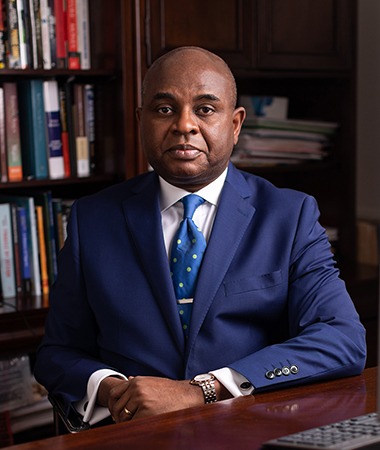
Categories
Policy Briefs Featured

Nigerian Education Conundrum: The Outcome Gap

With a predominantly youthful population and an emerging socio-economic development momentum in Africa, Nigeria has a significant opportunity to secure a prominent role in global emergence in the forthcoming decades. However, the realization of this potential hinges on the effective development and deployment of human capital capable of steering the nation’s progress. Given its role as the primary source of human capital in Nigeria, the education sector assumes heightened importance in the coming decades. Unfortunately, this sector has been besieged by numerous challenges, resulting in gaps that compromise the nation’s human capital. These challenges can be broadly categorized into three groups:

  • The Access Gap
  • The Quality Gap
  • The Outcome Gap

A comprehensive examination of the access gap, encompassing challenges hindering the average Nigerian’s access to education, has been outlined in the provided document HERE.

Additionally, the quality gap, addressing the challenges that undermine the capacity of available education to adequately equip individuals, has been analyzed HERE. The outcome gap delves into the human capital implications arising from both limited access and low-quality education. This policy brief focuses specifically on the outcome gap, offering insights into its realities, ongoing solutions, and identified gaps. Furthermore, the brief presents policy recommendations aimed at bridging the gap and fostering positive outcomes in education.

Understanding the Outcome Gap

The outcome gap can be understood in 5 related challenges:

  •  Education Transition Challenge

The Nigerian education system operates on a hierarchical structure, where progression between education levels is not automatic. Learners can advance to the next stage only upon demonstrating mastery outcomes, typically through standardized examinations. For instance, primary school students must pass entrance exams to qualify for secondary school, and tertiary institutions require a minimum number of WAEC* subject passes and UTME* scores for admission.

Poor outcomes at any educational level pose an additional hurdle to accessing higher education. Between 2016 and 2023, the percentage of students meeting the minimum 5- subject WAEC pass, a prerequisite for university admission, ranged from 53% to 79.8%. Consequently, at least one in every four high school students during this period was denied the opportunity to transition to higher education solely based on subpar outcomes, aggravating the challenges of education access and contributing to the leaky education pipeline—the progressive reduction in access to education as one ascends the tiers of education. Current strategies to address this transition challenge include a deliberate reduction of barriers between educational tiers. For instance, the Joint Admission and Matriculation Board (JAMB) has incrementally lowered the minimum UTME score required for university admission, from 180 in the 2009 admission cycle to 140 in the 2023 admission cycle. However, this has prompted public outcry, with education experts cautioning that continued reductions may compromise academic performance in tertiary institutions.

  • Education and Industry Disconnect

A major public critic of tertiary education particularly is its disconnect from the industry. Although the academia is expected to play the role of both a human capital supplier and a research-based innovation kickstarter for industries, this has not being the much of the case of Nigerian tertiary education. Students in higher education have limited exposure to the industry, and tertiary education curriculum places a major focus on academic content over helping students develop employable skills. The lack of research financing has also made it difficult for higher education institutions to lead the innovation trail as expected. To address the disconnect, various stakeholders at several levels have being implementing diverse solutions. The Federal Government instituted the Student Industrial Work Experience Scheme in 1974 through the Industrial Training Fund (ITF). SIWES was created to bridge the gap between the classroom and the industry by preparing students with the appropriate skills necessary for employment in Nigerian industries. The scheme however mostly caters to students within the STEM disciplines, with some inclusion of Agriculture, Medical Sciences and Education students. There has also been criticism of the effectiveness of the scheme based on the short duration, inability to transition to actual employment, poor matching of student placements, insufficient participating industries, and insufficient funding.

On a relatively local scale, some universities have created special strategies to connect the classroom with the industry. An example, the Vice Chancellor of University of Abuja as at August 2023 reports the university’s attempt to bridge the academia-industry disconnect through special strategies like creating industry-supported programmes within the University. The VC also reported the university’s plan to create an academic head of department and an industry head of department for its department of Mining and Geology as another example of actively involving the industry in the academic environment.

  • Employment Challenge

Education holds two significant promises: social mobility, enabling individuals to enhance their socioeconomic status, and social efficiency, furnishing the necessary human capital to contribute to societal development. However, the current state of education in Nigeria poses increasing challenges to realizing these promises. The adverse employment outcomes resulting from limited access and low-quality education manifest in three ways: unemployment, underemployment, and unemployability. Unemployment denotes a complete lack of suitable job opportunities for individuals willing and able to work, while underemployment involves occupying positions that underutilize employees’ skills and compensate them inadequately. Unemployability, on the other hand, describes situations where a person is deemed unsuitable for employment and unable to retain a job, often stemming from a mismatch between the skills possessed by an educated individual and those required for the sought-after positions (Obor and Kayode, 2021).

Unemployment poses a significant and enduring challenge in Nigeria, primarily driven by a scarcity of job opportunities and exacerbated by global factors such as the COVID-19 pandemic. Over the past decade, the unemployment rate has seen a steady increase. In the fourth quarter of 2020, it reached 33.3%. However, in the first quarter of 2023, the Nigeria Bureau of Statistics (NBS) revised its methodology for calculating the unemployment rate, publishing a revised figure of 4.1%. The updated system now considers employed persons as those in paid jobs who worked for at least one hour per week, a departure from the previous threshold of 20 hours per week. Despite the NBS asserting alignment with the International Labour Organization (ILO) guidelines, this revision has faced criticism from the Nigerian public. The NBS had previously reported an underemployment rate of 20.1% in Q3 2018 and 13.7% in Q4 2022. Under the revised system, the NBS now defines underemployment as a proportion of employed individuals working fewer than 40 hours per week, declaring themselves willing and available for more work, with a updated rate of 12.2% in Q1 2023.

Notably, there is a lack of comprehensive nationwide measures for unemployability in Nigeria. Its impact is observed in the paradoxical combination of unemployed graduates alongside reported shortages of skilled human resources by employers in the country. This situation has prompted a noticeable trend of labor recruitment from other countries by Nigerian-based companies, exemplified by the employment of 11,000 Indians in the newly constructed Dangote refinery, partially funded by the NNPC. The ensuing controversy has triggered a public debate on the unemployability challenge in Nigeria.

The relationship between the state of education in Nigeria and its impact on youth employment and employability can be understood from a dual perspective. On one side, a lack of access to basic education impedes the development of the intellectual capacity required for employment within the globalized economy. Conversely, on the other side, low-quality education results in graduates struggling in the workplace, restricting them to positions that impede their social mobility. Both scenarios lead to a similar challenge: young individuals find themselves unable to contribute optimally to the socio-economic development of the nation. Global challenges, which have led to economic contractions, add another layer to the issue by limiting job opportunities. This exacerbates employment challenges, making it difficult even for well-educated graduates to secure well-paying jobs. In essence, the intersection of restricted educational access and substandard quality compounds the hurdles faced by young people in making meaningful contributions to the nation’s socio-economic progress.

  • Job Creation Challenge

The impact of low-quality education extends beyond limiting job prospects for graduates; it also diminishes the likelihood of job creation in the first place. Research indicates a correlation between increased opportunities for job creation in an economy and increased opportunities for intellectual sophistication that equips individuals with the necessary worldview and technical skills for entrepreneurial exploration. A 2021 study conducted at the Stanford Graduate School of Business revealed that over 95% of 1263 Unicorn Founders globally held at least a Bachelor’s Degree, with over 60% of them possessing a graduate degree (Figure

2). Notably, all seven unicorn founders in Africa as of 2022 held higher education degrees. In essence, businesses generate jobs, and individuals with a strong educational background are more likely to establish successful businesses, contributing to job creation.

The impact of the current state of education on the younger generation extends beyond socio-economic aspects; it also has emotional implications. There is a noticeable decrease in the socio-affective engagement with education among young people when compared to earlier generations. What is particularly alarming is that this decline is not confined to those with limited access to education at the basic level or those affected by the leaky pipeline phenomenon, which reduces the percentage of individuals able to pursue higher education.

This trend is also evident among individuals currently within the educational systems. Research indicates a growing disinterest in education and a diminishing belief in its promises among the youth. Young people are becoming increasingly disconnected from the aspirations and assurances that education is supposed to offer.

Apart from academic research, this waning interest is also evident in various sociocultural shifts within Nigerian social spheres. These shifts reflect trends and discussions that indicate a noticeable departure from the once prevalent notion that obtaining an education serves as a pathway to social mobility and efficiency. Over the past decade, the surging popularity of the ideology “School Na Scam” (Translation: Schooling is Fraud) has sparked public controversy, leading to a significant increase in debates about the relevance of education, particularly higher education, to the socio-economic outcomes of contemporary youth. This ideology has gained widespread popularity, as evidenced by its inclusion in popular and widely-accepted creative works, such as songs by purportedly successful young individuals who assert that their achievements are not attributable to their educational experiences.

Although closely connected to the socio-economic outcome, the affective outcome differs in that it is more internalized, shaping internal perspective and eventually, external culture. Scholars argued tht societal perception and values are pivotal to the development of the culture of education(Famoye, 2021). Left unaddressed, the declining affective outcome has the capacity of reshaping an entire’s generation disposition towards education, impede educational progress, and reverse the advancements made in education in the decades to come.

Policy Recommendations

  • Better Measurement of Educational Outcomes in Nigeria

There is a striking absence of effective nationwide measurement of education outcomes in Nigeria. This deficiency in quality data hinders a comprehensive understanding of education outcomes at various educational levels and the intricate relationships among them. Furthermore, it undermines the capacity to gauge the effectiveness of interventions and increases the likelihood of continuously reinventing solutions that may not be yielding optimal results.

Moreover, most of the existing measurements of outcomes, particularly at the primary and secondary school levels, are predominantly quantitative, placing a strong emphasis on grades. There is a compelling need to adopt a multidimensional approach to measuring outcomes, incorporating both quantitative and qualitative assessments while building an understanding that spans both short-term and long-term perspectives. Developed nations, for example, the United States, capture a more robust and well-rounded comprehension of education outcomes by employing a combination of quantitative and qualitative measurements. They also embrace a longitudinal view when assessing outcomes. A notable example is the 2012 Education Longitudinal Study (ELS), which offers trend data about critical transitions experienced by students as they progress through high school and transition into post secondary education or their careers. Recognizing that the impact of education extends beyond the short term, a longitudinal approach aids in capturing the multidimensional, long-term effects of education, providing a more realistic picture of educational outcomes.

  •  Stronger Academia-Industry Relationship

Establishing a more robust connection between academia and industry is imperative to strengthen the socio-economic outcomes of education. Particularly in higher education, students need exposure to the real-world challenges within society that their education aims to equip them to address. Ossai (2023) proposes two models to help students translate abstract concepts learned in the classroom into real-world contexts. The first model advocates for the creation of discipline-based incubation spaces. In STEM-focused disciplines, these spaces can serve as Innovation Centers where students apply STEM principles to solve local challenges. For non-STEM fields such as arts, social sciences, and law, these incubation spaces can function as Thinking Clinics. Here, students engage with real-world case scenarios that require application of their field’s knowledge beyond rote memorization. The second model advocates introducing Experiential Capstone Projects to replace the current abstract and theoretical undergraduate thesis model. Experiential Capstone Projects would task students with designing solutions to problems within their local communities, serving as the culmination of their higher education journey. These models leverage established practices within higher education and have already been successfully implemented by universities in Africa, exemplified by the African Leadership University in Rwanda. This demonstrates the viability of such approaches even within the complex African context.

  • Promoting the Civic Responsibility of Education

Public discourse on anticipated outcomes of education should not only emphasize socioeconomic returns but must also encompass civic responsibilities. Graduates should recognize that education equips them not solely for employment and social mobility but also to fulfill their role as responsible citizens of the nation. Framing educational outcomes exclusively in economic terms risks stripping education of it’s responsibility to nurture individuals who comprehend their role in active contribution to social cohesion. A predominant emphasis on the socioeconomic returns of education contributes to a decline in the socio-affective disposition, particularly among youths, towards education, given the challenges of an increasingly complex global economy. Broadening the portrayal of education beyond economic returns can shift the narrative from viewing education merely as a means to secure a job to understanding it as a tool that empowers learners to address and solve societal problems. This holistic perspective encourages graduates to recognize their civic duties and promotes a more comprehensive understanding of the transformative potential of education in fostering responsible and engaged citizens.

*WAEC: West African Examination Council

*UTME: Unified Tertiary Matriculation Examination


References

  • Famoye, A.D. (2021). The Implication of Societal Perception and Value on Quality Education: The Nigeria Example, 1999–2019. In: Mojekwu, J.N., Thwala, W., Aigbavboa, C., Atepor, L., Sackey, S. (eds) Sustainable Education and Development. Springer, Cham. https://doi.org/10.1007/978-3-030-68836-3_1
  • Odu Obor, D., Kayode, D.I. (2022). Highly Educated but Unemployable. In: Baikady, R., Sajid, S., Przeperski, J., Nadesan, V., Rezaul, I., Gao, J. (eds) The Palgrave Handbook of Global Social Problems. Palgrave Macmillan, Cham. https://doi.org/10.1007/978-3-030-68127-2_162-1
  • Ossai, Edem (2023, September 20) Redefining the Role of Tertiary Educator in Nigeria [Webinar]. The Education Partnership Webinar Series. www.youtube.com/watch?v=rsJjvzOw8Q4
Categories
Uncategorized

Familiarization Visit to IGET by HE. Amb. Tarnawska, Polish Ambassador to Nigeria

Introduction

  • Amb. Tarnawska was received by Prof. Kingsley Moghalu, President of IGET, and the IGET staff team.

Book and Policy Brief Presentation

  • Prof Moghalu presented signed copies of his two books BIG and EA, and a copy of IGET’s 5 policy briefs to HE. Amb. Tarnawska.

Think Tanks

  • Prof Moghalu made a brief remark, introducing IGET, our goals and objectives as a Think Tank, and ways through which IGET plans to reach Nigeria and continental Africa, through Research, Policy Analysis, Advocacy, Discussion Forums, Executive Education and Advisory & Consultancy.

  • The Ambassador, while paying homage to Prof on his knowledge and expertise, made mention of the need to have stronger institutions, and why public policy and its implementation is a key part of the drive for stronger political institutions in continental Africa and the world at large.

Democracy

  • Our President mentioned the fact that a lot of African countries, with emphasis on Nigeria, practice a pseudo democracy and the need for Think Tanks like IGET, that can help enlighten the country on the need for strong institutions.
  • The Ambassador spoke on the fact that democracy isn’t just a word, but a system of government that has to be achieved, practiced and maintained.

Co-Operation

  • Prof Moghalu highlighted IGET’s vision to collaborate with the Polish Government, the Polish Embassy in Nigeria, other Think Tanks in and from Poland, and maintaining bilateral relationships between Nigeria and Poland.
  • The Ambassador also highlighted her shared vision with Prof, and her hope to kickstart a partnership with IGET in areas of policy formulation and implementation, executive training and exchange in the area of staff training.

On Africa and Experiences

  • Ambassador Tarnawska spoke on her lengthy stay in Africa; from her growing days in Africa and not leaving to Europe until about 21 to attend college.
  • The Ambassador also made mention of her love for Africa and Nigeria, and the fact she has names from the three major tribes; Ifeyinwa- Igbo; Jamila- Hausa; Funmilayo- Yoruba.

Women

  • IGET’s President stated that he had hopes that women would be more active in the political process and that he hopes to push, through IGET, for actual legislation that protects women’s rights in all areas.
  • Our President and the Ambassador shared similar opinions on championing women empowerment, the need to address the “Equality” and “Equity” subject matter.

On The Ambassador

  • Prof Moghalu commended the friendliness of the Ambassador, her relentless work in Africa and Nigeria, and her commitment to a better relationship between Poland and Nigeria.

iGET

  • Prof Moghalu spoke on IGET’s plan to release a detailed policy brief titled “Women, The Untapped Potential” and its translation into Igbo, Hausa, Yoruba, and Pidgin in order to disseminate it properly to the average Nigerian Woman.
  • The Ambassador stressed on the importance of affirmative action, not just theoretical propositions that bear little or no fruit.

Trade

  • IGET’s founder made mention of his appointment as the Chairman of the Advisory and Executive Board of Africa Private Sector Summit and his hopes to use this position to encourage trade policies that benefit Nigeria and Africa.
Categories
News Updates

The African Private Sector Summit [APSS] Appoints Professor Kingsley Moghalu as Chair of its Advisory Board and Executive Board.

The Africa Private Sector Summit (APSS), a Pan-African, Private Sector-led Non-Profit organization that promotes Trade and Investment in Africa and is headquartered in Accra, Ghana, has announced the appointment of Professor Kingsley Moghalu of Nigeria, as the new Chairman of its Board of Directors.

Professor Moghalu, one of Africa’s eminent political economists and development practitioners, served as Deputy Governor of the Central Bank of Nigeria from 2009 to 2014, and subsequently as Professor of Practice in International Business and Public Policy at Tufts University’s Fletcher School of Law and Diplomacy in Massachusetts, USA. He is the CEO of Sogato Strategies LLC,a macroeconomic, investment and geopolitical risk consultancy, and the President of the Institute for Governance and Economic Transformation (IGET), a public policy think tank. Moghalu previously worked in United Nations System for 17 years, rising to the rank of Director. He is the author of several books including Emerging Africa: How The Global Economy’s Last Frontier Can Proper and Matter.

“The Africa Private Sector Summit is delighted to welcome Kingsley Moghalu as its new Board Chair”, said Mr. Judson Wendell Addy, Founder and outgoing Chairman of APSS, a Liberian-born citizen, a retired International Business Entrepreneur and Pan Africanist. “His international leadership experience, credibility, and networks will help advance the goals of APSS, as we proceed with the roll out of the draft Charter on Private Sector Development, Rights and Protection Environment in Africa [Private Sector Bill of Rights], across all of Africa’s five geographic regions plus diaspora. The objective is to strengthen the private sector in African countries, attract increased business investment to the continent, and make strong contributions to enable the private sector actively drive implementation of the Regional Economic Communities (RECs] and the African Continental Free Trade Agreement (AfCFTA) protocols in collaboration with the Pan Africa Chamber of Commerce and Industry (PACCI), the Africa Busines Council (AfBC) and other stakeholders”.

“I am honored to have been invited to Chair the Board of APSS”, Moghalu said in his statement reacting to his appointment. “In collaboration with board colleagues and the executive leadership team, I will work hard with African companies, and other stakeholders including governments and international organizations to advance the critical role of the private sector in the structural transformation of African economies in the context of Africa’s economic integration and African Union’s Agenda 2063, our collective journey to the Africa we want”.

The APSS is leading the continent’s private sector and other stakeholders via an EcoSystem based approach, leveraging the African philosophy of Ubuntu, to develop a Private Sector Bill of Rights, for an enabling business environment in Africa. The APSS also collaborates closely with another organization, the African Education Trust Fund (AETF) headed by Dr. Ekwow Spio-Garbrah, a former Minister of Trade and Industry and Minister of Education in Ghana. The APSS was instrumental to the establishment of the AETF. The goal of the AETF is to overhaul Africa’s education systems to produce the skill sets needed for the economic transformation of the continent in the 21st century.

The APSS approved structure in the medium term, is to have a 13-member APSS Advisory Board and the a 17- member Executive Board, made up of distinguished personalities from Africa’s 5+1 regional blocks – East Africa, Central Africa, North Africa, West Africa, and Southern Africa, and the African Diaspora. To fill these positions, APSS recently announced its invitation of nominations of candidates into its Advisory and Executive Boards. Part of the restructuring arrangement for the new phase of APSS ahead of the roll out includes; [a] the co- founders of APSS have transitioned into the Advisory Board and Executive Boards as , members respectively, [b] Mr. Addy, the Founder and outgoing Chair, becomes a member of the Advisory Board and Chair Emeritus. To strenthen its executive capacity, APSS also recently appointed a CEO, transitioned one of the co-founders into an Executive Director and created three Director positions.

Professor Moghalu will serve as the Chairperson of both the Advisory Board and the Executive Board.

Signed:

Mr. Judson Wendell Addy

Outgoing Chairperson & Founder, Africa Private Sector Summit (APSS) LBG

Categories
Policy Briefs Featured

NIGERIAN EDUCATION CONUNDRUM: THE QUALITY GAP

The state of Nigerian education is faced with myriad challenges. In 2023, UNICEF reported that 75% of children aged 7-14 lack basic literacy and number skills. The World Economic Forum ranked Nigeria’s quality of primary education at 120th and its quality of tertiary education at 117th out of 137 countries in 2017/2018.

For a nation whose population is one of her greatest strengths, with youth majority, education becomes even more pertinent. The challenges of education can be grouped into 3 major gaps:

  •  The Access Gap
  • The Quality Gap
  • The Outcome Gap

The Access Gap groups the challenges limiting the Nigerian populace’s access to appropriate education. It includes issues of out-of-school children, low completion rates, low percentage of transitions between education tiers, adult illiteracy, education in emergencies, etc. The Quality Gap encompasses challenges that result in inadequate equipping capacity of the available education. The Outcome Gap covers the human capital implications of the low skills that result from low-quality education. A detailed analysis of the Access Gap is provided HERE. This policy brief zooms into the quality gap, providing insights into its realities, current solutions, and existing gaps. Some policy recommendations to help bridge the gap are also discussed.

Understanding the Quality Gap

The problem of low-quality education is fuelled by 4 key interrelated issues:

  1. Weak Curriculum

Curriculum is a critical input of education. Its development, design, content, and implementation have a significant impact on the quality of education. At all school levels, education in Nigeria is buffeted by a weak, outdated, and overloaded curriculum that is fighting for relevance in the context of the country’s needs.

On the development and design end, there is the challenge of using a top-down approach, with teachers having little to no contribution to the development of the curriculum. Also, there is inadequate qualitative research that focuses on understanding the cultural and psychosocial dynamics of the student in a way that can enrich the perspectives used in developing the curriculum. On the content end, there is an outdated, overloaded, and inflexible structure of curriculum content at the different tiers of education. On the implementation side, there is the nested problem of weak management that is disconnected from teacher’s instructional realities and the low capacity of teachers to implement curriculum.

The weak curriculum challenge mutates at different tiers of education. At the primary and secondary levels, the proliferation of unregulated private schools has particularly weakened the curriculum. Whereas at the tertiary level, the curriculum is mostly theoretical with little practical input that can help students connect their learning to the realities of their daily personal and community needs.

Tertiary education curriculum also suffers under the weight of imperialism and a disconnect from indigenous knowledge in various fields, which in the long term produces disenfranchised learners who always have to navigate a double, almost mutually exclusive, school life and home life. Researchers have shown that this disenfranchisement has far-reaching impacts not only on the intellectual capacity of the Nigerian learner but also on their confidence as solution creators. Ezeanya-Esiobu (2019) reported that:

“Several decades after the end of colonialism, sub-Saharan Africa has not made much progress in liberating the education process from the clutches of imperialism and dependency.

Only marginal improvements have been recorded, such as an increased rate of enrollment, expanded infrastructure, training, and recruitment of more teachers, and other improvements that are peripheral to the core issue of curriculum transformation. African pupils and students graduate from different levels of education, with a sense of helplessness, inferiority, and deference to Europe. In other words, the more the African studies, the deeper his inability to utilize his knowledge to directly and progressively influence his immediate environment for the better.”

Several solutions have been proposed for addressing the curriculum challenge. Efforts are continuously being made by the Federal Ministry of Education towards revising the curriculum at the primary and secondary school levels. However, this has been generally slow and focused on single disciplines; for example, Civic Education was reviewed within the Secondary School curriculum in 2017 and History was reintroduced into Basic education in 2022. In an effort to thrust university education towards global standards and reflect 21st-century realities, the National University Commission in 2022 approved a new curriculum dubbed the Core Curriculum and Minimum Academic Standards (CCMAS). CCMAS is the result of a comprehensive review of Benchmark Minimum Academic Standards (BMAS). It is aimed at providing 70% of university education content and expected outcomes, while Universities provide 30% based on their contextual peculiarities. However, the Academic Staff Union of Universities (ASUU) kicked against CCMAS, stating that it was created using a top-to-bottom model that did not fully carry the university educators along in its development. There remains an existing challenge with the curriculum of education in Nigeria.

  1. Teacher and Teaching Issues

Quality education is impossible without quality and qualified teachers. As the major human capital in the mix of factors of education, teachers hold a crucial role in the work of ensuring quality education in Nigeria. 4 major challenges make teaching and teachers contribute to the quality gap. First is the Inadequate Qualification challenge. The Education Sector Analysis carried out in 2022 by the Federal Government in partnership with The World Bank and UNESCO revealed that at least 20% of the teachers in public basic education schools are not qualified to teach. This number nearly doubles in private schools. (Table 1)

The problem of low qualification is worst at the Early Childhood Care Development and Education (ECCDE) tier, as only 1 in every 10 public ECCDE teachers holds a Bachelor’s or Postgraduate Diploma in Education. At the primary level, the majority of the teachers in public schools (60%) hold a National Certificate of Education (NCE), while only 15% have a Bachelor’s Degree in Education. The situation deteriorates in private schools, where over 4 of 10 teachers lack NCE. Although the official requirement for teaching at the secondary school level is a Bachelor’s Degree, one-third of teachers in public junior high schools hold only an NCE, and about 20% do not have any professional qualifications

The number of completely untrained teachers rises to 35% in private junior schools, with another one-fourth holding only NCE. It is important to note that this problem of unqualified teachers is unevenly distributed in the country, as reported by the 2021 Education Sector Analysis. For instance, in public primary schools, the proportion of untrained teachers ranges from 5% in Osun to 59% in Sokoto. In private schools, it ranges from 25% in the FCT to 72% in Kebbi (Figure 1). In public junior secondary schools, the share ranges from 10% in Ekiti to 33% in Akwa-Ibom, while in private schools, it ranges from 22% in FCT-Abuja to 46% in Kebbi

(Figure 2)

“all teachers in tertiary institutions shall be required to undergo training in the methods and techniques of teaching”, there is no evidence that tertiary educators undergo any form of education training or is mandated to do so.

The second issue builds on the first. Aside from the lack of pre-service training, teachers also lack in-service professional development opportunities. The 2022 National Personnel Audit conducted by the Universal Basic Education Commission (UBEC) revealed that 67.5% of teachers in public schools and 85.3% in private schools have not attended any in-service training in five years. Although the Revised National Policy on Education (2013) speaks of the provision of educational support services, including local government-based Teacher Resource Centres that can provide professional development space for basic education teachers, there is no evidence that this has been implemented a decade since the policy revision. At the tertiary level, although research has confirmed the importance of centres of teaching and learning support within Universities, Ajilore (2021) reported that less than 5% of universities have such centres, and the available ones are rarely concerned with educators’ instructional practices.

The third issue details the global crisis of teacher shortages. Recent data from UNESCO showed that sub-Saharan Africa needs to recruit 16.5 million more teachers to reach its education goals by 2030. In 2018, the Universal Basic Education Commission (UBEC) reported shortages of teachers at the basic education level up to 277,537. The Revised National Policy on Education (2013) prescribes a student-teacher ratio of 1:25 for pre-primary classes; 1:35 for primary and 1:40 for secondary schools. However, in February 2023, UNICEF placed the average pupil-teacher ratio across the three states in NorthWestern Nigeria as high as 124:1 as a result of the insurgency.

The fourth issue is the low perception of the teaching profession, which is based on a mix of poor remuneration and poor work conditions. Ikiyei & Enekeme (2023) studied the perception of the teaching profession among 300 third-year undergraduate students in the Faculty of Education at a Nigerian University and found 3 of 4 of these future teachers did not willingly choose the education path. They only accepted to study an education-themed course just to get a tertiary degree. 72% of them agreed that they were ashamed to introduce themselves as future teachers. The teaching profession has suffered progressively lower perceptions with increasingly challenging challenges such as low and unpaid salaries; lack of provision of professional development; career inflexibility, and more. Salaries for primary school teachers within public institutions can go as low as less than $80 monthly. And there have been records of teachers being owed salaries for up to 8 months in some Nigerian states. At the tertiary level, a full professor earns less than $600 monthly in Nigeria as against over $5,000 in South Africa. This has made the profession unattractive to young, bright minds who can bring modern innovation.

Although the issues surrounding teaching in Nigeria posit a strong quality challenge, there have been efforts to address them. Some of these efforts include stricter regulatory practices to ensure teachers are qualified. For example, in December 2019, following the 62nd National Council Education Meeting directive, the Teachers’ Registration Council of Nigeria was saddled with the work of removing all unqualified teachers from Nigerian classrooms.

However, in a typical case of a lack of goodwill for policy implementation, some state governments disregarded the directive. In 2016, the Federal Government announced that it would employ 500,000 new graduates and NCE teachers in the basic education sub-sector.

There has not been much news detailing the implementation of this plan. UBEC reported that the federal government disbursed over N57 billion to assist states with the Teachers Professional Development (TPD) programme between 2009 and 2022. In 2022, the federal government announced digital literacy training for 45,000 teachers across 24 states including Benue, Bauchi, Ebonyi, Enugu, Gombe, Ekiti, Lagos, Osun, and Jigawa. There, however, remains a lot more to do to ensure qualified teachers who are able to provide quality education.


  1. Infrastructure

Education Infrastructure is the element within the learning environments that make learning accessible and easy. They include classrooms, laboratories, learning tools, pieces of equipment, school facilities, etc. Evidence exists that high-quality infrastructure facilitates better educational quality and outcomes. The state of educational infrastructure in Nigeria is dire. From overcrowded classrooms to dilapidated buildings, inadequate books, and more; infrastructural neglect is a common challenge of the various tiers of education in Nigeria. At the primary level, there are reports of students having to sit on bare floors to learn (Figure 3).

At the secondary level, there are cases where students are unable to learn because of flooding inside the classroom. Infrastructural challenges at the tertiary level not only impede education for learners but also make cutting-edge research unreachable for professors. The leading causes of infrastructural challenges include lack of political will, low financing, corruption, project abandonment, poor maintenance culture, and poor planning.

There have been reports of interventions being carried out at the various levels of government to address this infrastructure challenge. In 2022, the Federal Government of Nigeria was reported to have spent over N6.3 trillion on capital projects in education, particularly on the development of ICT and other infrastructure since 2015. A total of N553 Billion of this amount was reported to be expended on the development of infrastructure at primary and secondary levels of education. This was allocated to the construction, renovation, and rehabilitation of classrooms, hostels, and laboratories as well as security infrastructure.

  • Inadequate Financing

UNESCO recommended that developing countries allocate 10-15% of their budgets to the education sector. In 2015, education was allocated 10.8% of the Nigerian budget. Since then, the allocation has progressively tanked to 5.3% in 2023 with a few peak periods in 2018 and 2019 (Figure 4). Education Financing in Nigeria mostly rests upon the government and is distributed across the 3 tiers. Basic education is financed through a concurrent financing mode from the 3 tiers of government—federal, state, and local government authority, with distinct financing mandates and responsibilities for each tier. The federal government provides 50% and the state and local government 30% and 20% respectively.

With rising debts, global instabilities, and shrinking economies, education in Nigeria is at risk of heightened under-financing which can exacerbate every other challenge associated with the quality gap as well as the challenges associated with the access gap, especially with increasing costs intensified by the destruction of educational infrastructure by insurgent attacks.

Efforts are being made at all government levels to ensure proper financing of education. In 2019, the new administration of the Oyo State Government upwardly reviewed the education budgetary allocation from 3% to 10% that year. It was further increased to 12% in 2020 and has maintained between 18-22% since then. Also, to expand its education financing capacity, the Federal Government increased the Education tax from 2% to 2.5% through the Finance Act of 2021 and then to 3% through the Finance Act of 2023.

Nested Challenges

It is important to note how interconnected the challenges of the quality gap are and why the gap must be addressed from a holistic perspective. A curriculum redesign necessitates the combination of improved infrastructure, and better quality and qualified teachers. This also rests upon improved financing to set the stage (Figure 5)

Recommendations

  • Curriculum Reformation

Curriculum reformation needs to go beyond content changes in subject matter to include changes in instructional objectives and approach. The 21st-century graduate is situated within an increasingly volatile, uncertain, complex, and ambiguous (VUCA) world that necessitates that they are not only prepared with skills that are already in need today but also able to cope with the dynamic nature of the global space with skills for an unknown future. The COVID pandemic exemplified how rapid changes can happen within a short time. If education aims to produce human capital that can continuously drive innovations and global competitiveness in an increasingly VUCA world, then it must aim beyond delivering current knowledge to the ability to synthesize new knowledge. Learners must be able to understand how knowledge is created, not just know what knowledge has already been created. Priority must be given to the learner’s ability to think, over being able to memorize facts or simply perform at a current skill. Curriculum reformation must avoid the ditch of short-term thinking of current needs and aim for longer-term foresight of uncertain future needs. This also calls for the need for more qualitative research in education that helps understand how to create education models that prioritize thinking over memorization within the unique context and challenges of the Nigerian socio-cultural climate.

  • Teacher and Teaching Revitalization

Reformation efforts in teaching must aim at 2 interrelated areas:

   a. Philosophical reframing of the teaching profession

There needs to be a philosophical reframing of the teaching profession from a professional that “remains unattractive and is most often taken only as the last option” as the Ministerial Strategic Plan for Education (2018-2022) put it. This necessitates a social, economic, and intellectual shift in the framing of the teaching profession. Teaching needs to be seen and valued as the profession straddled with the strategic work of human capital development that it is. Teachers need to be reframed as problem solvers in education who ensure value creation within the human capital ecosystem. This philosophical reframing must be led by the government’s commitment to making the profession more attractive with steps like better and prompt remuneration packages; better commitment to the provision of necessary infrastructure and more. This must also be supported by a necessary shift in the societal frame of teaching to become a more professional line of work. Teaching must become a well-respected, better-supported profession that will attract more talent. Teachers must be seen beyond being “tools in education” to be tweaked for change. The 21st-century teacher cannot be seen as an outsider for whom other stakeholders solve the problems of education and only require him to implement. Teacher education must be done in a way that repositions theteacher as one with both intellectual outlook and professional commitment.

b. Increased teaching effectiveness

To make teaching more effective, there is the need to provide expanded opportunities for teacher’s training. Pre-service teaching training done in National Colleges of Education and Institutes of Education in Universities must be reviewed in line with the expanded needs of the 21st century. There is also the need for continuous professional development for teachers across all tiers of education. In a rapidly changing world, the teacher education curriculum should be redesigned not only to accommodate the need for changes in subject matter knowledge but also the need for better capacity of the teacher to rapidly and continuously self-improve on every form of their teacher knowledge. Especially in Nigeria, with the myriad of societal challenges impart on education quality, teachers must be trained as education solution providers, equipped with intellectual curiosity, professional purview and enhanced thinking, and tools to address the local challenges education is facing in their communities. The teacher of the 21st century must be an education thought leader with enhanced thinking about their work and their role within the economy. Themes such as strategic thinking, design thinking, and social entrepreneurial leadership should become a part of the curriculum of pre-service teacher training and in-service continuous development. There is a need to implement the establishment of Teacher Resource Centres as posited by the Revised National Policy on Education (2013) and expand its work in light of current needs. Education research also needs to be given greater prominence, as lasting reforms in the education sector must be informed by ongoing empirical and qualitative insights into the challenges and ongoing reform practices to be able to understand what is working and what is not.

  • Finance Expansion

In the last 4 years, Oyo state has set a remarkable example that increasing the education budgetary allocation is possible. Several tiers of government need to follow this example by prioritizing education. There is a need to reduce the excessive cost of governance in annual

budgets to be able to make judicious use of scarce resources on crucial socioeconomic concerns like education. Also, sources of financing for education need to be expanded beyond the government to incorporate more private investment. Data has shown the growing status of diaspora remittance within the Nigerian financial sector. This shows a promising outlook on the interest of the diaspora community to play a role in strengthening the current Nigerian economy. This interest can be further cultivated by engaging the diaspora in financing education in a more systematic and structured way.


Conclusion

Nigeria is in dire need of education that can strengthen her human capital to strengthen her socioeconomic space in the polity of nations. This kind of education must center quality as a major priority. The better the quality of education, the better the human capital strength of the nation.

References

Ajilore, O.H. (2021). Teachers need Help: The Paucity of Centres for Teaching and Learning in Nigeria. Jean Piaget Conference (USA). DOI: 10.13140/RG.2.2.20305.30562

Ezeanya-Esiobu, C. (2019). Indigenous Knowledge and Education in Africa. Springer: New York.

Ikiyei, P.K. & Enekeme, A.B. (2023). Student-Teachers’ Interest in the Teaching Profession and the Future of Teaching as a Profession in Nigeria. A Study of Faculty of Education Students, Niger Delta Unversity, Bayelsa State, Nigeria. British Journal of Education,

Learning and Development Psychology 6(1), 12-26.

Categories
Policy Briefs Featured

HUMAN CAPITAL: NIGERIA’S EDUCATION ACCESS CONUNDRUM

With over 60% of her people below 35, Nigeria is a population with bustling youthful energy. This implies that there is a lot of human capital that can be captured for the country’s socioeconomic development. The World Bank defines human capital as consisting of the knowledge, skills, and health that people invest in and accumulate throughout their lives, enabling them to realize their potential as productive members of society. However, the conversation on human capital transcends just the presence of humans to their level of productivity, which includes their skills and capacities to produce socioeconomic outputs. This is where the education sector comes in. Education stands as a crucial supplier of human capital. The education sector should equip people with the necessary skills and refine their intellectual capacity so that they can meaningfully contribute to their communities and nation. Well-educated people should be able to lead meaningful personal lives, solve problems in their communities, and help improve the quality of life in the nation with their skills and knowledge while being agents of social cohesion. It is no news that the education sector in Nigeria is marred with several challenges that have adversely impacted Nigeria’s human capital. As of 2020, Nigeria has a Human Capital Index pegged at 0.36 by the World Bank, ranking it 168th of 173 countries globally. This was up from 0.34 in 2018 which ranked the country as the 152nd of the 157 countries surveyed. The slow growth of Nigeria’s human capital index can be assigned to the ever-increasing challenges in the realities of educating the Nigerian populace.

From unschooled children to unemployed graduates, there is an urgent need to address the challenges of education with a systemic approach. However, attempting to solve the problem requires a detailed understanding of the issues first. The education sector is a system with many moving parts and thus requires a systemic approach to its reformation. Reforming education in Nigeria necessitates that the challenges are understood more holistically.

The Tripartite Challenges

The multifaceted challenges of education in Nigeria can be mapped into 3 major categories:

  •  The Access Gap
  • The Quality Gap
  • The Outcome Gap

The access gap details the multilayered roadblocks that the Nigerian populace has in accessing the form of education that is required for proper skill-building at their level. The quality gap aggregates the many-sided problems of low quality of the current education system that is accessible. The outcome gaps detail the realities of meagre skills and capacities of the graduates of the educational system and the human capital implications of this reality.

This policy paper looks into the access gap to provide deeper insights into its current realities, and how it is being addressed now while providing some recommendations on new strategies to bridge the gap.

Understanding the Access Gap

Low access to education is a challenge that looms over all the tiers of education and affects all demographic classes. The access gap can be grouped into 3 major issues:

  • Out-Of-School Children

Out of the 244 million out-of-school children (OOSC) worldwide in 2021, UNESCO estimated OOSC aged 6-18 in Nigeria at 20 million. This is up the 13.7 million mark reported by World Bank in 2013. This makes 1 of every 12 out-of-school children in the world to be a Nigerian. As of 2019, the gross enrollment rate in primary school is 68% of children at the required age, while it stood at 54.4% for secondary school. However, this does not fully reflect the differences in the geopolitical realities as the net primary school attendance rate plummets to 53% in Northern Nigeria, according to UNICEF. From a gender stance, the situation worsens as more than half of the girls in North East and North West Nigeria are not in school, with some states in the region recording as low as 47.3% female primary net attendance.

The causes of the OOSC challenge are both general and specific to geopolitical regions. Generally, children’s access to education is obstructed by poverty and an inadequate amount of schools and learning facilities. Viewed from the geopolitical angle, the roadblocks become more diverse and unequally intensified. The Northern regions are plagued with several socio-cultural challenges, with insurgency being a leading factor. For example, reports show that in 2021 alone, there were at least 25 terrorist attacks on schools in the North leading to the abduction of 1,440 children, while at least 16 children were killed. In March 2021, about 618 schools were shut down in Kano, Niger, Katsina, Sokoto, Zamfara, and Yobe states, over the fear of attack and abduction of students and staff. Other issues included the perception of schooling as inherently Western and thus a poor reflection of immediate culture; poor perceptions of the female gender and religious sentiments.

The sociocultural challenges in the Southern Region include the lack of foster care as seen, for example, in the growing number of street children. Other causes are the poor perception of the need for formal education in light of the rising rate of youth unemployment; and child labour issues where the child is expected to be an economic contributor to the family.

Efforts to address the OOSC conundrum are ongoing at various tiers of government in partnership with local and international organizations. Examples include the Federal Government-sponsored Almajiri Education Program (AEP) aimed for deployment in 19 northern states. The goal of AEP is to improve access for vulnerable groups in the delivery of Universal Basic Education (UBE), especially the Almajiri, and learners in the Qur’anic schools, through remodeling the Qur’anic education to provide access and equity to Basic Education. Another initiative is the Better Education Service Delivery for all (BESDA), a World Bank-supported program that is jointly implemented by the Federal and State Governments in Nigeria. BESDA aims at bringing out-of-school children into the classroom, improve literacy, and strengthen accountability for results in basic education. In 2017, the World Bank provided $611 million in credit for BESDA.

The rising number of out-of-school children indicates that despite the efforts, there remains the need to ramp up new and more innovative ways to address access to education, particularly for out-of-school children.

  • Low Completion Rate

The Universal Basic Education Commission (UBEC) in its 2018 Education Profile Indicators reported that only 86.81% of entrants complete primary school. This represents the best case situation as early education completion stands at 35.47%; while secondary education completion rate stands at 42.27%. Just like the out-of-school situation, the national average figures do not fully reflect the situation across all geopolitical zones as primary school completion in North Central, for example, stands at 63.84%.

However, in the same 2018, UNESCO reported the primary school completion rate at 70.80% while pegging the junior and senior secondary completion rates at 62.46% and 49.30% respectively. This was below the earlier reported 73.36% primary school completion rate in 2010. The more recent UNESCO data in 2021 shows an upward trajectory at a 73.14% completion rate in primary school, 67.77% in junior secondary, and 53.71% in senior secondary. The significant gain recorded towards the 2020 school year in primary completion rate that increased the primary completion rate from 72.94% to 79.70% was lost, possibly due to the adverse post-COVID effect, tanking the figures back to 73.1% in 2021. Similar trends can be observed in secondary school too.

The gender parity narrative of the UNESCO data shows an increasing trend of the gender divide in completion rate as the students move from lower levels of education to higher levels. At the primary level, there is a growing equality of chances of completion particularly in the last 5 years of data collection (2017-2021) with completion percentage differences between both genders usually lesser than 2 percentage points. However, at junior secondary school level and senior secondary, the gap becomes progressively pronounced — close to 10 and 15 percentage points respectively.

  • Leaky Education Pipeline

A prominent way that the access gap manifests is the leaky education pipeline, a phenomenon that describes the progressive reduction in access to education as one moves higher in the tiers of education. In Nigeria, access to education becomes progressively difficult as children and youth move across education tiers. This is seen in the marked decrease in attendance rate from 68% in primary school to 54% in secondary school to about 12% in tertiary education.

Tertiary education is the least accessed form of education in Nigeria. Several factors are responsible for this; prominent among them is the higher cost of tertiary education. The annual tuition cost in a Nigerian university ranges between $200-$5000, which remarkably differs from the socioeconomic realities of the nation with over 33% of her population living below $2 daily.

The inadequate number of tertiary institutions also exacerbates this challenge with less than 300 tertiary institutions saddled with the responsibility of catering to the education needs of an annual average of 1.8 million prospective students writing the Unified Tertiary Matriculation Examination (UTME) and whose results expire every year.

One major way in which the leak is being addressed, particularly between secondary and tertiary education, is through the provision of alternative education routes in the form of vocational and other forms of specialized institutes. The Revised National Policy on Education (2013) regards vocational institutes as a valid form of tertiary education and assigns the Federal Government the responsibilities of accrediting, certifying, and regulating these institutions in light of the human capital goals of Nigeria.

The gap on the pathway to higher education is also being bridged by the Open and Distance Learning System. The National Open University Nigeria (NOUN), which is the only single-mode open and distance learning University in Nigeria was first launched in 1983 and then relaunched in 2001 by President Olusegun Obasanjo. NOUN which had a pioneer student enrollment of 32,400 in 2001 has now grown to have about 580,000 enrolled students spread across 78 study centers across Nigeria.

A more recent solution aimed at bridging access to higher education is the student loan bill which was introduced in 2016 and signed into law in 2023 by President Bola Ahmed Tinubu. The Student Loan Fund is to provide interest-free tuition loans to students from indigent families.

However, the challenges remain as there are yet roadblocks associated with some of the solutions being provided. For example, one of the conditions for accessing the student loan fund is a family’s annual income that is not less than 500,000NGN. This automatically locks out a student with a family monthly income of 50,000NGN, which is still not enough for catering to the education needs relative to the rising cost.

Data Inconsistencies

Other issues that feed into the access gap include inconsistencies of available data, which has made it more difficult to deeply understand the challenge. Different stakeholders of education use various methods of understanding the challenges that result in various data.

This inconsistency makes understanding the problem difficult and thus hinders the capacity to provide solutions. It is important that collaboration is deepened between stakeholders at diverse levels.

Recommendations

To address the complex OOSC challenge, there is the need for new approaches:

  • Accelerated Learning System: This is a promising approach particularly for older out-of-school children between ages 10-18 who might have more sociological challenges adjusting to a conventional school because of their age as compared to their colleagues. These challenges make it difficult for them to finish schooling even when they eventually access basic education, thereby spilling over into the low completion challenge. The accelerated learning approach can create an alternative education model for older out-of-school children to learn at a pace that can be faster than the usual 6 years of primary education by leveraging the knowledge they must have acquired informally by being active participants in their community. The accelerated learning approach is already being piloted on smaller scales by local NGOs such as The Destiny Trust which hosts the Bridge Learning Centre (BLC). BLC provides a 3-year accelerated education programme that enables over-aged out-of-school children (usually ages 10-18) to acquire basic education, reintegrate into conventional schools at age-appropriate levels, and acquire vocational skills. Alternative models like BLC can be extended more nationally to address the rising OOSC challenge.
  • Vocational Education: Vocational institutes can be strengthened and modernized in a way that makes them rival the established formal education tertiary systems and deliver similar intellectual development even if within the context of a specialized vocational skill. There is a growing person-to-person vocational education system in Nigeria, where individuals are trained by more skilled individuals or small business organizations. This existing framework can be tapped into and better structured through public-private partnership models to be able to take in even more people and produce better-skilled human capital.
  • Virtual Learning: More investment should be made into the new models of virtual skill-specific education, where people are skilled for a specific role, usually in technology-related fields, and connected with industries where their skills are needed. This self-directed open model of learning can be accessible to anyone with basic education skills and required facilities.
  • Poverty Alleviation Incentive Approach: The OOSC and Low Completion Rate challenges to access to education can be addressed by making school enrolment of children a condition for participation in cash transfer programs aimed at fighting poverty.

Conclusion

The youth population of Nigeria can be of major benefit for the socioeconomic development of the nation (demographic dividend) if the human capital is well harnessed. A commitment to maximize human capital must be premised on the foundational commitment to invest more in strengthening the Nigerian education system, starting from increasing and bridging the access gap. The more Nigerians can access education, the higher the chances they can contribute to nationhood and development.

Categories
News Updates

AFREXIMBANK: THE NEXT 30 YEARS.


30th Anniversary Founders Day Lecture

Of the African Export-Import Bank

  1. INTRODUCTION:

There is no question — in my mind at least — that world trade is the foundation of the global economy and the main engine of wealth creation. It also remains the chief channel of the phenomenon of globalization. According to the United Nations Conference on Trade and Development (UNCTAD), the total value of global trade reached the record level of $28.5 trillion in 2021. As we mark the 30th anniversary of Founders Day of Afreximbank, I would like to salute the founding fathers of the Bank – the governments of African countries, African and non-African financial institutions and other investors who founded and own this multilateral trade bank and had a vision to create it for the purpose of driving intra – and extra-African trade. I salute the Board of Directors and Management as well of Afreximbank, led by Professor Benedict Oramah, for the work you all are doing to have the bank deliver value and stimulate prosperity in Africa.

In my lecture, I would like to achieve three things. I will discuss Africa in the world trade ecosystem broadly as a necessary foundation for discussion of Afreximbank’s role, impact and future possibilities. I will then assess 30 years of Afreximbank’s existence and work. I will then project the next 30 years for the Bank, and how it can achieve transformative impact, in the context of new possibilities created by the African Continental Free Trade Area (AFCFTA).

  1. AFRICA IN WORLD TRADE:

Africa has for decades been structurally disadvantaged in world trade. The continent’s share of world trade is just 3%. There are many reasons for this, but perhaps the most important statistic to remember is this: 71% of world trade is in manufactured goods. Only 12% of world trade is in agriculture (farm products). African countries trade in the global arena not in manufactured, value-added goods, but mostly in agricultural commodities and minerals resources. This reality has roots in Africa’s colonial history in the 19th and 20th centuries when the structure of the economies of African countries was shaped to serve as a source of raw materials for the industrial production and consumption of colonizing countries.

This practice continues, with a few exceptions, to this day. The framework has also been maintained for decades in the rules-based international trading system of modern times moderated, first, by the General Agreement in Tariffs, and Trade (GATT) and, from 1995, by GATT’s successor organization- the World Trade Organization (WTO). Over the past 70 years, the GATT and the WTO have created an international trading system that has contributed to unprecedented global economic growth.  Africa has not benefited from this explosion of global trade. This is not just because of the structural factor of the skewed nature of international trade in favor of manufactures, but also because developed countries have deployed protectionists policies that limit access to their markets of agricultural products. At the same time, African countries were prevailed upon to increasingly liberalize their own markets. WTO members cannot agree, for example, on how to cut the large subsidies developed countries pay their farmers, which makes Africa’s agricultural products unviable for exports to developed country markets.

The Doha round of negotiations among WTO members, which began in 2001, concluded in 2016 in Nairobi, Kenya with no agreement on agricultural subsidies and access to the agricultural products market that the African nations sought. Complicating the WTO negotiating framework in the failed Doha round were two principles.  WTO decisions are reached by consensus, which means everyone must be persuaded before a trade deal can be struck.  On top of that, “nothing is agreed until everything is agreed”. The latter requirement is referred to as the “single undertaking” negotiating framework.

Beyond the difficulties imposed by the global trade framework on African countries there are other, more homegrown obstacles that have conspired to keep Africa’s share of world trade low. These include:

  • Weak manufacturing base: the absence of a strong industrial base for the manufacturing of finished value-added food has remained a major structural challenge for the continent for several decades.
  • Low intra-regional trade: Intra-African regional trade stands at a low 14.4% of the continent’s exports. It is 68% for Europe, 59% for Asia, and 30% for North America. This shows that a vast majority of Africa’s trade is extra-regional. Given the disadvantage created by the structure of the continent’s economies, this is an own goal because the continent is not competitive in this scenario.
  • It is important to note, however, that there are valid arguments that the levels of intra-African trade are not as low as is commonly believed. There are two main reasons for this trend. The first is that trade in commodity exports, which are mostly to destinations outside Africa, distorts the picture of intra-African trade. The second is that intra-regional trade figures in Africa are obscured by the trade patterns of the continent’s three largest economies – Egypt, Nigeria, and South Africa. These countries carry on a lot of extra-African trade for reasons of history, Nigeria’s oil dependence, and South Africa’s Apartheid legacy. Moreover, informal cross-border trade within sub-regional groups on the continent is vastly under-reported.
  • Weak infrastructure: Africa has been unable to diversify its economies because of weak infrastructure. This includes not just physical infrastructure, such as roads, rail and electricity but also social infrastructure such as health, education and skills. Transport and electric generator costs add up to 75% of the total prices of African goods, making such products uncompetitive in the global market in price terms.
  • Trade facilitation challenges: Ports are poorly equipped and administered, leading to delays and increased costs of clearing goods.
  • Quality assurance concerns: manufactured goods in African countries frequently face obstacles of meeting quality standards for global exports, and so experience a high degree of rejection from potential export destinations.

AFCFTA.

Against the background of Africa’s weak position in world trade, as well as a relatively low-level of intra-regional trade, the establishment of the African Continental Free Trade Area by member states of the African Union is a watershed development in Africa’s contemporary and future positioning in world trade. The AfCFTA, which commenced officially in January 2021, is a recognition of the reality that intra-African trade, especially in a global trade order that has been inimical to the achievement of Africa’s development aspirations, is the only path to the continent having a shot at prosperity. Going forward in the years ahead, I believe the continental trade agreement will provide an enabling environment for the work of Afreximbank that would be far more powerful than was the case in the past 30 years of the Bank, without prejudice to the Bank’s significant achievements. AfCFTA will help resolve, in a foundational and potentially powerful manner, the limitation of whether a continental trade bank, however well run, can catalyze economic transformation through trade without the right normative framework to underpin its work.

  1. THIRTY YEARS OF AFREXIM BANK

Afreximbank was founded in 1993, with four classes of shareholders: – Class “A”- African governments, African central banks, and African public institutions; “Class B”- African financial institutions and African private investors; “Class C”- Shares held by non-African investors, mainly international banks, and expert credit agencies; and “Class D”- Shares held by any investor and are fully paid par value.

Uniquely, Afrixembank is both a multilateral institution with full protections in international law for its operations in member countries, but also a profit-making financial institution that pays dividends, offers a wide array of direct trade finance facilities, credit guarantees and other risk management products, and advisory services. In short, Afreximbank aims to be total trade finance solution provider for Africa- a “trade finance supermarket “- to sovereign and private sector entities. As a financial institution, the Bank has achieved success over the past 30 years. It has never incurred annual losses since it was founded, has managed its risks exposures successfully, and is steadily growing its profits. Its capital is $5 billion, with its shareholders consistently supporting its capital reason efforts, and has assets of $32 billion.

Among the successes and increasing impact of Afreximbank in the African continent are:

  • Its strong network with African commercial banks to which it provides letters of credit confirmation lines in support of cross-border trade. According to Afreximbank’s President, Benedict Oramah, Afreximbank aims to onboard 500 banks in the continent with aggregate lines of over $8 billion and has already onboarded 480 of these banks.
  • In collaboration with the African union and the AfCFTA Secretariat, Afreximbank has created a Pan-African Payment and Settlement System (PAPSS) to facilitate cross border payments in national currencies. This initiative will help overcome currency exchange constraints that have held back greater volumes of inter-African trade and is projected to save the continent $5 billion in transfer charges.
  • Afreximbank support to African countries to create/expand industrial parks in special economic zones to overcome the infrastructure bottlenecks that stunt industrialization. Projects valued at $1.2 billion are underway in 10 countries.

Juxtaposed against these and several other successes, however, we must question what can be described as the somewhat limited reach of the Bank’s activities. This appears to me to have occurred in two ways. The first is the geographical concentration of the Bank’s exposures, which potentially limits its real impact when measured on a continental scale. More than 50% of all its exposures are to entities in Egypt and Nigeria, Afreximbank’s two largest shareholders. Against this we must note, however, that concentration risk remains low, with the Bank’s five largest exposures making up only 26% of banking portfolio at the end of 2021.

While Afreximbank’s ratings have improved from BBB- to BBB, I would argue from all this information available about the Bank, that its ratings should perhaps more appropriately be AAA-, especially when we consider that the African Development Bank has a stellar rating of AAA. There certainly is a case to be made for a fairer assessment methodology for the credit rating agencies rating of African sovereigns.

The United Nations Development Program has published a study showing how subjective ‘’idiosyncrasies” in the major rating agencies have cost African countries $75billion in excess interest payments and foregone funding. To put the implications for Africa’s development in perspective, UNDP says this $75 billion is 80% of Africa’s annual infrastructural needs (estimated at $93 billion), more than twice the cost of reducing malaria by 90% ($34 billion), and 6 times the cost of vaccinating 70% of Africans ($12.5 billion) to achieve herd immunity to COVID-19.  While it is true that Afreximbank, in lending to both sovereign and non-sovereign entities, operates in a somewhat riskier environment, the fact that it has managed its risk so well over the years is noteworthy and deserves to be rewarded with a higher credit rating.

IV. AFREXIMBANK: THE NEXT 30 YEARS.

Afreximbank has been a successful, impactful institution. But in the next 30 years, it can go beyond success to becoming transformative for Africa in world trade. It is fortunate that the AfCFTA has arrived to fill the normative and institutional partnership that Afreximbank needs to fulfil this role. This is because finance alone, without the necessary underlying philosophical, political, legal and institutional frameworks, cannot be transformative. As we saw at the beginning of this conversation, Africa’s share of world trade has remained at a low 3% despite the existence of numerous banks and other financial institutions in national jurisdictions on our continent. The key then, is for Afreximbank to zero in on the various aspects of the AfCFTA that, combined with Bank’s role and operations, will bring about the needed continental transformation by 2050.

The AfCFTA’s contributions to the African economy will be huge. It is the world’s largest free trade area, creating a single market out of 55 countries of the African Union and eight regional economic communities. The continental free trade agreement is expected to boost Africa’s income by $450 billion by 2035, and to grow Africa to a $29 trillion economy by 2050. The fact that 54 member states of the African union have already signed the treaty and 46 have deposited their instrument of ratification within just five years of the signing of the trade agreement in Kigali, Rwanda in 2018 is a hopeful sign that the future can be African.

With the AfCFTA Secretariat and Afreximbank in a strong partnership, we can achieve, at least, an African half-century by 2063 in accordance with the vision of the AU. Already, the United Nations Economic Commission for Africa has reported that, because of the AfCFTA, intra-African trade increased by 20% in 2022.

A core mandate of the AfCFTA is to remove trade barriers (tariff and non-tariff) and thus boost intra-African trade. Specifically, the continental free trade agreement aims to advance trade in value added production across all sections of the continent’s economy. As we saw at the beginning of our discourse, it is this trade in value-added goods and services, not trade in raw commodities, that creates the wealth of nations and makes up the greatest component of global trade. The external challenge of access to global markets, combined with low levels of intra-regional trade and our continent’s structural weakness in competitive industrial production and infrastructure, have marginalized Africa in the world economy. The world has long shifted from comparative advantage as the basis for international trade, to competitive advantage based on knowledge, skill, and innovation, which enable production that has competitive value at competitive prices. These finished products utilize components and value chains from multiple locations.

While the WTO remains an important global trade framework, and Africa is fortunate to have a distinguished daughter of the continent (Dr. Ngozi Okonjo-Iweala of Nigeria) as its head, Africa was absent at the creation of the international trade order shortly after the Bretton Woods institutions were created after World War II. That trade order was born through the proposed International Trade Organization (ITO). The ITO, however, could not take off because the United States Congress at the time declined to ratify US participation in the organization. Informal discussions on global trade, then, evolved into the General Agreement on Tariffs and Trade (GATT).

The effect of Africa’s absence at the scene of global trade’s institutionalization in the late 1940s and early 50s because African countries were still mainly colonies at the time, remains with us today. Thus, AfCFTA has arrived to give Africa what the WTO simply was not designed to give it – a place under the sun of global trade. This reality is further affirmed by the fact that global trade has progressively become driven mainly by regional dynamics. Thus, Afreximbank’s trade financing over the next 30years will have more meaning and impact because the fundamental challenges to the continent’s trade ambitions will now be addressed resolutely.

Afreximbank has already stepped into the breach with what finance is best placed to do. And that is the question: who or what pays for the loss of tariff and customs duties in Africa’s free trade area? According to Afreximbank and the AfCFTA Secretariat have established and AfCFTA Adjustment Facility that will cushion African countries from fiscal revenue losses from the tariff removals associated with the AfCFTA and to help the private sector retool their operations as they reorient their operations towards the continental market”. The AFCFTA Adjustment Fund requires $10 billion over the next 5-10 years, and Afreximbank has already funded the facility with $1 billion. The Adjustment Fund and the PAPSS, are operational instruments that, if efficiently and consistently applied, will do much to achieve the vision of Afreximbank for African trade.

The AfCFTA will be negotiated and become operational in two phases. Phase 1 consists of trade in goods, trade in services, dispute settlement mechanism, and customs and trade facilitation. Phase 2 consists of intellectual property rights, investment, competition policy, digital trade, and women & youth in trade. In this sense, AfCFTA goes well beyond standard free market agreements that focus mainly on trade in goods.

As we look to the future of African trade, two questions arise beyond the initial and foundational Afreximbank initiatives on payment systems and the AfCFTA  Adjustment Facility.

• How should the bank frame its priorities in the years ahead in terms of its trade financing, guarantees, and advisory services?

• Is Afreximbank’s institutional framework fit for purpose in this age of AfCFTA?

I believe the African Union’s Boosting Intra-African Trade (BIAT) action plan provides a useful anchor for moving forward. The BIAT plan is divided into seven clusters: Trade Facilitation, Trade Policy Reform, Productive Capacities, Trade Related Infrastructure, Trade Finance, Trade Information and Factor Market Integration. Of these components, one that is of critical importance, but is often neglected, is Trade Policy Reform, especially at domestic national levels. Afreximbank needs to pay particular attention to this because many multilateral finance organizations often assume – wrongly — that their efforts alone will fix problems of development in developing countries. These countries buy into this false notion too, and in doing so rob themselves of agency and the primary responsibility for their own progress.

It is a well-known fact that, except for South Africa, African countries lack seasoned and well-grounded trade bureaucrats and policy makers. This creates a policy vacuum at national levels, compounded by an absence of fundamental understandings about the political economy of international trade. This in turn leads, at the domestic levels, to erroneous policies that frequently are either too liberal for the good of African countries, or too nationalistic, based on macroeconomic populism that can be economically destructive.

At the international levels, this lack of policy knowledge and nuance results in a weak negotiating ability in global trade rounds.  It also leads to African countries easily becoming client states to competing global powers. Several economies in Africa have suffered from either or both kinds of policy dysfunction in recent years. As we move into the era of AfCFTA-based intra-regional trade, Afreximbank should build partnerships with countries to stimulate trade policy capacity. Financing trade transactions, trade facilitation or trade-related infrastructure alone may not be enough to solve Africa’s trade challenges.

Is Afreximbank’s institutional structure fit for the future we seek in intra and extra African trade? As we have noted earlier, Afreximbank’s mandates are cross-cutting enough to meet the challenges it has faced over the past 30 years. And the Bank has mobilized impressive levels of funding for trade transactions and trade related transactions in Africa, attested to by its $32 billion in assets. But Africa is a vast continent with deep financial needs, especially in its private sector. In this context, I believe the Bank needs to execute its long planned international IPO to raise additional capital to back its ambitious plans in the AFCFTA era.

Further Recommendations:

From an examination of the mandate and strategic pillars of Afreximbank, the obstacles to Africa’s participation in world trade, and the ambitions of African leaders and citizens for the continent’s free trade area agreements, I would additionally recommend the following as important priority areas for Afreximbank’s continuing or increased attention, in addition to national trade policy reform and additional capitalization:

  • Invest in specialization and the acquisition of trade-related skills in African countries to drive this specialization – productive knowledge to achieve economic complexity which is the basis of modern global trade, and which will be necessary for competitiveness in intra-African trade as well.
  • Ports facilitation and trade-related infrastructure, in particular electricity – the absence of which makes manufacturing extremely costly and uncompetitive, weakening Africa’s ability to participate in global trade in finished products.
  • Risk guarantees for Foreign Direct Investment (FDI) in Africa.
  • Special Economic Zones, agro-processing and light manufacturing.
  • Africa Quality Assurance.
  • Afreximbank should increase its focus, in the context of extra-African trade, on preferential trade arrangements such as the under-utilized Africa Growth and Opportunity Act (AGOA). Crude oil trade with the United States still makes up most of AGOA trade – a reality that must give way to more beneficial trade in unique finished goods for which there is a ready market and for which Quality Assurance for the products for export is assured. The rules of origin for extra-African trade under AGOA have been found to be more beneficial to stimulating exports from Africa than the rules of origin under the Everything but Arms initiative of the European Union.

In short, I believe Afreximbank should increase its financing of initiatives to overcome structural obstacles to intra and extra African trade such as the ones listed above, relative to financing trade transactions in and of themselves. This approach will align more with the goals of the AfCFTA and yield more transformational outcomes for Africa in the context of the continental trade agreement and beyond.

Finally, I believe Afreximbank needs to become much more known – and accessible – in Africa’s trade and business communities. The Bank needs to shift more to opportunities that exist at the bottom of the pyramid in African trade by expanding its SME support programs. This will better create inclusive growth in African economies.

Overall, Afreximbank is without a doubt one of Africa’s success stories. Against the odds, it has succeeded and showcased itself as an effective, well-run, and profitable institution, defying stereotypes about the continent. Of this we should be proud. If the Bank brings the ambition with which it evolved in the past 30 years to the next thirty, with the underpinning of the AfCFTA, we are likely to witness more fundamental transformations in African trade by the end of the next three decades.

Thank you.

Categories
News Updates

Moghalu to Deliver Afreximbank 30th Anniversary Founders’ Day Lecture.

Professor Kingsley Moghalu. the President of the Institute for Governance and Economic Transformation (IGET) and former Deputy Governor of the Central Bank of Nigeria, will deliver the 30th Anniversary Founders’ Day Lecture of the African Export-Import Bank (Afreximbank) at the Bank’s Headquarters in Cairo, Egypt, on May 8, 2023, at the Bank’s invitation, IGET announced in a statement today.

According to the President and Chairman of the Board of Directors of Afreximbank, Professor Benedict Oramah, “Afreximbank Founders’ Day Celebration is commemorated annually to celebrate the visionary leaders who conceived the idea and contributed to the establishment of the Bank. It is also a platform to take stock of the contributions of the Bank towards Africa’s trade development aspirations and reflect on its future. The Founders’ Day, celebrated on May 8 each year, brings together over 800 diverse participants comprising all staff of Afreximbank and their spouses, African and selected non-African Ambassadors and diplomats, representatives of international organizations resident in Cairo, as well as the Bank’s clients and officials of the Egyptian Government”.

“I am honored to have been requested to deliver the Afreximbank’s 30th Anniversary Founders Day Lecture”, said Prof. Moghalu. “As Africa’s trade finance bank and one of the continent’s most strategically important financial institutions, Afreximbank has a central role to play in developing Africa into one of the world’s prosperity zones”.

Afreximbank was established in 1993 by African Governments, African private and institutional investors as well as non-African financial institutions to provide financial solutions and advisory services for the expansion and diversification of intra-and extra-African trade. The Bank has total assets of $12 billion. It was recently upgraded to “BBB” from “BBB-” by the ratings agency Fitch. Moghalu’s Afreximbank lecture will focus on ‘Afreximbank in the next 30 years’, providing new perspectives on what the Bank’s priorities could be over the next 30 years in the context of continental strategies such as the African Continental Free Trade Agreement (AfCFTA). 

About IGET: The Institute for Governance and Economic Transformation (IGET) is an independent, non-partisan think tank established to help African countries create inclusive growth and prosperity through effective governance, knowledge-based public policy, and economic strategy. IGET delivers value through accessible policy briefs, executive education for public and private sector leaders, and consultancies. For more information, please contact IGET at: info@igetafrica.org