Categories
Policy Briefs Featured

AI Rising: Africa’s Path

AI Rising: Africa’s Path

By Kingsley Moghalu and Stephen Ogundele

March 3, 2026  

Introduction

Artificial intelligence (AI) is emerging as one of the most consequential technologies of the 21st century, with far reaching implications for economic structures, governance systems, and social organization. Like earlier general-purpose technologies such as electricity or computing, AI does more than improve existing processes. It reshapes how value is created, how decisions are taken, and how power is distributed within and across societies. As AI systems become embedded in finance, public administration, healthcare, security, and communication, their influence extends beyond the technology sector into the core of political and economic life.

For African countries, the accelerating diffusion of AI presents both opportunity and risk. On the one hand, AI offers the prospect of productivity gains, improved service delivery, and enhanced problem-solving across critical development sectors. On the other hand, AI adoption is unfolding within a global political economy marked by deep asymmetries in technological capability, capital, and institutional power. The most advanced AI systems are developed, owned, and governed largely outside the continent, raising the possibility that Africa may once again be integrated into a transformative technological wave primarily as a consumer rather than a producer of value.
Crucially, choices relating to data ownership, regulatory frameworks, public procurement, and institutional capacity shape who benefits from AI and who bears its costs. In contexts characterized by large informal labor markets, weak regulatory institutions, and uneven digital infrastructure, uncoordinated AI deployment risks exacerbating inequality, and reinforcing dependency.

AI and Africa’s Development Context

Artificial intelligence is being adopted across African economies within a development context defined by distinctive economic, demographic, and institutional realities. Most countries on the continent are characterized by large informal sectors, labor-intensive services, and rapidly growing youthful populations. These features simultaneously increase the potential relevance of AI for development and heighten the risks associated with poorly governed deployment. Unlike advanced economies where AI adoption typically builds on formal labor markets and mature regulatory institutions, Africa’s socio-economic structure magnifies the distributional consequences of technological change.


Africa’s recent digital experience is often framed as leapfrogging, particularly in the rapid spread of internet/mobile telephony, digital payments, and platform-based services. In many cases, these technologies were adopted quickly and at scale, enabling significant gains in financial inclusion, commerce, and connectivity within a relatively short period. However, this pattern of leapfrogging has largely been driven by access rather than by the development of underlying infrastructure. Digital services have expanded in environments marked by unreliable electricity, limited broadband capacity, and weak supporting systems, constraining their efficiency, resilience, and long-term scalability.


This experience offers an important parallel for the current wave of AI adoption. As with earlier digital technologies, AI tools are becoming available and increasingly used across the continent, even as the foundational infrastructure required to develop, deploy, and sustain them such as stable power supply, high-performance computing, data infrastructure, and reliable connectivity remains uneven or insufficient. In contrast to advanced economies, where AI builds on decades of cumulative investment in digital and industrial infrastructure, Africa’s engagement with AI is unfolding atop structural gaps that limit domestic innovation and deepen dependence on externally developed systems.


At the same time, Africa occupies a strategically significant position in the evolving global digital economy. Its large and fast-growing population represents both a major source of talent, and a future market for AI-enabled services. In addition, the continent holds substantial reserves of critical minerals essential to digital infrastructure and AI-related technologies. These factors underscore Africa’s relevance to the global AI ecosystem, even as the capacity to capture value from these assets remains limited.

The Political Economy of AI Adoption in Africa

The adoption of artificial intelligence in Africa is shaped less by technological readiness than by political and economic structures governing access to capital, data, infrastructure, and decision-making power. Globally, AI development is highly concentrated. Advanced systems rely on large scale computers, proprietary models, and vast datasets controlled by a small number of firms and countries. This has produced an asymmetrical AI ecosystem in which most countries participate primarily as users rather than producers of high-value technologies.

Within this global structure, African economies largely occupy the role of adopters and consumers. AI-enabled services deployed across the continent are typically built on externally owned platforms, cloud infrastructure, and models. As a result, much of the economic value generated through AI adoption accrues outside domestic economies, while governments and firms remain dependent on foreign providers for critical digital capabilities. 

Domestic institutional capacity further shapes AI outcomes. Many African states face gaps in regulatory expertise, coordination across ministries, and technical oversight, limiting their ability to set standards, and enforce safeguards. In practice, AI adoption is often driven by narrow administrative efficiency or security objectives rather than by integrated national development strategies.

Political economic dynamics also influence how benefits and risks are distributed. Access to AI driven opportunities remains concentrated in urban centers and among skilled elites, while informal workers and rural populations face higher risks of exclusion. Without deliberate policy intervention, AI may amplify existing inequalities rather than reduce them. At the same time, the deployment of AI in areas such as surveillance and information management raises concerns around accountability and civil liberties, particularly in contexts with weak oversight mechanisms.

AI adoption in Africa is therefore not a neutral process of technological diffusion, but a contested terrain shaped by power relations, institutional capacity, and economic incentives. Whether AI contributes to inclusive development or entrenches existing structural vulnerabilities will depend on the ability of African states and regional institutions to assert agency within an evolving and unequal global AI landscape.

Social Dynamics and Distributional Impacts

The social effects of artificial intelligence adoption in Africa are emerging unevenly and incrementally, shaped more by development priorities and institutional capacity than by large-scale technological disruption. At present, AI deployment across the continent is concentrated in sectors such as agriculture, health, financial services, logistics, and public administration. 
In agriculture, AI has begun to influence livelihoods primarily by improving information access and decision-making for smallholder farmers. In countries such as Kenya and Malawi, AI powered tools and chatbots provide real-time advice on pest control, soil health, and climate adaptation, often delivered through basic mobile platforms. These systems improve productivity, income stability, and risk management where traditional extension services are limited.


In Nigeria, Rwanda, and Côte d’Ivoire, AI enabled telemedicine platforms and diagnostic support tools have been used to extend basic healthcare access in underserved areas. These systems assist with symptom triage, patient routing, and clinical decision support. The social impact lies in expanded access to care and earlier intervention. Fintech platforms in countries like Kenya, South Africa, and Egypt use machine learning for fraud detection, transaction monitoring, biometric authentication, and customer support. These improvements carry indirect social benefits for informal traders, micro-entrepreneurs, and households reliant on digital payments and remittances.
AI has also begun to influence public sector operations and infrastructure management. In South Africa, AI enabled logistics and port management systems have been deployed to reduce congestion and improve cargo handling efficiency, lowering trade costs across supply chains. Also, In Guinea-Bissau, governments have experimented with advanced digital tools such as blockchain based systems for public sector payments and administrative monitoring. These initiatives aim to improve fiscal transparency, eliminate “ghost workers,” and enable secure, real-time tracking of salaries and pensions.
However, there are some sectors lagging that could also benefit greatly from AI. Sectors such as energy and power grid management, legal and judicial administration, and advanced technical education in AI

Governance and Institutional Landscape

The governance of artificial intelligence in Africa is taking shape through a mix of continental frameworks and national policy initiatives but remains fragmented and uneven in practice. While interest in AI has grown rapidly, governance arrangements across most countries are still evolving and have yet to crystallize into coherent, enforceable systems.


At the continental level, the African Union adopted a Continental Artificial Intelligence Strategy in 2024, positioning AI within Africa’s broader digital transformation and development agenda. The strategy outlines shared principles on ethical use, inclusion, data governance, and regional cooperation, and signals a collective ambition to shape AI outcomes on the continent. However, the AU’s role is primarily normative and coordinative. It provides strategic direction but lacks binding authority or implementation mechanisms, leaving responsibility for execution largely with national governments.


At the national level, several countries including Kenya, Rwanda, Egypt, Senegal, Zambia, and Mauritius have developed or are developing AI strategies. These documents show areas of convergence, particularly around skills development, innovation, and responsible AI use. In many cases, however, AI strategies function as standalone vision statements, weakly connected to budgeting processes, sectoral policies, or regulatory mandates, and implementation pathways remain underdeveloped.


There are notable exceptions. Kenya’s National AI Strategy places strong emphasis on governance and data ecosystems and is reinforced by an existing Data Protection Act (2019), providing a clearer institutional basis for oversight. Rwanda has embedded AI within a broader digital transformation framework, supported by centralized coordination and early engagement with governance and ethics questions. Egypt’s AI strategy, adopted earlier than most, is closely linked to public sector modernization and institutional capacity-building efforts.


Across the continent, regulatory capacity remains a central constraint. Few countries have AI-specific legislation, and oversight typically relies on existing ICT, data protection, or sectoral regulators whose mandates were not designed for algorithmic systems. Responsibilities for data governance are often dispersed across institutions, limiting coordination and constraining both effective public-sector deployment and domestic innovation.

Conclusion

Artificial intelligence will not transform Africa simply because it is adopted. Its effects will depend on how African states, institutions, and markets choose to engage with it. AI is entering African economies through existing development pathways, shaped by global concentration of technological power, domestic institutional capacity, and sector-specific needs. This reality calls for clarity of purpose, not imitation.
Across the continent, AI is already being applied in practical ways to improve service delivery, reduce inefficiencies, and support decision-making in areas such as agriculture, health, finance, and public administration. These applications reflect Africa’s priorities and constraints. They also underscore that the continent’s AI trajectory will differ from that of advanced economies, not due to a lack of capability, but because of different development objectives and institutional conditions.
The central challenge is therefore not technological access, but institutional readiness. Without coherent governance, clear mandates, and coordinated policy action, AI adoption will remain fragmented and its benefits uneven. Strategy without execution will change little. What is required is deliberate action: strengthening institutions, building supporting infrastructure, improving coordination, and asserting policy control over how AI is deployed in pursuit of Africa’s development goals.

  • Kingsley Moghalu is the President of IGET Academy and a former Deputy Governor of the Central Bank of Nigeria
  • Stephen Ogundele is a Technology Founder and Research Associate at IGET Academy. He graduated with a B.A. in International Relations from Voronezh University and studied for an M.A. in Information Technology Entrepreneurship at Innopolis University, both in Russia.
Categories
Policy Briefs Featured

Elevated Multi-Dimensional Poverty in Africa: Diagnostics and Effective Policy Options

Executive Summary

Africa’s economic growth over the past two decades has been significant, yet poverty reduction has remained slow and uneven. Over 530 million Africans are multidimensionally poor—deprived across health, education, and living standards (UNDP & OPHI, 2024). This discussion paper examines the persistence of multi-dimensional poverty, explores its drivers, and proposes practical policy options for inclusive and sustainable transformation across African economies.

Context and Overview

Despite progress in GDP growth and macroeconomic stability, Africa remains the world’s most impoverished continent in multi-dimensional terms. Income measures alone mask the breadth of deprivation that households face—limited access to clean energy, poor health outcomes, and inadequate education. Recent shocks—including COVID-19, inflation, and climate-related disasters—have intensified these vulnerabilities, pushing an additional 30 million Africans into poverty since 2020 (World Bank, 2023).

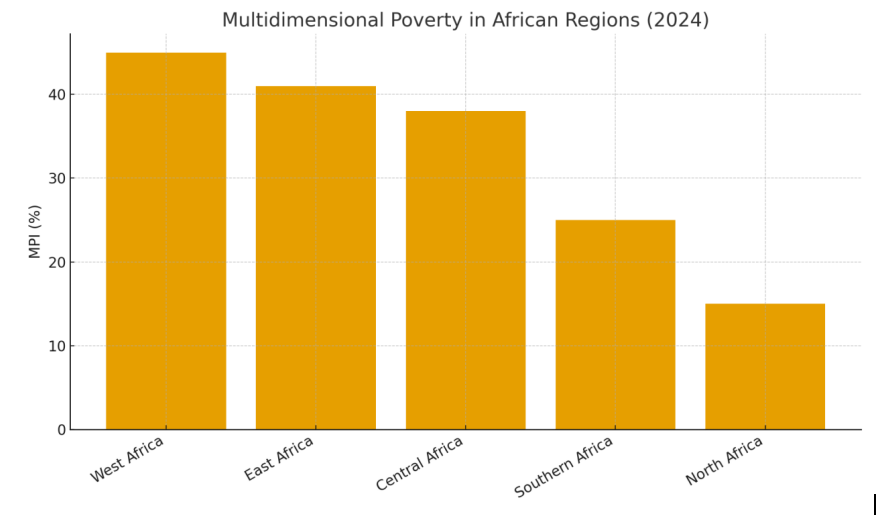
Figure 1: Multidimensional Poverty Index (MPI) by Region, 2024 (Source: UNDP & OPHI, 2024)

Analytical Framework

Multi-dimensional poverty captures deprivations across multiple indicators simultaneously. The African experience shows that income-based metrics underestimate the extent of vulnerability. The UNDP’s MPI measures deprivation across health, education, and living standards, using indicators such as nutrition, child mortality, school attendance, cooking fuel, sanitation, and assets.

Empirical Trends and Evidence

As of 2024, approximately 40 percent of Africans live in multi-dimensional poverty. The distribution is uneven: West and East Africa record the highest incidence, while Southern and North Africa show relative progress. Rural areas account for over 80 percent of the multi-dimensionally poor.

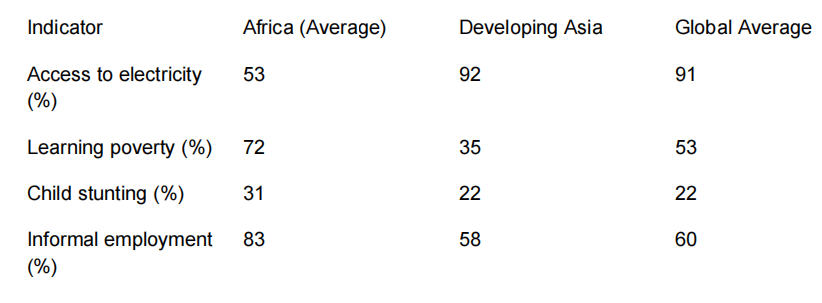
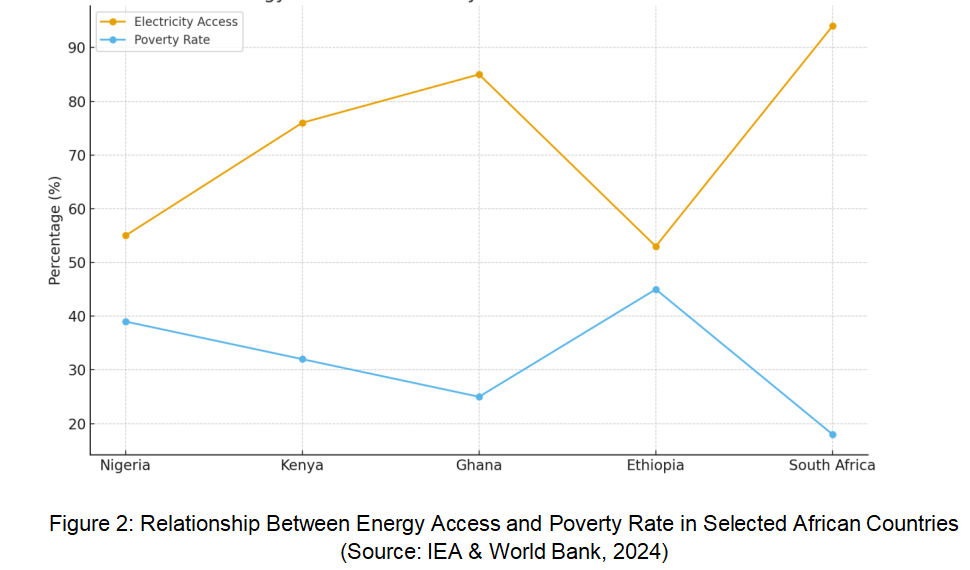
Table 1: Energy Access and Poverty Rate in Selected Countries.

Structural Drivers of Poverty

The persistence of poverty in Africa stems from several interrelated structural challenges: low agricultural productivity, limited energy access, poor human capital outcomes, and weak governance institutions. These factors reinforce one another, creating persistent poverty traps that are difficult to escape without coordinated multi-sectoral intervention.

Policy Gaps and Institutional Weaknesses

Most African poverty strategies are fragmented, short-term, and underfunded. Weak fiscal capacity and donor dependency limit the ability of governments to implement sustained programs. Outdated household data and weak monitoring systems impede policy learning.

Policy Options for Transformation

The following integrated policy approaches can accelerate multi-dimensional poverty reduction:

  1. Reorient growth toward inclusion and productivity—support labor-intensive sectors and rural value chains.
  2. Expand human capital and social protection systems—invest in education quality, universal health coverage, and digital safety nets.
  3. Address energy poverty as a cross-cutting enabler—expand mini-grids, solar solutions, and affordable tariffs.
  4. Strengthen governance and fiscal coherence—improve tax systems, transparency, and inter-ministerial coordination.
  5. Adopt climate-resilient, gender-responsive frameworks for sustainable development.

Implementation Pathway and Financing

Implementation requires coherent institutions, reliable data, and innovative financing. Governments should embed MPI indicators in national development plans and mobilize domestic revenues through tax reforms, while leveraging blended finance and public-private partnerships to expand social investment.

Case Studies of Emerging Success

Examples from across the continent show that progress is achievable with commitment and coherence:

 i. Ethiopia’s Productive Safety Net Programme has supported over 10 million people through public works and asset creation.

ii. Ghana’s LEAP programme improved educational attendance and nutrition outcomes via digital cash transfers.

iii. Kenya’s rural electrification initiative reduced energy poverty and boosted small business growth.

iv. Rwanda’s human capital reforms have raised education and health indicators significantly over the past decade.

Conclusion and Policy Imperatives

Africa’s elevated multidimensional poverty remains both a challenge and an opportunity. The continent must shift from measuring poverty to managing prosperity, through inclusive growth, human development, and energy access. Leadership commitment, data-driven policymaking, and regional coordination under the African Union will be vital for sustainable transformation.

References

UNDP & Oxford Poverty and Human Development Initiative (2024).

Global Multidimensional Poverty Index 2024.

World Bank (2023). Poverty and Shared Prosperity Report.

International Energy Agency (2024). Africa Energy Outlook.

UNICEF (2024). State of the World’s Children Report.

African Development Bank (2023). African Economic Outlook.

Categories
Policy Briefs Featured

Education and National Development: Meeting Nigeria’s Challenge in the 21st Century.

5th Arthur Mbanefo Annual Lecture

I. INTRODUCTION: THE FUNCTIONS OF EDUCATION

“What is the purpose of education?”, Eleanor Roosevelt asked in an essay she wrote in 1930, three years before she became the First Lady of the United States.

Purpose must be at the heart of education and education systems. That is the only way education can go beyond literacy – important as that is – to develop and transform societies.

The education sector serves as a critical provider of human capital, equipping individuals with the requisite skills and enhancing their intellectual acumen to make meaningful contributions to their communities and nation. Good education works to develop not only the learner’s understanding of established knowledge but also sharpens the learner’s mind and enhances their capacity for thinking, creativity, and innovation so they can become active creators of new knowledge.

Education, however, does not only develop people intellectually; it also plays a vital role in the development of the social dimensions of the person and the citizenry. Well-educated individuals are not only confident to lead fulfilling personal lives but also actively engage in problem-solving within their societal contexts, thereby elevating overall societal welfare and fostering social cohesion. They are not equipped only with intellectual capacity for thinking and knowing, but also with a deepening sense of character, community, and citizenry. Education plays an active role in the socioeconomic development of a nation by actively contributing to educating its people about necessary character, roles, and obligations of citizenship. Education fosters social cohesion and the development of a collective identity necessary for a visionary future.

I therefore agree with experts who have identified five key purposes of education. These are:

  1. Education for Economic Development. This is the most believed purpose of education. This perspective is rooted in the human capital theory – that the more schooled and educationally qualified we are, the higher our incomes, wages, and our productivity will be.
  1. Education for Building National Identity and Good Citizenship. Education is an important means that countries use to construct nationhood, a shared sense of unity and purpose for the citizens of the state, beyond physical statehood. It can instill in citizens not just a sense of their entitlements, but also of their responsibilities and obligations as good citizens. Education is a powerful tool to construct and inculcate worldviews – a personal and collective sense of identity, ambition, the values that underpin society and its ambitions for each citizen and collectively, and a nation’s sense of destiny. Without a clear worldview, no nation can rise. We have the examples of the United States and Pax Americana, the British Empire, the Rise of China, and Asia more broadly, the State of Israel and its accomplishments, etc.
  1. Education as Liberation. This perspective on the purpose of education sees that purpose as that of confronting various kinds of structural oppression and setting people free. Examples include the transatlantic slave trade that lasted for nearly four centuries, colonialism, contemporary racism, gender inequity, and so on. This is the sense in which Martin Luther King defined the purpose of education in his essay in 1947 titled “The Purpose of Education”. The American civil rights leader argued that the purpose of education had to be one of social and political struggle alongside other objectives. Education provided the basis for our struggle for freedom from colonial rule a century ago. Today, although Nigeria became free from colonial rule in 1960, Nigerians are still suppressed and oppressed by maladies such as corruption, tribalism, mediocrity in governance, and the worship of wealth for its own sake, no matter how acquired. In this understanding of the purpose of education, we need the re-education of present and future generations to set our citizens free.
  1. Education for Well-being. Education advances our social, emotional, physical, mental, and spiritual well-being. This purpose has to do with young people acquiring the knowledge, attitudes and skills that enable them to create positive mental and emotional health for themselves and balanced relationships with others.
  1. Education for cultural sustenance. Here, education should serve the purpose not just of discarding all aspects of our culture and becoming ever more “westernized”, but in fact hold on to the objectively positive aspects of our indigenous cultures. In this context, education should validate our identities and project it as part of our worldviews.

II. UNDERSTANDING AND ADDRESSING THE CHALLENGES OF NIGERIAN EDUCATION.

Nigeria boasts of a vibrant youth population, with over 60% of its people under the age of 35. This demographic dividend presents a reservoir of human capital ripe for harnessing the nation’s socioeconomic advancement. Human capital, as defined by the World Bank, encompasses the knowledge, skills, and health individuals accrue over their lifetimes, empowering them to fulfill their potential as valuable contributors to society. Yet, the discourse on human capital extends beyond the mere presence of people to encompass their productivity and capacities to generate socioeconomic outputs.

Central to this narrative is the pivotal role of the education sector. Education emerges as a vital conduit for nurturing human capital. Charged with the task of imparting essential skills and honing intellectual acumen, the education sector empowers individuals to make meaningful contributions to their communities and country. Awell-educated populace not only enhances personal fulfillment but also addresses local challenges, elevates societal well-being, and fosters social cohesion.

However, the current Nigerian education landscape grapples with myriad challenges, undermining the nation’s human capital potential. As of 2020, Nigeria’s Human Capital Index, as assessed by the World Bank, stood at 0.36, positioning it 168th out of 173 countries globally—a marginal improvement from 0.34 in 2018, where it ranked 152nd out of 157 nations surveyed. This sluggish growth underscores the persistent obstacles hindering the effective education of Nigeria’s populace. For Nigeria to play a significant role on the global stage in the years ahead, it must effectively develop and deploy its human capital to propel national advancement. Given its central role as the primary purveyor of human capital development, the education sector assumes heightened significance in Nigeria’s developmental agenda.

Understanding the intricacies of Nigeria’s educational challenges is vital for devising effective solutions. The education sector comprises numerous interconnected elements, requiring a systematic approach to drive substantial reform. These challenges can be categorized into several areas. One such category encompasses obstacles hindering access to quality education for the Nigerian populace. These hurdles include the escalating number of out-of-school children, low rates of educational completion, limited transitions between educational levels, adult illiteracy, and the provision of education during emergencies.

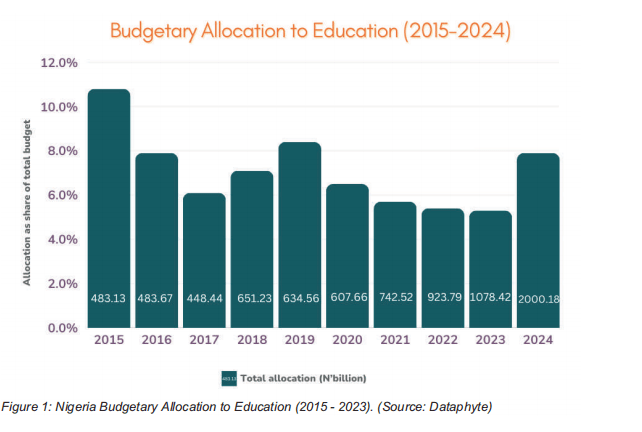
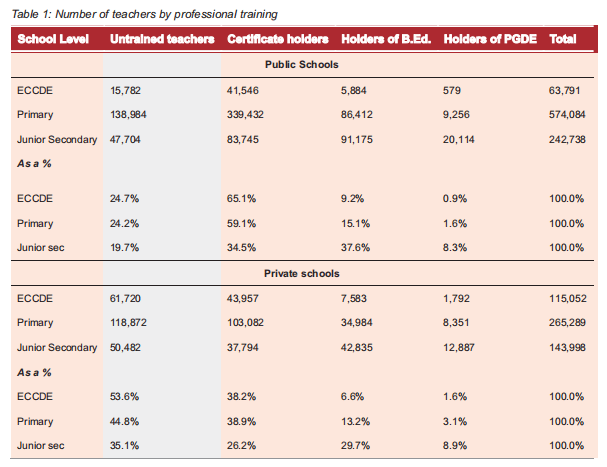
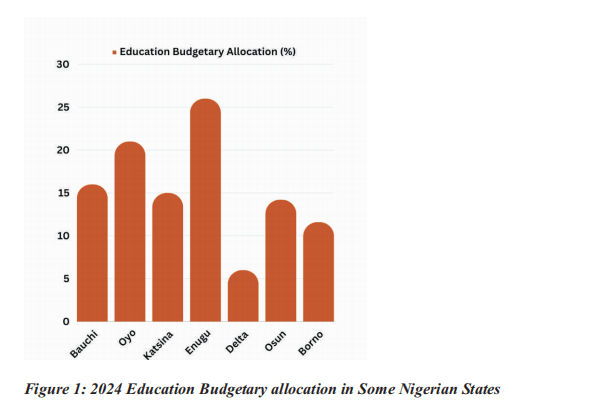
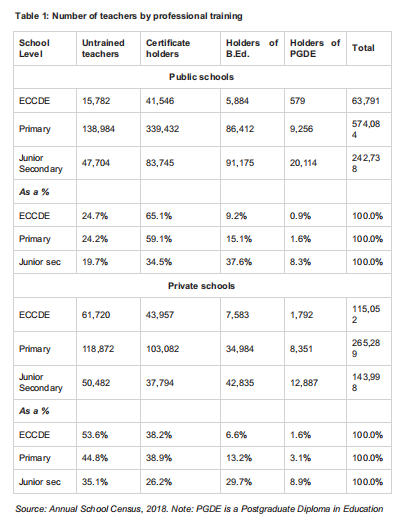
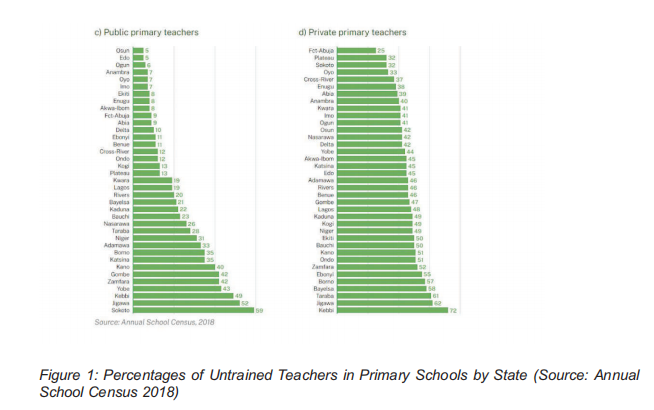
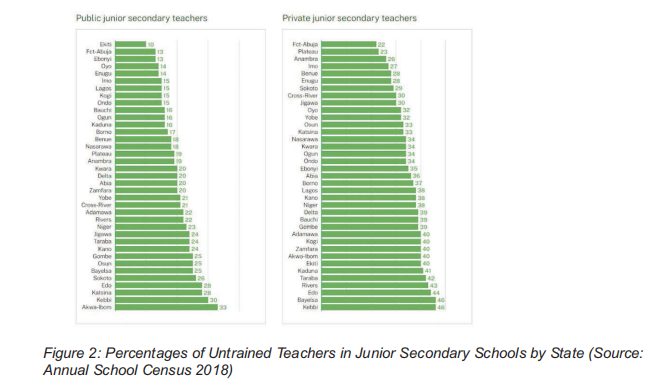
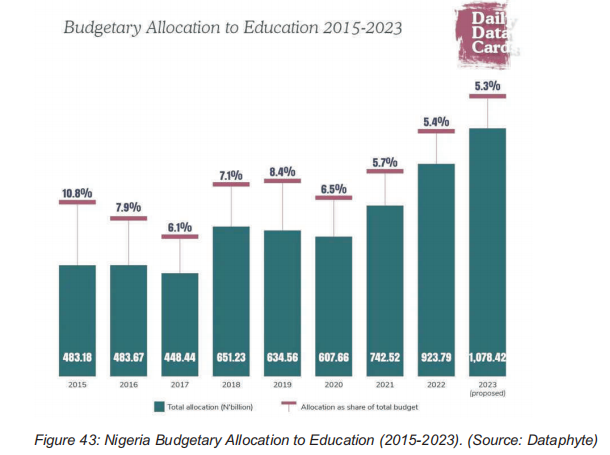
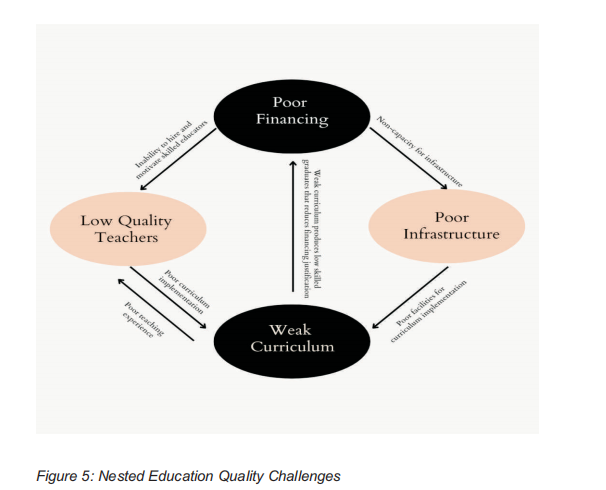
Another set of challenges pertains to the erosion of education quality, resulting in insufficient capacity-building within the existing educational framework. Among these challenges is inadequate financing. Despite UNESCO’s recommendation that developing nations allocate 10-15% of their budgets to the education sector, Nigeria’s education budget allocation is a low 5.3% in 2023 (Figure 1). Additionally, both the World Bank and UNESCO have disclosed that a minimum of 20% of teachers in public basic education institutions in Nigeria lack the necessary qualifications. This percentage nearly doubles in private schools (Table 1). Furthermore, the quality of Nigeria’s education system suffers from deficient educational infrastructure.

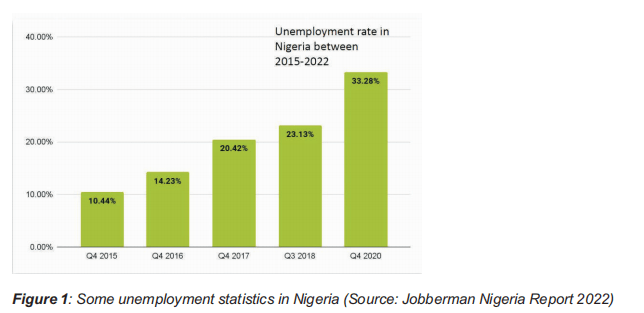
Another significant category of challenges revolves around the human capital implications stemming from inadequate access to and quality of education. These challenges include the disconnect between academia and industry, diminishing socio-emotional attachment to education among young individuals, rising unemployment rates, and the issue of unemployability. These challenges contribute to a myriad of other interconnected problems within the education system.

Addressing the challenges within the Nigerian education system requires a multifaceted approach. Acritical first step, however, is recognizing the lack of clear objectives within the system. Establishing these objectives is vital to driving progress and development. The reform movement must be grounded in precise objectives that can guide efforts toward meaningful change. It’s essential to determine the necessary reforms and the desired outcomes of an improved education system. Given Nigeria’s context, needs, and trajectory, three fundamental objectives are paramount for driving development and should serve as the cornerstone of education reform efforts. These objectives are:

  • Literacy

Nigerian education reforms must emphasize both foundational and adult literacy. Several challenges have attacked foundational literacy. For instance, UNESCO has estimated that there are approximately 20 million out-of-school children aged 6-18 in Nigeria, which is a significant increase from the 13.7 million reported by the World Bank in 2013. This means that one out of every 12 out-of-school children worldwide is Nigerian. In 2019, the gross enrollment rate for primary school children at the required age was 68%, while it was 54.4% for secondary school children.


However, these figures do not fully capture the disparities in educational access across different regions, as the net primary school attendance rate drops to 53% in Northern Nigeria, according to UNICEF. The situation is particularly dire for girls, with more than half of girls in the Northeast and Northwest regions of Nigeria not attending school. Some states in these regions have female primary net attendance rates as low as 47.3%. The challenges contributing to the Out-of-School Children (OOSC) dilemma stem from both overarching and region-specific factors. Generally, barriers to children’s education include poverty and insufficient educational infrastructure.

When viewed through a geopolitical lens, these obstacles vary in nature and intensity across different regions. In the Northern areas, socio-cultural complexities exacerbate the situation, with insurgency emerging as a prominent concern. There were approximately 25 terrorist attacks targeting schools in the North in 2021, resulting in the abduction of 1,440 children and the tragic loss of at least 16 lives. In March 2021, around 618 schools in Kano, Niger, Katsina, Sokoto, Zamfara, and Yobe states were forced to close due to fears of attacks and kidnappings of students and staff. Additionally, cultural perceptions associating schooling with Western influences, negative attitudes towards female education, and religious sentiments further compound the issue.

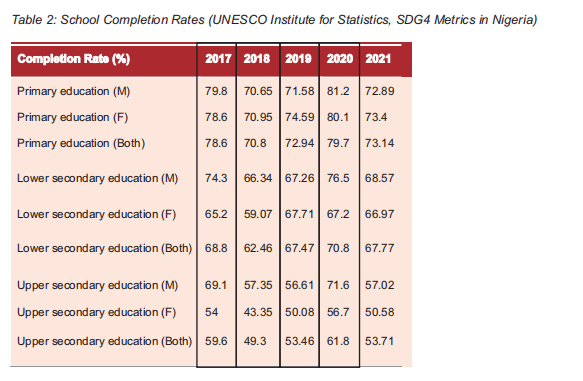
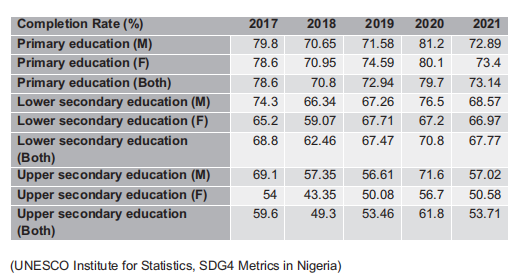
Low Literacy levels are also influenced by school completion rates. UBEC’s 2018 Education Profile Indicators revealed low completion rates for primary, junior secondary and senior secondary education in Nigeria. Disparities existed across different geopolitical zones, with the North Central region having a low primary school completion rate of 63.84%. UNESCO’s data for 2018 (Table 2) showed primary school completion at 70.80%, junior secondary at 62.46%, and senior secondary at 49.30%, all lower than 2010 figures. By 2021, slight improvements were seen with primary school completion at 73.14%, junior secondary at 67.77%, and senior secondary at 53.71%, though a reversal in progress was noted due to the COVID-19 pandemic.

Gender disparities were evident, with a widening gap between male and female students as they transitioned from primary to secondary school, emphasizing the need for targeted interventions to ensure equal access to education. The accessibility of education becomes increasingly challenging as children and youth progress through the various levels of education. This trend is evidenced by a noticeable decline in attendance rates, dropping from 68% in primary school to 54% in secondary school, and further plummeting to approximately 12% in tertiary education.

Tertiary education is the least attainable form of education in Nigeria, primarily due to a range of factors. Among these factors, the high cost of tertiary education stands out as a significant barrier. Annual tuition fees at Nigerian universities typically range from $200 to $5000, a stark contrast to the socioeconomic conditions of the country, where more than 33% of the population lives on less than $2 per day.

The challenges of illiteracy in Nigeria are beyond the foundational levels. Adult illiteracy persists in Nigeria despite ongoing efforts to improve literacy rates. According to UNESCO, Nigeria’s overall literacy rate was approximately 62% in 2018, indicating a substantial portion of the adult population lacks basic reading and writing skills. Illiteracy rates across the country exhibit regional disparities with the rates generally higher in the northern states when compared to the southern regions. For example, in some northern states like Katsina and Borno, the adult literacy rate is below 30%, while in the southern states like Lagos and Ogun, it exceeds 80%.

Moreover, gender inequality exacerbates the problem, with women generally experiencing lower literacy rates than men, particularly in rural areas where traditional gender roles may limit girls’ access to education. According to UNICEF, in some northern states like Kano and Sokoto, the female literacy rate can be as low as 14%, compared to over 60% for males. Rural communities also bear the brunt of illiteracy, as limited infrastructure and fewer educational opportunities hinder literacy development. Consequently, illiteracy tends to be more prevalent in rural areas than in urban centers.

The economic implications of adult illiteracy are significant, as it restricts individuals’ access to higher-paying jobs and hampers their ability to participate fully in the workforce, perpetuating the cycle of poverty. According to the World Bank, each additional year of education for an individual can increase their income by up to 10%. Furthermore, illiteracy impacts health outcomes and overall development, as individuals with low literacy levels struggle to understand health information and engage in civic activities. Despite government efforts to address adult illiteracy through initiatives such as adult education programs and literacy campaigns, challenges such as limited resources, infrastructure deficits, and socio-cultural barriers persist. It becomes imperative, therefore, that literacy, both at the foundational and adult levels, be a core objective of the nation’s education reformation.

  • National Ethos and Values:

The national ethos of a nation encapsulates its core values, beliefs, and ideals, shaping its collective identity and guiding its actions on both individual and societal levels. The national ethos of a country provides both sociological and ideological definitions to that country and stands it out in the comity of nations. It serves as the compass, influencing policies, behaviors, and interactions within the nation and between it and other countries. It also serves as the ideal vision from which her citizens and communities can build their personal and communal visions. Essentially, the national ethos encapsulates the core principles that characterize the nation’s character and aspirations. For instance, the national ethos of the United States is rooted in the ideologies of liberty, equality, democracy, and opportunity that encompass the ideals of individual rights, freedom of speech, religious tolerance, and the pursuit of happiness towards the goals of diversity, innovation, and resilience.

Chapter 2 Section 23 of the Nigerian Constitution describes the national ethics of the nation as Discipline, Integrity, Dignity of Labor, Social, Justice, Religious Tolerance, Self-reliance and Patriotism. Other national values spread across several sources, including the constitution and official government statements include cultural diversity, respect for the rule of law, democracy, patriotism, faith and spirituality among others.

Cultivating and disseminating a thorough understanding of the national ethos of the country should be a major objective of the Nigerian education system. Education should play a role in the acculturation of citizens towards the collective identity of the nation. Thus, there is a need to align the education systems towards the promotion of the national ethos.

  • Skills

The education system of Nigeria must put skill development right at its center. Education must go beyond rote memorization of facts to helping learners acquire various forms of skills that make them form a formidable human capital for the nation. Educated citizens must be skilled to be able to create individual livelihoods, community wealth, and national value chains and thus effectively contribute to the economic transformation and global competitiveness of the nation, especially considering the 4th Industrial Revolution. There are at least 5 kinds of skills that are crucial for education to help develop among the nation’s educated citizens:

  1. Technological Skills: In the 4IR, technology plays a central role in driving economic growth and innovation. Without adequate technological skills, Nigeria may struggle to adopt and leverage emerging technologies such as artificial intelligence, blockchain, and the Internet of Things (IoT) to improve productivity, efficiency, and competitiveness across various industries. This lack of technological proficiency can hinder the development of advanced manufacturing, digital services, and other high-value sectors critical for economic transformation.
  1. Scientific Skills: Scientific knowledge and research are essential for innovation and the development of new products, processes, and technologies. Without a strong base of scientific skills, Nigeria may face challenges in conducting cutting-edge research, developing indigenous technologies, and addressing complex societal problems. This can limit the country’s ability to create value-added products, attract investment, and compete in knowledge-intensive industries globally.

iii. Vocational Skills: Vocational skills are crucial for meeting the demands of a rapidly evolving labor market and supporting industries such as construction, manufacturing, and services. Without a skilled workforce in areas such as plumbing, welding, electrical work, and automotive repair, Nigeria may struggle to meet infrastructure needs, maintain industrial machinery, and provide essential services. This can impede economic development and hinder efforts to build resilient and sustainable communities.

iv. Entrepreneurial Skills: Entrepreneurship is a driving force behind economic growth, job creation, and innovation. Without a culture of entrepreneurship and the necessary skills to start and grow businesses, Nigeria may struggle to unleash the full potential of its human capital and natural resources. Lack of entrepreneurial skills can inhibit the creation of new ventures, the scaling of existing enterprises, and the development of vibrant ecosystems that foster innovation and collaboration. A focus on developing vocational skills, when combined with entrepreneurial skills and efficient access to capital, will play an important role in boosting employment in Nigeria, as self-employment is one of the most potent methods of reducing unemployment.

v. Interpersonal/Soft Skills: These encompass a range of personal attributes, attitudes, and abilities that facilitate effective interactions with others, adept navigation of social situations, and success across various life and work domains. Unlike job-specific technical skills, soft skills are transferable and relevant across different roles and environments. They include skills such as communication, problem-solving, adaptability, leadership, time management, and emotional intelligence. These capabilities are vital for fostering relationships, collaborating effectively, managing conflicts, and attaining both personal and professional achievements. Soft skills complement technical proficiency and are highly prized by employers in today’s ever evolving and interconnected world. Without appropriate soft skills, educated Nigerians might struggle to sustain their jobs and/or ventures, adapt to changing global workforce dynamics, and innovate for the long haul.

Nigerian Tertiary Education particularly needs to foster integration between academia and the industry. While academia is traditionally expected to serve as a supplier of human capital and a catalyst for research-based innovation in industries, this synergy has not been fully realized within the Nigerian tertiary education system. Students in higher education often have limited exposure to the professional world, and the curriculum tends to prioritize academic theory over the development of practical skills required in the modern world of work. It is therefore pertinent that skill development becomes a core objective of education for Nigeria to position itself as a competitive player in the global economy and achieve sustainable economic transformation. Investing in education, training, research and development, and supportive policies can help develop a skilled workforce equipped to drive innovation, create value, and thrive in the 4IR.

  II. IS NIGERIA’S CURRENT EDUCATION POLICY FIT FOR PURPOSE?

The impetus for a national education policy arose from the 1969 National Curriculum Conference, which convened a diverse group of Nigerians. This gathering was prompted by widespread dissatisfaction with the existing education system, which had become disconnected from national needs, aspirations, and goals.

The conference, occurring amidst the Civil War, served as a pivotal moment for the development of Nigeria’s indigenous education system and continues to underpin the nation’s educational philosophy. Beyond intentionally tailoring an educational framework to align with the nation’s cultural context and practical requirements, a notable aspect of this conference was its inclusivity, drawing participants from diverse sectors of Nigerian society beyond academia and government.

Following the National Curriculum Conference, a seminar was held involving representatives from various interest groups across Nigeria, including voluntary agencies and external bodies. The seminar deliberated on the essential components of a national education policy suitable for an independent and sovereign Nigeria. The result was a draft document that, after receiving input from states and other interest groups, culminated in the publication of the National Policy on Education in 1977. Subsequent editions followed in 1981 and 1993. The fourth edition, released in 2004, was prompted by policy innovations and changes, as well as the need to update the previous edition from 1998. The subsequent editions, 2007 and 2013, reflecting the evolving landscape of social change and educational demands, incorporated recent developments such as:

  • Rescinding the suspension order on Open and Distance Learning programs by the Government.
  • Strengthening and expanding the National Mathematics Centre (NMC).
  • Establishment of the Teachers Registration Council (TRC).
  • Integration of Information and Communication Technology (ICT) into the school system.
  • Inclusion of French Language in the primary and secondary school curricula as a second official language.

  • Specification of the minimum number of subjects required for candidates.

  • Incorporating basic education into the school program to ensure equal opportunity and implementation of Universal Basic Education (UBE).

  • Enhancing the science, technical and vocational education scheme to optimize national educational performance.

  • Updating the policy to reflect current best practices in education, among other changes.

Nigeria’s education policy has evolved over the years, aiming to address various challenges in the education sector, such as access, quality, and relevance. In recent years, Nigeria’s education policy has been undergoing reforms to improve the quality of education and make it more relevant to the needs of the society and the economy. Some key aspects of the current education policy include:

      i.Universal Basic Education (UBE) Policy: Implemented to ensure that every Nigerian child has access to free and compulsory basic education. This policy covers the first nine years of formal education, comprising six years of primary education and three years of junior secondary education.

        ii. Tertiary Education Policy: Nigeria has various tertiary education institutions, including universities, polytechnics, and colleges of education. The policy aims to expand access to tertiary education while also ensuring quality and relevance. Efforts have been made to improve infrastructure, curriculum, and faculty quality in these institutions.

        iii. Technical and Vocational Education and Training (TVET): Recognizing the importance of skills development for economic growth and youth empowerment, Nigeria has been placing more emphasis on TVET. Efforts have been made to improve the quality and relevance of vocational education to align with industry needs.

        iv.Curriculum Reforms: There have been ongoing efforts to review and update the national curriculum to make it more responsive to the needs of the society and economy. This includes integrating technology, entrepreneurship, and critical thinking skills into the curriculum.

         v.Teacher Training and Capacity Building: Improving the quality of teachers is crucial for enhancing the overall quality of education. The government has been investing in teacher training and professional development programs to equip educators with the necessary skills and knowledge.

Despite these efforts, Nigeria’s education system still faces many significant challenges, including inadequate funding, infrastructure deficits, teacher shortages, and issues of equity and access, particularly in rural areas. Additionally, there are concerns about the quality and relevance of the curriculum and the effectiveness of implementation. So, it continues to beg the question if the current national policy on education is truly fit for its purpose of shaping the nation’s education system as the vital national human capital supplier in the 21st century.

A full 55 years later, the Nigerian education system still largely runs on the 1969 vision. The National Policy on Education, even with all its revision, still imbibes a view of education that doesn’t reflect much of the globalization trends of the 21st-century world. Its most current version was published in 2013, i.e. 11 years ago – a testament to the fact that much of our current education vision is playing catch up with rapidly changing global dynamics.

In addition, the National Education Policy suffers from implementation challenges. Innovative policy reforms are sometimes crippled at the implementation stages due to factors such as lack of adequate human capacity, inadequate funding, and corruption. At other times, implementation of policies is sometimes slowed down or completely side-stepped because of weak political will and vested interests within the community of stakeholders responsible for implementation. Despite the creditable objectives and structure of education in Nigeria, all indications point to the fact that the Nigerian system of education failures is on the yearly increase which can be effectively attributed to problems of policy implementation.

IV.NIGERIA EDUCATION POLICY AND GLOBAL COMPETITIVENESS: LESSONS FROM OTHER COUNTRIES

The socioeconomic strength of any country is directly correlated to the strength of its education system. The Organization for Economic Cooperation and Development (OECD) in its Program for International Student Assessment (PISA) which assesses 15-year-olds’ abilities in reading, mathematics, and science, found a clear correlation between the academic achievement and economic outcomes of a country. Generally, developed countries with strong education systems demonstrate some common key characteristics, including:

                  i. Implementation of rigorous standards and cohesive curricula designed to prepare students for a competitive global economy. Teaching and learning methodologies prioritize critical thinking, interdisciplinary connections, and fostering innovation.

                  ii. A commitment to both equity and excellence in education. Highly ranked nations ensure that all students, regardless of socio-economic background, have access to high-quality education.

                 iii.Rigorous recruitment and training processes for teachers and school leaders. Only individuals with  exceptional academic achievements are selected to join the education profession, and continuous professional development opportunities are provided to maintain a focus on shared educational objectives. Compensation and career advancement structures are clearly defined.

                 iv.A strong emphasis on mathematics and science education, starting from the early stages of primary schooling and progressing throughout the educational journey.

                v. A dedication to extended learning time and academic effort. Asian students, for example, invest more time in their education compared to their American counterparts, leading to a deeper academic foundation.

               vi.Astrong commitment to adequate financing of education.


High-Performing Education Systems: Case Studies of Israel and South Korea

In 2012, Israel ranked second among Organization for Economic Co-operation and Development (OECD) countries (tied with Japan and after Canada) for the percentage of 25 to 64-year-olds that have attained tertiary education with 46 percent compared with the OECD average of 32 percent. In addition, nearly twice as many Israelis aged 55–64 held a higher education degree compared to other OECD countries, with 47 percent holding an academic degree compared with the OECD average of 25%. It ranks fifth among OECD countries for the total expenditure on educational institutions as a percentage of GDP.

In 2011, the country spent 7.3% of its GDP on all levels of education, comparatively more than the Organization for Economic Cooperation and Development average of 6.3%. As a result, Israel has fostered an education system that helped transform the country and rapidly grow its economy over the past 70 years. In 2019, OECD countries spent on average 4.9% of their gross domestic product (GDP) on primary to tertiary educational institutions. In Israel, the corresponding share was 6.2%. Between 2008 and 2019, funding for educational institutions from all sources grew by 74% in Israel. Over the same period, the increase in GDP was lower with 52%. Consequently, expenditure on educational institutions as a share of GDP grew by 0.8 percentage points over the same time.

South Korea is another top-performing OECD country in reading, literacy, mathematics, and sciences, with the average student scoring about 519, compared with the OECD average of 493, which ranks Korean education at ninth place in the world. The country has one of the world’s highest-educated labor forces among OECD countries and is well known for its high standard of education, resulting in the nation being consistently ranked amongst the top for global education.

The main driving force behind Korea’s development is the government’s investment in human resources. Consequently, Korea can provide the necessary skilled workforce at the right time through vocational education and training and is now preparing for the future by tackling issues

posed by the 4th industrial revolution. The Korean government has launched and implemented two major education policies: The Free Semester Program (FSP) and the SMART Initiative. Through such efforts, Korea aims to meet changing industrial demands and foster a creative economy. The Free Semester Program (FSP) was implemented to address the identified shortcomings in its education system, including academic stress, teacher-centric teaching/learning, learning confined to textbook and class, test-based assessment, and teacher-dominant education manpower. First announced in 2013, FSP aimed at developing competencies for the 4th industrial revolution, such as creativity, problem-solving skills, higher-order thinking skills, and social-emotional skills, with four objectives by offering students a chance to find their dreams and talent and continuously reflect upon and develop themselves through experiences of exploring and designing their aptitude and future. Diverting from a competition-centered education, FSP enables self-leading creative learning and the development of creativity, personality, and social skills through a shift towards student-centered teaching and learning. Rather than traditional lecture-based classes, students are engaged in solving complex problems through project-based learning and debates. FSP was initiated in 43 schools and continually expanded to all 3204 middle schools (100% of all public middle schools) as its overall positive impact was recognized.

Korea also launched its Self-directed, Motivated, Adaptive, Resource-enriched, and Technology-embedded (SMART) Education initiative in 2011 to customize education systems and bridge the gap between these new and innovative fields and the education sector in a way that fosters learner capacities for the Fourth Industrial Revolution. The key goal of implementing the SMART Education initiative was to digitize educational content by 2015, reflecting modern changes of the 21st century and to utilize ICTas a primary medium of learning.

Key Lessons for Nigeria

Nigeria’s 21st-century education policy should reflect a commitment to providing equitable, inclusive, and high-quality education that empowers individuals, strengthens communities, and drives national development. Taking lessons from countries with strong education systems, the nation’s education policy should prioritize several key areas, including:

        i.Digital Literacy: Incorporating technology into teaching and learning processes to enhance engagement, access to information, and innovation to equip students with digital skills essential for the modern workforce.

        ii.Quality of Education: Ensuring that the curriculum is up-to-date, relevant, and of high quality to meet international standards and equips students with the knowledge and skills needed to succeed in a globalized economy.

        iii. Access to Education: Addressing barriers to education such as poverty, gender inequality, and geographical disparities to ensure equal access to quality education for all children.

        iv.Skills Development: Focusing on developing critical thinking, problem-solving, creativity, and collaboration skills to prepare students for the challenges of the future workplace.

        v.Teacher Training: Providing continuous professional development and support for teachers to enhance their skills, motivation, and well-being in delivering

effective and engaging lessons using modern teaching methods and technologies.

              vi.Partnerships and Collaboration: Collaborating with various stakeholders, including government agencies, private sector organizations, civil society, and international partners, to leverage resources, expertise, and best practices in education delivery and improvement.

               vii. STEM Education: Promoting Science, Technology, Engineering, and Mathematics (STEM) education to cultivate a workforce capable of driving innovation and technological advancement.

               viii. Entrepreneurship Education: Introducing entrepreneurship education to foster an entrepreneurial mindset among students and empower them to create jobs and contribute to economic growth.

               ix. Cultural Relevance: Acknowledging the importance of preserving and promoting Nigeria’s rich cultural heritage within the education system, fostering a sense of identity, pride, and belonging among students.

               x. Infrastructure Development: Investing in infrastructure such as schools, libraries, and laboratories to create conducive learning environments for students and teachers.

effective and engaging lessons using modern teaching methods and technologies.

              vi.Partnerships and Collaboration: Collaborating with various stakeholders, including government agencies, private sector organizations, civil society, and international partners, to leverage resources, expertise, and best practices in education delivery and improvement.

               vii. STEM Education: Promoting Science, Technology, Engineering, and Mathematics (STEM) education to cultivate a workforce capable of driving innovation and technological advancement.

               viii. Entrepreneurship Education: Introducing entrepreneurship education to foster an entrepreneurial mindset among students and empower them to create jobs and contribute to economic growth.

               ix. Cultural Relevance: Acknowledging the importance of preserving and promoting Nigeria’s rich cultural heritage within the education system, fostering a sense of identity, pride, and belonging among students.

               x. Infrastructure Development: Investing in infrastructure such as schools, libraries, and laboratories to create conducive learning environments for students and teachers.

  1. Monitoring and Evaluation: Implementing robust monitoring and evaluation mechanisms to assess the effectiveness of education policies, monitor student learning outcomes, measure the effectiveness of education programs, and inform evidence-based decision-making.

          xii. Adaptability and Innovation: Building flexibility and adaptability into the education system to respond to changing needs and circumstances, fostering a culture of innovation and continuous improvement.


V.RECOMMENDATIONS: REFORM OF EDUCATION POLICY AND PRACTICE IN NIGERIA

  • Recommended Philosophical Basis of Nigerian Education

The following philosophical foundations can provide guiding principles for shaping educational policies and practices in Nigeria to reform Nigerian education into the human capital generator it needs to be while reflecting the country’s diverse cultural, social, and historical contexts.

        i. Human-centeredness and Intellectualism: Human-centered education focuses on the holistic development of the individual, emphasizing the development of the learner’s critical thinking, creativity, innovation prowess and all-round personal growth. In Nigeria, human-centered principles can guide educational practices that prioritize the well-being and intellectual empowerment of students, nurturing their full potential as individuals and members of society.

Intellectualism refers to engagement with, and respect for, seemingly abstract ideas and concepts as the essential foundation for progress in all spheres of human activity, including invention and innovation, systems of governance, and the success of national economies.

          ii.Social Reconstructionism: This philosophy views education as a tool for addressing social inequalities and promoting social justice. In Nigeria, social reconstructionist principles will advocate for educational policies and practices that empower marginalized communities, challenge systemic injustices, and promote inclusive development.

         iii. Nationalism and Cultural Identity: Given Nigeria’s diverse cultural landscape, educational philosophy often includes elements of nationalism and cultural identity. This involves promoting a sense of pride in Nigerian heritage, history, and traditions while also fostering unity and solidarity among the country’s diverse ethnic and cultural groups.

         iv.Pragmatism: Pragmatic philosophy emphasizes practical experience, problem-solving, and experiential learning. In Nigerian education, a pragmatic approach can guide curriculum development and teaching methods that prioritize real-world relevance, vocational skills development, and entrepreneurship education

         v.Educational Equity and Inclusion: Grounded in principles of fairness, justice, and equal opportunity, this philosophy emphasizes the importance of addressing disparities based on gender, ethnicity, socio-economic status, and disability. In Nigeria, educational equity and inclusion are essential principles for ensuring that all students have access to quality education and opportunities for success.

  • Repositioning the Teaching Profession – Teacher Training and Teacher Pay

Efforts to reform teaching must focus on two interconnected areas:

Philosophical reorientation of the teaching profession

A philosophical reorientation of the teaching profession is imperative, moving away from the perception of teaching as a less desirable option, as outlined in the Ministerial Strategic Plan for Education (2018-2022). This shift requires a comprehensive reevaluation of the social, economic, and intellectual aspects of the teaching profession. Teaching should be recognized and esteemed as a vital profession responsible for fostering human capital development. Educators should be viewed as problem-solvers, facilitating value creation within the human capital ecosystem, and be trained accordingly. The government must demonstrate a commitment to enhancing the attractiveness of the profession by offering improved and timely remuneration packages, ensuring the provision of essential infrastructure, and more.

Additionally, there must be a societal shift in recognizing teaching as a respected and supported profession that attracts top talent. Finland and South Korea, for example, top the list of developed countries with the best education systems because these countries have a strong culture of education in which education is highly valued and teachers enjoy a high status in society.

Enhancement of teaching efficacy

To enhance teaching effectiveness, it is essential to broaden the opportunities for teacher training. Pre-service teacher training at National Colleges of Education and Institutes of Education within Universities should be revised to align with the evolving demands of the 21st century. Continuous professional development for educators at all levels is vital in a rapidly changing world. The teacher education curriculum must be redesigned to accommodate advancements in subject knowledge and to equip teachers with the ability to continuously enhance their teaching skills. Particularly in Nigeria, where societal challenges impact the quality of education, teachers should be trained as education solution providers, equipped with intellectual curiosity, professional insight, and critical thinking skills to address local educational challenges. Modern teachers should be seen as educational thought leaders with a profound understanding of their role within the economy. Concepts such as strategic thinking, design thinking, and social entrepreneurial leadership should be integrated into both pre-service and in-service teacher training programs. The establishment of Teacher Resource Centers, as proposed by the Revised National Policy on Education (2013), should be expanded to meet existing needs. Emphasizing education research is crucial, as sustainable reforms in the education sector must be informed by ongoing empirical and qualitative insights to evaluate the effectiveness of reform practices.

  • Financial Investment in Education

The education sector urgently requires enhanced financing, accompanied by clear and impartial guidelines for education financing that transcend individual political interests. Over the course of the past four years, Oyo State, for example, has demonstrated a commendable commitment to increasing the allocation of funds towards education. This serves as a noteworthy model that should be emulated by various levels of government to prioritize the advancement of education. It is imperative to address the issue of excessive costs of governance within annual budgets to enable the efficient utilization of limited resources towards essential socioeconomic priorities such as education. Moreover, there is a pressing need to diversify the sources of funding for education beyond government resources by incorporating greater private sector investment. Recent data indicates a notable growth in diaspora remittances and alumni financial contributions to educational institutions, highlighting a promising trend towards increased involvement of the diaspora community and alumni in the financing of education.

One notable example is the takeover of the famous Government College Umuahia, which fell into decay after the 1980s, from the Abia State Government by the school’s alumni, and the reinvention of the school under the non-profit Fisher Educational Development Trust as its new owner. A massive rebuilding and refurbishment of the institution followed, with approximately N3 billion in

funds donated by its Old Boys. The institution, which first had to be closed in order to reposition it, has now been reopened as a modern, 21st century secondary school under private and non-profit ownership. This Guest Lecturer happens to be an Old Boy of this institution and contributed his widow’s mite to the school’s restoration. Several other secondary schools in Nigeria are undertaking similar efforts at revival under alumni initiatives. There is a need and space for the active engagement of alumni, including those in the diaspora, in providing structured and systematic financial support for education initiatives.

Foreign investment in education in Nigeria should be encouraged and strategically pursued. This approach will serve three functions – enhance the pool of human capital needed for broad-based economic productivity, limit the drain on Nigeria’s foreign reserves created by the demands of paying for tertiary education abroad, and reverse the brain drain. An example Nigeria can look at is the EduCity Iskandar in Malaysia, a multi-campus education city with 305 acres of universities, higher education institutions, research and development centers that has Malaysian campuses of foreign universities such as Newcastle University, Maastricht University, and University of Reading. Another example is Rwanda, which hosts a campus of the prestigious Carnegie Mellon University headquartered in Pittsburgh, Pennsylvania in the United States Pittsburgh, Pennsylvania in the United States.

  • Tackling Access to and Quality of Foundational Learning (Lessons from Burundi)

The World Bank blog, 2024 reported that the Government of Burundi made strides in the quality of foundational learning by investing in high-quality instruction in children’s mother tongue, Kirundi, in early grades. There has also been a commitment to building teams of qualified and dedicated teachers and to nurturing community engagement and support. The results of these initiatives are underscored by the ‘Programme d’analyse des systèmes éducatifs de la CONFEMEN’ (PASEC) student assessment, which shows that Burundian children shine in reading and mathematics, particularly in early grades, outperforming their peers in other Sub-Saharan African Francophone countries. The World Bank-funded Burundi Early Grade Learning Project (PAADESCO) has played a pivotal role in maintaining the quality of education by bolstering the primary school curriculum, enhancing teaching, and learning resources, extending school feeding programs, and providing essential school kits. Building on the successes of PAADESCO, the Human Capital Development Project, currently under preparation, aims to further advance reforms of the curriculum. It will concentrate on facilitating a smooth transition from Kirundi to French as the language of instruction, helping ensure uninterrupted learning.

To effectively tackle the issue of the access-quality conundrum within Nigeria’s education system and emphasize the importance of investment in primary and secondary education, the subsequent recommendations can be derived from the model set forth by Burundi, which includes the need for infrastructure improvement, curriculum review and development, teacher recruitment and training, ensuring equity of access, and appropriate community/stakeholder engagement. The nature of education expenditure also matters greatly. Most countries in Sub-Saharan Africa spend 10 times more on university students than on primary school pupils, according to UNESCO. Burundi offers an interesting example. The country brought down its numbers of out of school children from 723,000 in 1999 to 10,000 in 2009, increasing its investment in education from 3.2% to 8.3%. Burundi dedicated a much larger portion of its education budget to primary education than secondary schools and universities. By adopting these recommendations and learning from the experiences of countries like Burundi, Nigeria can make significant strides in addressing the access-quality conundrum in primary and secondary education. Investing in these foundational levels of education is essential for building a skilled workforce, promoting social mobility, and driving sustainable development and prosperity across the nation.

  • Curriculum Reform

Given the rapidly evolving global landscape and the increasing importance of technology, science, entrepreneurship, and teacher training in driving economic growth and innovation, Nigeria must realign its education curriculum, particularly at the tertiary level, to prioritize these areas. By allocating 70% of the curriculum to technology, science, entrepreneurship, and teacher training, Nigeria can better equip its youth with the skills and knowledge needed to compete in the 21st-century economy, foster entrepreneurship, and improve the quality of education across the board. I also recommend that Ethics becomes a compulsory subject in the education curriculum in Nigeria at both primary (in a simplified and elementary form) and secondary school in a more comprehensive form. This will help achieve the educational objective of creating good and responsible citizens.

  • Pedagogy Reform

There is also a need to shift the pedagogical practices of the Nigerian classroom from one that emphasizes rote memorization to more intellectual engagement, creative thinking, and experiential learning. For instance, in tertiary education, it is imperative to foster the connection between academia and industry to improve the socio-economic impact of education. Tertiary students require exposure to real-world challenges that their education is designed to help them address. Edem Ossai (2023) put forth two models to assist students in applying abstract concepts learned in the classroom to practical situations. The first model suggests the establishment of discipline-based incubation spaces. In STEM fields, these spaces can function as Innovation Centers where students use STEM principles to tackle local issues. For non-STEM disciplines like arts, social sciences, and law, these incubation spaces can serve as Thinking Clinics where students engage with real-life case studies that necessitate the application of their knowledge.

The second model recommends the implementation of Experiential Capstone Projects to replace the current theoretical undergraduate thesis model. These projects would require students to develop solutions to community problems, marking the culmination of their academic journey. These models draw on existing practices in higher education and have been successfully implemented by universities in Africa, notably the African Leadership University in Rwanda. This successful implementation showcases the feasibility of such approaches even within the intricate African educational landscape.

Enhancing pedagogy reform in primary and secondary schools involves investing in comprehensive teacher training programs to equip educators with modern pedagogical techniques, subject matter expertise, and effective classroom management skills. Provide ongoing professional development opportunities to keep teachers updated on best practices and innovative teaching methods. It is also imperative to integrate technology into the classroom to enhance teaching and learning experiences and to provide teachers with access to educational resources, interactive multimedia tools, and online platforms for collaborative learning. Instruction strategies should also be catered to student’s learning systems and should accommodate diverse student needs. The classroom environment should encourage active participation, inquiry-based learning, and critical reflection while also fostering student engagement through cooperative learning structures, Socratic questioning techniques, and experiential activities. By implementing these strategies, primary and secondary schools can experience pedagogical reform, improve teaching and learning outcomes, and create a conducive environment for student success and academic excellence.

Finally, by investing in the practices and tools that foster creative thinking and innovation, Nigeria can create a more dynamic and resilient education system that meets the needs of students and the labor market, ultimately driving sustainable growth and prosperity for the nation.

  • Standards and Compliance

Nigerian education policy revitalization should also prioritize building and implementing effective standards and regulatory measures that ensure the compliance of all forms of education institutions to the necessary quality of the educational system. Some of the paramount forms of standards necessary are:

            i.Curriculum Standards: Establishing a framework for curriculum development that emphasizes relevance, flexibility, and alignment with national development goals. There’s a need for a broad-based curriculum that integrates academic, vocational, technical, and entrepreneurial skills.

           ii.Assessment Standards: Developing guidelines to monitor student’s progress through continuous assessment and evaluation and ensure learning outcomes are achieved. It encourages the use of various assessment methods, including formative and summative assessments, to provide a comprehensive picture of student achievement.

            iii. Teacher Certification and Qualification Standards: Setting requirements for teacher education and professional development in ensuring quality teaching. It emphasizes the need for qualified and well-trained teachers and outlines requirements for teacher certification and licensure.

            iv.Accreditation Standards: Accreditation by recognized bodies such as the National Universities Commission (NUC) and the National Board for Technical Education (NBTE) is a means to ensure quality assurance and improvement in educational institutions.

             v.Accessibility and Inclusion Standards: This emphasizes the importance of providing equal access to education for all Nigerian citizens, regardless of gender, ethnicity, religion, or socio-economic status. It calls for measures to promote inclusive education and address barriers to learning, including those faced by marginalized and vulnerable groups.

V.CONCLUSION

Nigeria is urgently in need of educational policy that can enhance its human capital, make it globally competitive, and bolster its standing within the global community. This kind of education must prioritize access and quality by emphasizing literacy, skills, and national values. Our country has suffered a massive, progressive collapse of values over the past several decades. This has happened largely because we have taken our eyes off the ball of education, which is the foundation upon which every society rises or falls. The progressive loss of respect for ideas and education as a value naturally extended to a loss of priority for education as a national priority as the national focus shifted to the effects of Nigeria’s resource curse from the oil boom – easy money and illicit wealth from rent-seeking activities. The domino effect of this decline in values was felt in the death of a drive for access to education and the quality of education. As the private sector became increasingly involved in education through the establishment of both elite and pseudo-elite private schools, Nigeria’s public education system increasingly faced a struggle for survival and relevance.

We have not lacked education policy in Nigeria. Implementation, however, has always been our big weakness. But even the policies we have are out of date and out of place if we seek to transform Nigeria to become a nation, not just a country, to become a global power and not just a “potential” power. We can do it. Just look at how our compatriots thrive in foreign lands where the right philosophies drive education, making it a true national priority in terms of purpose, strategy, and investment.

We must return to education as a national priority, and to education that has a clear objective and purpose. There is no alternative but to reform our public education system and make it world class.

No country in the world has risen with a reliance on private sector educational institutions alone. The reason is obvious: private education is expensive, and only a tiny percentage of citizens can afford it. Education is a fundamental human right. If that right is to be respected, then education must be a national public good – accessible, qualitative, and affordable. This is the path to Nigeria’s rise in the 21st century.

References

Emily Markovich Morris and Ghulan Omar Qargha (2023), “In the Quest to Transform Education, Putting Purpose at the Center is Key”, Brookings Institution Commentary, www.brookings.edu/articles

Ezeyi, V.N., Ene, N.N.S., & Nwosu, R.Y. (2013). National Policy on Education in Nigeria [Article]. In: Historiological Dimensions of Nigerian Education. Equity Ventures in Conjunction with Mega Atlas Projects Limited, pp. 91-150. ISBN 978-978-49195-0-4.

OECD (2022), Education at a Glance 2022: OECD Indicators. OECD Publishing, Paris, https://dx.doi.org/10.1787/69096873-en.

Ossai, Edem (2023, September 20) Redefining the Role of Tertiary Educator in Nigeria [Webinar]. The Education Partnership Webinar Series.

Euiryeong Jeong (2020). Education Reform for the Future: A Case Study of Korea. International Journal of Education and Development using Information and Communication Technology (IJEDICT). Vol. 16, Issue 3 (Special Issue), pp. 66-81

Categories
Policy Briefs Featured

WHAT AFRICA MUST DO ABOUT BRAIN DRAIN

WHAT AFRICA MUST DO ABOUT BRAIN DRAIN

If health is truly wealth, as the popular saying goes, does Africa have any chance of escaping mass poverty and low rankings in the human development index that measures the quality of life of the world’s peoples? This is an existential question for the continent because its health systems are collapsing, worsening the quality of life of millions of Africans who do not have adequate and quality healthcare because the continent’s doctors, nurses, pharmacists, laboratory scientists and other health professionals are fleeing abroad in search of greener pastures. Real development is not just about GDP growth numbers, but more about GDP per capita and human development issues such as the availability of quality healthcare and Universal Health Coverage, education and skills, nutrition, potable water, and life expectancy.

Africa, which has only 3% of the world’s health workforce despite being 18% of the world’s population, has suffered a massive “brain drain” – a one-directional migration of skilled human capital that benefits only the receiving countries – for several decades. The problem has become acute, progressively getting worse as the years have gone by. And it isn’t going away soon. While the brain drain is a challenge for the continent across the board, it is most profound – and its impact heaviest – in the healthcare sector.

Consider: 65% of Egypt’s doctors work abroad. A total of 9,000 Nigerian doctors left Nigeria between 2016 and 2018 to work in the UK, USA and Canada. In Nigeria we call this the “japa” syndrome. Between 1986 and 1995, 61% of the entire graduates of one medical school in Ghana had migrated to other countries for work. A decade ago, an Ethiopian official lamented that there were more Ethiopian doctors in the United States city of Chicago than in Ethiopia.

When we look at Africa’s health workforce, what we see most vividly and immediately is a map that divides Africa and the developed world between the “brain drainers” and the “brain drained”. Fifteen of the world’s fiscally wealthiest countries have 55,000 African doctors working in their health systems – and this does not include nurses and other healthcare professionals. And there is anecdotal evidence that these numbers are a conservative estimate. The top “brain drainers are UK (13,909), USA (12,692), France (10,731), Canada (5,888), Germany (4,535), Ireland (3,056), and Australia (1,999). Conversely, Australia is the country that suffers the least brain drain the world. The top brain drained countries in Africa are, in ranking order, Egypt, Nigeria, South Africa, Algeria, and Sudan.

The health workforce brain drain is caused mainly by a combination of political instability, insecurity, and weak economies, on the one hand, and insufficient investment in public health systems. Inadequate equipment and drugs supplies, health insurance, low worker pay (African healthcare workers earn between $200 and $500 a month on average, while their counterparts in developed countries earn, on the average, 3000% more) all combine to create very difficult working conditions. Progressively increasing healthcare needs in developed countries, partly because of aging populations also drive the brain drain, as the laws of demand and supply kick. In the UK there was a 38% increase in new registrations of foreign doctors in 2002 compared to 1993 – a decade. England needed 25,000 more doctors in 2008 than it did in 1997. The situation is far worse regarding nurses: England needed 250,000 more nurses in 2008 than it did in 1997. More than 75,000 nurses are estimated to have left Nigeria in 2017.

The COVID19 pandemic has massively increased the healthcare needs of developed countries. Recruitment campaigns for health professionals by developed western countries targeting health workers in developing countries, and the absence of effective health insurance to cover healthcare costs, all contribute to a potent, irresistible mix of “incentives” for the brain drain phenomenon. There also is a lack of recognition and appreciation of the healthcare professions. The importance of health workers and the healthcare professions is not explicitly recognized, appreciated, and incentivized in the governance of most African countries. This also includes non-financial aspects of recognition and reward including the value attached to scientific research, the impact and publicity of publications in professional journals etc. This, combined with poor working conditions, creates an urge to leave our countries to work in developed countries where the uniqueness of the medical and healthcare profession is recognized in different and innovative ways.

The brain drain has had disastrous consequences for African countries. There is low doctor to patient ratios because of staff shortages. The World Health Organization recommends a ratio of 1 doctor to 600 people, but in Nigeria the ratio is a paltry 1:9000, while in South Africa it is 1:3198. Doctors in training (interns, Residents) now carry most of the workload burden, resulting in lack of adequate supervision, overwork, and burnout, with dangerous implications for health outcomes. Most African countries have been unable to achieve Universal Health Coverage. Moreover, the brain drain of healthcare professionals in Africa threatens the whole spectrum of development. Health tourism, which leads to economic bleeding of financial resources that would have been spent inside African countries, thus boosting the economy, is another major consequence of the brain drain. And labor strikes by medical personnel, with disruptive and existential implications for lives and public health in general, are a reality of life in countries like Nigeria.

Although reversing the phenomenon of the brain drain will take time even in the best of scenarios, it is such an important threat to the well-being of the citizens of African countries that it ought to be a number one priority of public policy and governance. Unfortunately, this is not the case. Few African countries prioritize healthcare. Without evident political will to reverse the brain drain, especially in the health care sector, the future of most African countries is bleak. A state exists to enable the welfare and prosperity of its citizens, for them to thrive and not to merely exist. Without health, most individuals will not live fulfilled and economically productive lives.

Against this background, the following strategies must be adopted to begin to stem the impact of the healthcare sector brain drain. First, fiscal investments in improving healthcare systems must become an evident political priority. In 2001, member countries of the African Union pledged to allocate and invest 15% of their national budgets on health. Only Eritrea, Mauritius, and Seychelles have met this target. Without such a level of investment, and with such investments allocated and spent efficiently and effectively with monitoring and evaluation of outcomes, healthcare cannot take off in African countries. Private healthcare providers simply cannot fill the gap, as their services are costly for poor populations. Second, we must train multiple times more health professionals. This requires a significant shift in the education policy. We need to shift the curricula of tertiary institutions to prioritize science and technology, in particular medicine and health sciences. Nurses and laboratory technologists are critical in this context. Third, incentive structures need to be created and implemented. These include increased remuneration for public sector healthcare workers, which will also incentivize more people to study medicine and the other medical sciences such as nursing, pharmacy, and so on. There should also be additional incentives for healthcare workers who work in mostly underserved rural areas. Fourth, we must massively increase health insurance coverage, as viable health systems must have a working health insurance policy to subsidize their costs, including compensation for medical workers.

Fifth, African countries need to establish and invest in comprehensive Diaspora return strategies, focused on the healthcare and education sectors. The brain drain crisis cannot be addressed without a direct engagement with brain drained Africans and with an attractive proposition too. IGET proposes a Diaspora Fund that would pay Diaspora returnees 50-75% of the compensation they earn in developed countries, for a fixed period of 5 years. This strategy would appeal to patriotic Africans who wish to return to and work in the continent but cannot get over the realities of their financial needs. These kinds of Africans would accept some “discount” on their compensation abroad when purchasing power parity in African countries is factored in.

The newly established World Health Organization (WHO) and World Bank Pandemic Fund

could be adapted for this purpose. However, with $500 million at this time, it may be too meagre

to meet the diaspora return funding needs of larger countries that have been the greatest victims of the brain drain such as Egypt, Nigeria and South Africa. Nigeria alone would need at least a $500 million Fund for this purpose.

Sixth, investments in skills training for healthcare industry remote work could create a brain gain in which trained and skilled African workers work partly for industries abroad remotely, earning hard currency, in addition to supporting medical care at home. Conversely, “brain drained” medical personnel abroad can deploy the technology of telemedicine to support health systems at home in Africa. Seventh, the productivity base of African economies must be improved so that a general improvement in living, working and professional conditions can help retain a significant portion of health workers. This will require adequate electricity, improved security, and the availability of housing and educational opportunities. Eight, slow down population growth. Population growth is outstripping not just economic growth in many African countries, but also outperforming improvements and advances in health care systems and the capacity of the health workforce.

Finally, African countries need to engage more effectively with the World Health Organization’s Global Code of Practice on the International Recruitment of Health Personnel, which aims to make such recruitments more “ethical” and ensures the oversight or involvement of national health authorities. But most African countries have yet to engage seriously with this framework as part of a holistic strategy to address their brain drain challenge. In the WHO Global Code of Practice 4th National Round of Reporting published in March 2022, only 8 African countries had submitted their national reports on the implementation of this framework in their respective countries.

African countries cannot afford to merely lament the brain drain, with little or no strategy, public policy, or tangible action. That’s simply admiring the problem. The brain drain is admittedly a difficult challenge, one not amenable to a quick fix. This is the case also because migration, whether for political, economic or other reasons, is an intrinsic part of human history. And we have seen no evidence of Francis Fukuyama’s famous phrase, the end of history. But we must begin to mount a serious response to the phenomenon in Africa. Without a viable health workforce, effective healthcare delivery can’t happen. And without healthcare, a basic human need, any talk of development is a pie in the sky.

References

Mark Green, “Africa’s Healthworker Brain Drain”, Wilson Center Blog Post, May 23, 2023, www.wilsoncenter.org/blog-post/africas-healthworker-brain-drain.

Alfred Olufemi, “There Won’t Be Enough People Left: Africa Struggles to Stop Brain Drain of Doctors and Nurses”, The Guardian (UK), August 14, 2023.

World Health Organization Global Code of Practice on the International Recruitment of Health Personnel: Fourth Round of Reporting, June 2, 2022, who.int/news/item/02-06-2-22.

Delanyo Dovlo, The Brain Drain and Retention

Categories
Policy Briefs Featured

Nigerian Education Conundrum: The Leadership Gap

Nigerian Education Conundrum: The Leadership Gap

A comprehensive assessment of the challenges of education in Nigeria has earlier grouped the challenges into 3 major gaps: The Access Gap, The Quality Gap, and The Outcome Gap. The access gap covers the challenges of education that limit people’s access to education, regardless of their age group. A detailed assessment of this was provided in a previous policy brief HERE. The Quality Gap addresses the challenges of education that add up to ensuring that the education access doesn’t live up to its expected ability to equip people for intellectual prowess and socioeconomic contributions. A previous policy brief dive fully into it HERE. The Outcome Gap explicates the challenges that low access to education and low quality of education instigates within the context of national development. A previous policy brief full describes it HERE. Upon closer scrutiny of the state of education in Nigeria, it becomes evident that there is a need to recognize another significant gap within the educational system. This crucial void is best described as the Leadership Gap.

Numerous scholars have endeavoured to define leadership, and a few of these definitions are

outlined below:

“Leadership is the ability to evaluate, and or forecast a long term plan or policy and influence the followers towards the achievement of the said strategy.” Adeoye (2009)

“Leadership is the process of influencing others to understand and agree about what needs to be done and how to do it, and the process of facilitating individual and collective efforts to accomplish shared objectives” (Yukl, 2010)

“Leadership is a set of behaviours used to help people align their collective direction, to execute strategic plans, and to continually renew an organization (McKinsey, 2022)

The leadership gap in Nigeria education comprises all challenges that impedes the ability to strategize and mobilise diverse resources essential in achieving an education system free from the challenges underpinning access, quality, and outcome gaps. This policy brief aims to provide an in-depth understanding of the issues surrounding leadership within the education sector while also offering recommendations to help bridge the existing gaps.

Understanding the Leadership Gap.

The leadership gap manifest 4 interrelated challenges:

  • Lack of cohesive vision for current realities

The 1969 National Curriculum Conference formed the bedrock for the Nigerian’s philosophy of education. The conference, which happened at a time the nation was still reeling from the Civil War, became a launchpad for the indigenous education system in Nigeria. Some key outcomes of the conference includes the birth of the National Policy of Education and the 6-3-3-4 system which later evolved to the 9-3-4 system in 2008. Aside from its intentional decolonization efforts, an excellent feature of this conference was how it brought together Nigerian people from different walks of life to cohesively deliberate on a vision for Nigeria’s education. The conference in its aim to chart a vision for Nigerian education drew participants from all segments of the Nigerian society including academic institutions at all levels, local governments, various ministries, trade unions, publishing houses (Akanbi and Abiolu, 2019). Every part of the Nigerian socio-economic, political, and bipartisan institutions were represented including religious bodies, teachers associations, other professionals (medical, legal, engineering etc.), university teachers and administrators, ministry officials, youth clubs, businessmen, representatives of the then government of the 12 States of Nigeria and more (Dan Asabe, 2009). The government of the time thought it was necessary for the vision of education that was to emanate from the conference to be cohesively built by Nigerians so it could be owned by all. Adaralegbe (1972) succinctly described it as follows:

“It was not a conference for educationists alone; it was necessary to hear the views of the masses of the people who are not directly engaged in teaching or other educational activities, for they surely have a say in any decisions to be taken about the structure and content of Nigerian education.”

55 years later, Nigerian education system still largely runs on the 1969 vision. The National Policy on Education, although revised 5 times since 1969, still imbibes a view of education that doesn’t reflect much of the globalization trends of the 21st century world. Its most current version was published in 2013 i.e. 11 years ago, a testament to the fact that much of our current education vision is playing catch up with rapidly changing global dynamics.

Unlike the 1969 curriculum conference which made space for the input of the general Nigerian populace, the work of formulation of education policies in Nigeria in recent decades have been restricted mostly to policymakers with little involvement of the Nigerian public. Frequently, educators, who are intended to play a role in implementing education policies, often find themselves also excluded or overlooked during the formulation stages of these policies. The general populace, and sometimes teachers, are usually only informed of the policy after it has been decided by the policy makers.

Even concerning the dissemination of information, there are limited opportunities for direct public input before they are set on the trajectory toward implementation. A policy that has no public input is doomed to lack their buy-in also. It is no wonder there is little cohesiveness in the implementation of many would-have-been innovative education policies in Nigeria.

Current strategies to address this challenge involves work aimed at getting the public involved in charting a modern vision for Nigeria’s education in a cohesive, public-facing manner. They include works being championed by local organizations like The Policy Shapers, whose mission is to lead public-facing policy development processes by promoting policy ideation, dialogue, and advocacy that are led by young people in Nigeria. However, there remains the need for strong leadership that can rally the interest, buy-in, and commitment of the diversity of the Nigerian populace towards dreaming, strategizing, and executing a long-term vision of the kind of education necessary for the Nigerian to thrive in a modern world.

  • The Intertwining of Education and Politics

Education, originally conceived as a public and apolitical good, has become entangled with the political landscape in Nigeria. The education system is designed in a way that makes the nation’s political situation central to its realities i.e., the outcome of education at a particular moment is closely intertwined with the ideologies, interests, and views of the political power of the day. Education is thus left at the mercies of becoming a power tool for the political class to enhance their interest and control the nation’s path. Different ruling classes gives different level of priority to education with evidence seen for example in a striking different educational budgetary allocation percentage across different tiers of government and different political affiliations. The implication is frequently evident in various scenarios, such as the discontinuation of innovative projects once they cease to align with the interests of the prevailing political class. This occurs, for instance, when initiated by an opposing political faction or when they no longer contribute significantly to consolidating the political class’s power.

Instances have arisen where the failure to implement or sustain policies occurs even within the tenure of the administration that initiated them. This can be attributed to various factors, including a lack of political will to persist or issues like corruption. An example is the School Feeding Programme that was inaugurated but later discontinued under the 2015-2023 presidential administration. At other times, implementation of policies are sometimes slowed down or completely side-stepped because of differing political will, affiliation and interests within the community of stakeholders responsible for implementing.

The influence of the nation’s political climate on the education system is further reflected in the substantial involvement of political interests in appointing administrators at various levels, ranging from ministries to universities. Frequently, considerations such as political affiliations, quota systems, and ethnicities take precedence over demonstrated educational and leadership capacities.

The towering influence of the political class on the education system is not without repercussions. An instance of such consequences, for example, is the erosion of trust in educational leaders. When stakeholders lack confidence in the capacity and competence of education leaders, it becomes significantly challenging for these leaders to galvanize collective efforts towards the shared objective of reforming the education sector.

  • Education Leadership Capacity

Aside from teachers, another crucial human-capital contributor to the education landscape is the category of education administrators. They are responsible for the process of planning, administration, and management of the education sector. The structure of education leadership manifests itself in two primary levels of administrative scope: institutional-level and government-level.

The institutional-level encompasses the leadership structure within various tiers of education (primary, secondary, and university), featuring roles such as principals, proprietors, deans, vice-chancellors, and others. These individuals are responsible for guiding the leadership within their specific institutions. On the other hand, the government-level leadership structure is tasked with establishing and guiding the higher-level administration that governs the functioning of multiple educational institutions. This leadership is distributed across different tiers of government (local, state, and federal) and includes positions such as Ministers of Education, Commissioners of Education, Directors, and more.

Education leaders at these diverse levels and tiers are expected to have demonstrated capacity for education leadership. While many of these roles primarily involve administrative responsibilities, the intricate and rapidly evolving nature of the education sector demands that these leaders possess competence not only in administration but also in the nuances of education itself. The education sector differs significantly from other industries in its perspectives, scope, and practices. Consequently, education leaders need to possess not only general administrative skills applicable in any field but also sector-specific expertise essential for this distinctive domain. Unfortunately, this is not always the case. Numerous educational leadership roles have been occupied by individuals who, while competent in other domains, lack demonstrated evidence of sector-specific capacity crucial for effective planning, administration, and management of the educational sector. Additionally, there is limited evidence of education leaders’ commitment to ongoing professional development, which is essential for consistent knowledge acquisition and capacity building. This lack of dedication to staying abreast of evolving global dynamics is particularly concerning, given the ongoing need for continuous evolution in how we both conceptualize and implement education.

  • Education Financing

As previously highlighted, numerous decisions shaping the state of education in the country hinge on the inclinations of the political class. A critical example that warrants detailed exploration is the decision-making process regarding education financing. The decision for budgetary allocation for education at different levels of government lacks a specified national standard. Despite multilateral institutions like UNESCO recommending a 15-20% standard for budgetary allocation to education, as agreed upon by member states in 2015, this guideline is not consistently followed throughout the various tiers Nigerian government. Furthermore, the methodology employed in determining the budgetary allocation for education at various tiers of government remains unclear and is often influenced by the prevailing political power dynamics at that particular level.

It is not unusual to observe significant variations in budgetary allocations to education among different states and tiers of government. For instance, in 2024, Enugu state earmarked 26% of its budget for education, whereas Bauchi state and Ebonyi state allocated 16% and 6% of their budgets to education, respectively (See Figure 1). Conversely, at the Federal Government level, education received only 6.39% of the national budget.

The state of education financing within a specific tier of government thus heavily depends on the preferences of the political leader in charge. An illustrative example is the year 2019 when the budgetary allocation for education in Oyo state surged from 3% to 10% due to a change in the political leadership of the state administration. There remains the need for an education financing model that prioritizes the sector’s needs over the political inclinations of leaders.

Recommendations

  • Education Vision Revitalization

The educational vision of Nigeria requires revitalization to align with the realities of the 21st century and to place the opinions and diversity of the Nigerian populace at the forefront. This necessitates an extensive, collaborative process between policymakers and the diverse Nigerian population to redefine a vision outlining the characteristics of an educated Nigerian, their abilities, and how they can contribute to the nation, the African continent, and the global community. A preliminary step could involve revising the existing version of the National Policy of Education through a model that actively involves the public.

  • Nonpartisan Autonomy for Education Sector

The education sector must undergo a redesign that decentralizes political influence. The sector requires a nonpartisan sense of autonomy, where decisions are guided by clear, independent guidelines stemming from a renewed vision of education. This autonomy should also be maintained outside the full control of the political landscape.

  • Continuous Capacity Building for Educational Leaders

Beyond establishing transparent processes for selecting education administrators based on demonstrated educational leadership capacities, it is imperative that administrators commit to ongoing professional development. Education leaders must embrace opportunities for training, workshops, and collaborative initiatives that foster not only administrative acumen but also a deep and current understanding of the dynamic landscape of education. By prioritizing continuous learning and growth, education administrators can effectively navigate the complexities of the sector, implement innovative strategies, and contribute to the sustained improvement of the education system.

  • Clear guidelines for funding allocation

The education sector urgently requires enhanced financing, accompanied by clear and impartial guidelines for education financing that transcend individual political interests. This call for clarity is not novel, as certain aspects of education financing have already benefited from such transparency. For example, basic education is distinctly financed through concurrent contributions from the three tiers of government—federal, state, and local government authority, each with specified financing mandates and responsibilities for each tier. The federal government provides 50% and the state and local government as 30% and 20% respectively.

Extending such clarity to other areas of resource mobilization for education is essential. For instance, adopting a concise model to guide education budgetary allocation at all levels, regardless of the prevailing political landscape, would foster stability and consistency in funding. This model could establish predetermined percentages or criteria to allocate resources, mitigating the impact of political fluctuations on education financing.

References

Adaralegbe, A. (1969). A Philosophy of Nigeria Education. Ibadan: Heinemman

Adeoye, M (2009). A Leadership manager in Nigeria . Pearl publishing

Akanbi G.O and Abiolu O.A. (2018). Nigeria’s 1969 Curriculum Conference: A practical approach to educational emancipation. Cad. Hist. Educ. Vol.17 no.2. https://doi.org/10.14393/che-v17n2-2018-12

Dan-Asabe, A.U. (2009). National Policy on Education for Economic Reliance and Rehabilitation. Global Academic Group

Mckinsey (2022): What is leadership? Accessed online on 20 February 2024. https://www.mckinsey.com/featured-insights/mckinsey-explainers/what-is-leadership

Yukl, G. (2010). Leadership in organizations (7th ed). Upper Saddle River, NJ: Prentice Hall.

Categories
Policy Briefs Featured

Nigeria’s Distressed Economy:Which Way Forward?

Nigeria’s Distressed Economy: Which Way Forward?

Leadership Newspaper Group 2024 Conference and Awards Congress Hall, Transcorp Hilton, Abuja March 5, 2024.

  1. INTRODUCTION

Every choice we make has consequences; but we have no choice over the  combined consequences of the choices we have made – Anonymous.

Nigeria’s economy today is, to use the title of the classic novel by Gabriel Garcia Marquez, the Chronicle of a Death Foretold. Will there be a resurrection? I believe so, but only if we fix the FUNDAMENTALS. There is nothing that is happening today – hyperinflation, the crisis of the value of the Naira, debt distress and the revenue challenge, unemployment, and extreme poverty etc – that should surprise any thinking citizen or professional observer of how our country’s economy has been mismanaged for a long time. Choices have consequences: there is hunger and anger in the land.

The past 10 years were particularly ruinous. They were the years of the locust, marked by unprecedented mismanagement of fiscal policy, unproductive external borrowing, unnecessary budget deficits, illegal Ways & Means lending by the Central Bank of Nigeria to the federal government to the tune of N30 trillion, and unprecedented corruption. Earlier, a combination of oil price shocks and an incompetent policy response from the CBN, in the form of an attempt to fix the exchange rate, all helped give us two recessions within seven years. Many of these things happened because, as we witnessed, there was a successful political assault on the independence of the central bank, with the storekeeper willingly handing over the store keys to the marauders.

We are in a crisis. Regardless of whatever short-term measures that are taken, and the success of those measures or lack of it, this crisis and its effects will be with us for a minimum of 3 -5 years. Although the immediate aspects of the Mexican peso crisis lasted for two years from 1994 to 1995, the effects lasted for about 6 years. The Asian crisis of 1997-1998 was relatively brief and over in two years. That crisis originated in Thailand after the Thai government floated the country’s currency, the baht, owing to a shortage of foreign currency to support its peg to the US Dollar. As with Nigeria, the Thai central bank stopped defending the baht after some months of pressure on the currency, and the baht fell quickly and deeply in value. The contagion spread to other Southeast Asian countries. But the increasingly strong economic fundamentals of these countries helped their relatively quick recovery.

We must not waste the present economic crisis. While we attempt to tackle our immediate problems, we must understand that these challenges today are simply symptoms of root causes we have long ignored. We should not repeat the cycle of past crises that did not force us to fix our economy for good, to be productive and create wealth and jobs for the average Nigerian. It is time to reposition our economy for the long term, out of the lessons of today’s challenges.

I maintain my position, which is a matter of record, that the decisions to remove the petrol subsidy and forex subsidy were bold and correct. We have lived a lie for 40 years and the chickens have come home to roost. Given the country’s revenue challenges in the crude oil production and export sector, Nigeria could no longer afford to subsidize the importation of refined petrol, at least fully, and could no longer afford to defend the value of the Naira artificially.

Nevertheless, there also are some immediate causes of today’s economic mess that can be traced to significant strategic errors by the present government early in its 7 months in office (so far). I point these out not as recrimination, but only so we can learn lessons for the future. The first error was the precipitate nature of the introduction of these policies without a thorough preparation for the morning after. Nigerians should first have been educated on the economics of why these subsidies had to go, and on what steps the government was taking to mitigate the anticipated impact, e.g., with a subsidized mass transportation system across the country. The forex reforms at the central bank should have benefitted from prior, in-depth consultations with institutional investors who are the movers of global capital and in the absence of robust revenues from oil, influence forex liquidity through capital importation.

Second, exchange rate unification and a further effort to “float” the naira in an environment awash with naira liquidity (a loose monetary environment) was a mistake. This contributed to the naira’s race to the bottom. The policy should have been accompanied, or preceded by, immediate monetary tightening. But we know that a substantive Governor of the CBN was appointed only several months later, and the Monetary Policy Committee was only just appointed and confirmed in office – last month, I believe. That these two important institutional props of Nigeria’s economic policy making were not in place for several months after the new administration was sworn in, created policy uncertainty and damaging gaps in investor confidence – even as investors were broadly in support of the reform direction. The CBN’s recent increase of the MPR by 400 basis points, and the cash reserve ratio by 12.5%, from 32.5% to 45%, although belated, is appropriate in our circumstances today. Better late than never.

Third, the appointment of the President’s cabinet took too long in a sensitive period of transition. When the appointments were finally made, the cabinet’s composition turned into a predominantly “political” one instead of a strong bench of apolitical technocrats to address the economic crisis, which investors had hoped for. This was a lost opportunity. It is always the case that when a government inherits an economic mess of humongous and fundamental proportions, the wiser course of action is to invest in the confidence of both the investor community and citizens with a clear departure from “politics as usual”, in favor of a stronger “technocratic quotient” (TQ) in constructing the highest echelons of the executive branch of government.

  1. ECONOMIC REVIVAL: THE FUNDAMENTALS WE MUST ADDRESS
  1. The Absence of Nationhood

Economic development and transformation can only be achieved if the quest for these outcomes is anchored on a shared understanding of nationhood. This is a task of nation-building. When a country’s population has a shared understanding of where they come from and where they are going, purpose and a common destiny, the unity of purpose leads to concentrated effort without the distraction of fundamental divisions. This usually yields economic progress over time. The United States is a remarkable example of the role of nation-building and nationhood in economic development. The Revolutionary War of 1776, the U.S. Constitution adopted in1787 which guaranteed property rights and the inviolability of contracts and the rule of law, provided the foundation for America’s exceptional growth in the 19th century. It is no surprise that an intellectual property clause that provides for patent and copyright systems was enshrined in the very first article of the United States Constitution, directing the U.S. Congress to “promote the progress of science and useful arts by securing the authors, and inventors the right to their respective writings and discoveries.” The same principle of nationhood as a prime driver of economic greatness applies in Singapore (expelled from the Malaysian Federation in 1965), China (civilizational pride), Taiwan (expelled from mainland China after a civil war), Japan (which dominated East Asia in the early 20th century before the rise of China).

In Nigeria, the absence of nationhood, the primacy of the primordial identities of ethnicity and religion, prevent a shared understanding of the purpose of the state and the unity of purpose without which transformational economic policy and management cannot be achieved. It is “every group for itself and God for us all”.

  1. Bad Governance

Because there is no shared understanding of the Nigerian State and its purpose, the real aims of politics, the contest for power and authority are not good governance to improve the welfare of its citizens. The absence of good governance marked by efficient, competent, effective, transparent, and accountable administration and the effective rule of law — is a foundational reason for Nigeria’s recurring economic crisis including the present one. When, as is the case in our country, the government is subverted to the service of entrenched self and vested interests, institutions cannot not strong and independent, and instead serve the parochial interests of political parties in power. Industrial scale corruption reigns, fiscal indiscipline and waste are the norm, and even basic security cannot be guaranteed. The state is fundamentally weakened and rendered unable to create an enabling environment for business and wealth creation.

A state that lacks capacity to protect its citizens and control its territory, administer taxation efficiently, and administer social services such as health, education, and social security (note: not “palliatives”) cannot create a strong economy. We have seen the impact of insecurity on food security and inflation.

Because Nigeria has weak governance systems, we run a crony economy in which a few oligarchs are stupendously wealthy, and use access to power to benefit themselves, while the vast majority live in poverty. The enthronement of nepotism and mediocrity means that competent policies cannot be framed and executed, and competent citizens have no opportunity to contribute to economic management because they are shut out by nepotism. Our national economy suffers as a result.

  1.  Ad Hoc-ism- Absence of Strategy

A nation that has been propelled to a stage where, to quote the Nobel Laureate Wole Soyinka, “almost every episode comes across as little more than a grand gesture subsisting for significance and substance” needs an economic strategy.

We lack a real strategy for governance and economic management in our country. We are permanently in ad hoc, reactive mode towards crisis, including the present one. This is an instinct to “be seen to be doing something” while not much is being done. “Create a committee!” Motion without movement. This is why Nigeria’s economy is permanently crisis prone. We make “plans” for the economy but rarely ever achieve it. Vision 2010, Vision 2020, “ERGP, etc are all dead and buried, with no tangible achievements.

Real strategy is what will make the difference, and is what Nigeria needs, rather than yet another committee of “stakeholders”. Strategy is first and foremost about thinking, far more than it is about planning. The way we as Nigerians think, or don’t think, determines whether we can make progress with our economy. Thinking is more important than we think (forgive the pun). We must THINK more deeply about our economy than mere ad hoc reactions that don’t move the needle. As the strategist Max McKeown writes in the context of corporate organization, but also applicable to countries, “Strategy is about outthinking your competition”. That is why it is so important that you think before you plan.”

In practice, formulating a coherent strategy for a country can be daunting, as macroeconomic challenges are often complex and interdependent. This is Nigeria’s case. However, without a clear destination and a plan to get from here to there, we cannot make progress. The difference between having a coherent strategy and not having one is that those countries without one are highly likely to be implementing numerous policies with no coherence to them (Nigeria’s case), while nations with a real strategy are more likely to achieve desired outcomes.

UAE is an example of a country with a strategy-based approach to economic transformation. A desert country, known previously for its production of dates, palms, UAE has transformed its economy over the past 50 years with a conscious strategy into a diversified and competitive economy, increasing its GDP more than 247 times, from AED 6.5 billion when the union was established to AED 1.6 trillionn today. In 1971 oil was 90% of GDP. Today it is less than 30%. The country invested large portions of its oil revenues in SWFs (Sovereign Wealth Funds) which today yield significant profits and invested the balance in tourism and industry.

  1.  Absence of Philosophy and Knowledge

Every successful economy in the world is anchored on a philosophical foundation.

Nigeria’s economic management suffers from philosophical confusion. Are we capitalist, mixed economy or socialist? We have oscillated from capitalism to faux socialism under different administrations and back to capitalist economic thinking as indicated by the reforms being instituted by the present government. But, if we are capitalists, we must be a productive capitalist economy, because capitalism is anchored on economic activities.

We need to understand the three requirements of successful capitalism- property rights, innovations, and access to capital. None of these three things drives the

Nigerian economy. Land (the most important property) is held by the state under the Land Use Act. Inventions do not drive productivity in Nigeria, whereas in the West and Asia productivity is anchored by science, tech, and innovation. Only the rich have access to capital in Nigeria, which many abuse and default on their loans with no consequence.


We also do not operate the Nigerian economy with any evident understanding and clarity as to whether we an entrepreneurial capitalist state like the USA, a welfarist capitalist state as in the Scandinavian countries of Europe, a crony capitalist state like Russia (which, is what we are, but a somewhat more primitive version), or a state capitalist country such as China.

This absence of philosophy and knowledge has resulted in our inability to balance the state and the market. This is why we hear policies about airport bans, border closures, price controls, fixing of forex rates and all sorts of artificial controls on market dynamics, well beyond responsible and appropriate regulation. A huge amount of arbitrage is the result, because in a capitalist economy, the state cannot play the role of the market. This is economic populism. It has failed in Nigeria, especially as we have seen in the past ten years.

Effective capitalism creates a free market with real competition. That is the incentive to get a reasonable price for goods and avoid price gouging. If we want any product to be cheap, we must have several companies that manufacture and sell that product! When only one or two companies do so, it is not a truly free market because there is little or no competition!

Real knowledge should drive the management of Nigeria’s economy but has not done so. This also includes an understanding of the relationships between human development (water, nutrition, health, education, etc.), economic growth (the sum of goods and services produced each year) and structural economic transformation (when an economy achieves prosperity by complex, value-added production than on the export of crude natural resources, such as oil or subsistence agriculture). This is why economic policy in Nigeria is fixated on GDP growth, while poverty rises, quality of life declines, and we have remained vulnerable to external shock from global oil prices for more than 40 years.

A knowledge-based management of the economy will understand that successful economies are managed at four different and interrelated levels- philosophical, institutional, macroeconomic, and human development. We tend to focus on the macro economy and ignore the rest. And we have not even managed our macroeconomy well.

  1.  Financialization and de-industrialization

According to the National Bureau of Statistics (NBS), the manufacturing sector’s contribution to GDP declined to 8.23% in Q4 of 2023. The ratio has hovered between this extremely low level and 13% over the past decade. In Malaysia, the manufacturing to GDP ratio is 23%. It is 24% in South Korea. Export as a percentage of GDP is 10.74% in Nigeria, in Malaysia, the ratio is 73.84% of GDP, and in Turkey it is 80.50%.

Nigeria has been progressively de-industrialized over the past 40 years. Instead, our economy has been increasingly “financialized” without a productive base. The banks and the bankers are kings, serving a rentier political class for healthy profit, while productive sectors suffer.

Productive, export-based economies can devalue competitively, to make their exports cheaper to attract more revenues and forex. But the Naira’s woes are simply a symptom of this underlying crisis. Until we fix the fundamentals, “quick fixes” to the current crisis may be only temporary and not sustainable. Nigeria must create a productive economy of diversified value-added exports, but our political cultures foster a rentier economy. Malaysia, Thailand, and Chile, all originally resource-based economies, all achieved “economic complexity”, manufacturing and exporting increasingly sophisticated goods over time. Nigeria’s leaders will need strong, sustained political will, and a measured implementation strategy to achieve this.

  1. Electricity

Let there be light! There is no way out of Nigeria’s economic quagmire without adequate electricity. Without this vital requirement, our economy cannot become productive. Nigeria needs to move to at least 20,000 megawatts of electricity within the next three years. It is doable, but only if we provide the private sector with the right business environment for private investments, at the levels of state governments. The priority for power investments should be manufacturing clusters, such as Lagos/Ogun state, Kano, Onitsha/Nnewi. The inauguration of Geometric Power in Aba is a hopeful breakthrough, after two decades of setbacks. It is a model that should be replicated.

  1. Population Crisis

Nigeria’s unchecked population growth over decades has contributed to the crisis of unemployment and poverty. The geometric growth of uneducated and unskilled youth in an already stressed and unproductive economic environment has negative implications for both economy and security. This is already evident in some parts of the country. The population crisis has gone on for too long because of a lack of political will to address it, flowing from sensitivities around culture, religion, and politics. I argue that these sensitivities are ultimately self-defeating for Nigeria as a country, more so, when our population growth trajectory is projected to climb to 400 million by 2050, making Nigeria the third most populous country in the world after China and India.

III. The Way Forward: Possible Solutions

  1. N20 Trillion Railway, Housing and Agriculture Nationwide Project

The challenge Nigeria faces today calls for the rollout of a bold, visionary, and engineered strategic project for FUNDAMENTAL ECONOMIC REBIRTH. This project, which we shall for the purpose of our discussion call Project “3-in-3”, should be aimed at the rebirth of three strategic sectors in three years. The project, to be scoped and commissioned within the next three months, is to be predicated on massive investment in the development of railway lines (linking all state capitals), housing (mortgage-ready and qualitative to incrementally reduce housing deficits), and agriculture (covering the value chain), to be delivered in the first phase over three years beginning in 2024.

Project 3-in-3 should target to create 5 million new direct and indirect jobs. It will create two new thriving economic sectors. The purpose is to stimulate productivity in agriculture and housing, two sectors that do not depend on foreign exchange, and depend on locally available resources across the 36 states. That resource is land.

The three project sectors are all outside of exclusive federal control, constitutionally. This will allow flexible and diversified intervention by subnational governments and the private sector under overarching federal coordination. State and local governments as anchor implementers should leverage their control of land assets as debt capital to create value chains under the project.

The federal government should commission a broad implementation framework, template, and target to be adapted by each subnational unit, according to their local circumstances; and also commit to provide seed credit guarantee through securitization of inventories and recoverable from project 3-in-3. RA-H-AG will raise sovereign bonds in the capital market at market-rated (but government subsidized single digits) medium tenor to the tune of 20 trillion naira for disbursement in predetermined tranches through commercial banks, to support sectional milestones through the project timeline.

The interest subsidies on the bonds will cease after the initial five years after which they will be priced and traded at competitive capital market rates without government underwriting. This is intended to be a creative avenue to not only mop up excess liquidity that drives galloping inflation, but also to reinvest those idle funds in the long-fenced productive sectors envisaged in the project, with multiplier effects.

I also recommend the issuance of a presidential executive order for mandatory engagement of indigenous academic and research institutions located close to the operational bases of the program as consultants. This will create a needed interface between “town and gown” as a model for the rest of the economy as obtained in the industrialized countries.

This proposal essentially seeks to use land as a borrowing base for reserve-based lending in the same manner as unproven reserves are used in Reserve-Based-Lending in the oil and gas industry. The Land Use Act is thus converted into an asset rather than a constraining factor in wealth creation for the broad masses of Nigeria. Atlantic City in Victoria Island, Lagos, and the Dangote Refinery Complex Corridor at Ibeju Lekki are examples of how this concept can be applied. Both projects were erected on expensively reclaimed land in collaboration with the host state government. The expected outcome of project 3-in-3 is a reflation and regeneration of the economy productively while taming cost-push and forex speculation driven inflation.

  1. Fiscal Policy Must Wake Up!

Revamp fiscal policy making. Fiscal policy in Nigeria has been extremely weak for many years. The failure of fiscal policy led to excessive reliance on the CBN by the government. Urban and interstate transport infrastructure such as roads should be private sector led. The federal government’s budgets are excessively politicized and fund too much recurrent expenditure that is unproductive and drives inflation, instead of capital projects targeted at opening the rural economy. constructed by private sector entities through PPPs, freeing up resources for appropriate social infrastructure such as health, education, and potable water as well as social security. Nigeria’s budget, including the 2024 budget of the FGN, is a set-piece of waste and corruption. All budgets must be subject to forensic audit before presentation to the National Assembly. The practice of lawmakers of NASS adding budget items on their own after presentation by the executive and before appropriation in my view is unconstitutional and should end. The appropriation power of the NASS is predicated on budget proposals by the executive branch of government. Deficit budgeting should be drastically reduced and contained within lawful limits. The Nass role in supporting illegal ways and means loans from the CBN to FGN must never be repeated if we are serious about getting out from our economic crisis in a sustainable manner.


  1. End Oil Theft and Reduce Corruption

The NNPC must be reformed to promote transparency and accountability to battle oil theft at source. The corporation remains too opaque. The level of oil production in Nigeria must be measured with the necessary meter equipment and transparently published, along with revenues received from crude oil sales. If the high level of crude oil theft that goes on in Nigeria is not truly and evidently curbed, fiscal balance, revenue generation and an exit from the current crisis will remain difficult, if not impossible in the short and medium term.

More generally, the government of Nigeria must wage war on systemic corruption in all spheres of the economy and rescue Nigeria from the vice grip of vested interests that appear to have become more powerful than the Nigerian state itself. It is imperative to publish the amounts of all funds recovered from those who have looted our country’s resources, and they must be brought to account by being named, shamed (based only on concrete evidence) and prosecuted.

  1. Continue Monetary Tightening

The Central Bank of Nigeria should continue its recently announced monetary policy stance of tightening the money supply for the next 24 months at least until inflation is brought under firm control in the single digits. At a moment of crisis such as this, a choice must be made between macroeconomic stability, in particular price stability and growth. Some have criticized the central bank’s rate hike by a dramatic 400 basis points (4%), noting that Nigeria’s present hyper-inflation is much cost-push in nature than demand pull. This criticism, while understandable, does take the full picture into consideration. First, forex instability is a major cause of cost-push inflation. Loads of Naira sloshing around in loose monetary conditions contributes to the huge demand pressure on the US dollar and other foreign currencies as capital flight intensifies. This vicious cycle must be broken. Doing so will help achieve both price stability and exchange rate stability in the medium term. It is also calculated to increase confidence among investors, who need attractive yields to bring in portfolio investments that will help stabilize the exchange rate and do not wish to invest in high-inflation environments that erode value.

The CBN must also keep an eye on financial stability, as high interest rates will stress the ability of businesses to repay or obtain loans. Non-performing loan rates will likely increase. The CBN must now proactively wear its risk management hat to manage the implication of its newfound hawkish monetary policy stance for the banking sector. Granted, the CBNs actions are geared more to the short or medium term, and the Bank needs to develop a longer-term perspective regarding its mandate. But the Bank’s efforts are part of a necessary multidimensional onslaught. Our weakest link in the financial sector, however, remains Nigeria’s fiscal management.

  1. Crack Down on Banks Playing Footsie

Beyond the current actions by the CBN, the Bank must demonstrate a willingness to go hard on forex speculation that is going on in Nigeria’s banking sector. It is not enough to focus on cryptocurrency P2P (peer to peer) platforms such as Binance who do not have political godfathers in Nigeria. The central bank must have the political will of a regulator to crack down on erring banks and bankers. Making examples of a few proven cases of forex hoarding will undoubtedly set heads straight and improve the forex situation. As is well known, the CBN under the overall leadership of Sanusi Lamido Sanusi (during which period I served as deputy governor) boldly and successfully cracked down on corruption in the banking sector after the global financial crisis. This approach helped save Nigeria’s banking sector, and thus the economy.

  1. Consider an IMF Stabilization Facility

To get out of Nigeria’s foreign exchange crisis, the FGN must very carefully CONSIDER whether it should take a formal stabilization package of $20-30 billion from the International Monetary Fund (IMF). This option should be subjected to a thorough analysis by experts, as opposed to any knee-jerk action or uninformed public opinion. While there is typically a strong emotional and substantive argument against this approach in our country, it has clear pros and cons. Regarding the pros, a substantive IMF facility (it would have no impact if it is not a big package) would markedly increase forex liquidity and our forex reserves in a more transparent manner. It will improve investor sentiment and attract a marked increase in foreign investment because of the confidence it will give investors, all of which will further stabilize the forex market while we pursue more fundamental and structural changes. It will also impose more fiscal discipline in the country’s fiscal management. In any case, the reforms (removal of subsidies) really are part of the Bretton Wood template. Why take all the pain that is creating anger, without the gain of robust inflows and improved investor sentiment?

On the cons, a major critique of IMF programs is that they do not solve the longer-term problems of borrowing countries, although they are helpful in the short to medium term – when the program is implemented in full. The experiences of Ghana and Sri-Lanka demonstrate the limitations of IMF programs. Both countries have borrowed from the IMF 17 times and 16 times respectively. Both have continued to experience economic crises in recent years. Perhaps one response to this dilemma is that the responsibility for any country’s economic transformation remains the country’s, not that of the IMF. Countries should plan well ahead of stabilization packages that create temporary relief. Another major risk of IMF borrowing is the debt sustainability challenge it can create. This is relevant to an already debt stressed country such as Nigeria. A default on an IMF loan will create a negative credit rating and restrict opportunities for future access to financing. IMF loans also affect a country’s sovereignty by dictating economic policies and choices of borrowing countries.

  1. Create a Full-Time Economic Advisory Council

The President of Nigeria should create, following careful consideration, a FULL-TIME, high-level, and professional Economic Advisory Council of 7 economists. The Tripartite Economic Advisory team he appointed recently has some important limitations. The most important thing is that it is a part time assignment. Nigeria’s economic crisis today needs far more than part time advisers to be effectively managed. The distinguished members of the group all have full time business and political commitments that will limit their availability, concentration, and consistency.

This was the same approach taken by President Muhammed Buhari in his appointment of an Economic Advisory Council whose members worked part time on the assignment and met infrequently. Predictably, the Council could not influence economic management. In addition, the appointment of serving elected politicians and full-time corporate business leaders creates the potential for conflicts of interest in a country whose economy has suffered from the influence of vested crony interests. While the members of this new group undoubtedly have value to add, their mandate needs to be redefined and renamed as an external CONSULTATIVE GROUP, perhaps a State-Business Advisory Council (SBAC).

The full time, 7-member Economic Advisory Council Nigeria needs today should have the following summarized characteristics and functions:

a. Be a full-time public-sector body of the government at appropriate rank.

b. Be composed of distinguished economists and economic thinkers with a track record of research, publications, executive experience in the economic field.

c. Be composed of persons with SPECIFIC specialization, skills, and expertise, in particular: Agricultural Economics, Labor Economics, Industrial Policy, Fiscal Policy, Trade Policy, Business Economics, and Development Economics or Political Economy. It is the combination of these specific skills and competences coming together in a structured framework that can give the Nigerian economy the solutions it deserves –provided the political will exists to implement their recommendations.

d. The council should have a chairperson and a vice-chair.

e. Report directly to the President.

f. Advise the President on a roadmap to the structural transformation of Nigeria’s economy to one marked by competitiveness, productivity, and value-added exports.

g. Advise the president on the short- and medium-term resolution of the present economic crisis.

h. Monitor the implementation of its advice to the President by relevant ministries, departments and agencies as directed by the President and compare with projected outcomes in the country’s economy.

In short, this full-time advisory council will recommend the reforms and implementation steps to truly diversify Nigeria’s economy and turn the country into a full Emerging Market economy such as Malaysia, Chile, Turkey, and Thailand within the next 10 years. Of particular importance for the work of this council will be the challenge of poverty – how the government can take 100 million people out of poverty into the middle class in 10 years – and advising on how the human development-GDP growth/GDP per capita-structural transformation continuum can be achieved.

  1. Cut the Cost of Governance:

The humongous cost of governance in Nigeria must be drastically curtailed in a systemic, well thought-out, and efficient manner. While the present government’s decision to implement the Oronsaye Report is commendable, the taste of the pudding must remain in the eating, as previous governments have announced decisions to implement the report but never succeeded in doing so. Moreover, as the purchase of an estimated 57.6 billion Naira worth of imported SUVs (while Nigerian Vehicle Manufacturers such as Innoson Vehicle Manufacturing and Nord could have satisfied this demand) for members of the NASS has demonstrated, cutting the cost of government in an effective, measurable, and transparent manner must begin with elected and appointed political leaders. This is essential for the ongoing reforms to obtain buy-in from Nigerians. The people must not bear the costs of austerity while politicians live large.

  1. Asset Sales

Sell down government assets under the oversight of the Ministry of Finance, Incorporated (MOFI) to raise $20billion, to be pumped into the external reserves.

  1. Create Effective Social Security

End the populist corruption-riddled “palliative economy”, develop, and ensure implementation of an effective social security system.

  1. Population Policy

Design and implement a VOLUNTARY population policy to control Nigeria’s population amidst poverty. Such a population policy should be anchored in education and incentives.

  1. Let There be Light

Design and implement a blueprint to increase Nigeria’s electricity output to 20,000 megawatts within 3 years, driven by private sector investments and anchored on the principle of a sustainable energy transition.

  1. Confidence: Reshuffle the Cabinet

President Tinubu needs to revamp his cabinet of ministers not later than his first-year anniversary in office, if public and investor confidence in the capacity of his government to grapple effectively with the present economic crisis is to improve.

President Tinubu’s government should adopt, and domesticate, the 24-point Private Sector Bill of Rights advocated by the Africa Private Sector Summit (APSS) to improve the investment and business environment in Nigeria, and position Nigeria as Africa’s largest economy to take advantage of the African Continental Free Trade Agreement (AfCFTA). These rights include those to a secure and stable environment for business, good governance, customs and ports reform, infrastructure, an efficient taxation system, and a corruption-free business environment.

  1. CONCLUSION

The best approach to exiting Nigeria’s economic malaise and its potential for social unrest is to think and move with strategy, not with populist, knee-jerk reactions that only create new and further opportunities for corruption. To think structurally and lay long-term foundations. To fix Nigeria’s crisis today, we must act for tomorrow, and deal with all the issues that have brought us to where we are. In economic reform, you cannot do one thing and not the other. You must do ALL that is required. This calls for joined-up thinking, policy, and action. Systems thinking.


Let there be no doubt: we can beat this crisis and save tomorrow for our young people. But we must ask ourselves honest questions, and answer honestly. What is the purpose of political power and Government? To improve the welfare of the masses and create national wealth, or to create personal wealth and to serve vested interests? To vaunt our tribes, or to build a nation? Is it endless politics for its own sake or is it effective governance? When we look in the mirror, we should see one figure: the average GDP per capita for Nigeria since 1960 has remained in the region of $2,000. That is a testament of failure. What will our GDP per capita be in the next 10-15 years? That is the question we must answer, NOW.

Nigeria is too important to fail. If it fails, we all have failed, most of all those we have entrusted with the responsibility to secure our today and tomorrow. When we compare where we are today with where many other countries are, with the talents that abound in our country, we should have a new resolve: We are God’s children too. We deserve a place under the sun in this world of 7 billion people. It’s time to stop the worship of the god of small things – corruption, tribalism, cronyism, nepotism, mediocrity. This “religion” is why we are poor and comatose today. It is Time for a new religion: meritocracy, strategy, discipline, competence, integrity in governance, the organizing principle.

Thank you.

Categories
Policy Briefs Featured

Nigerian Education Conundrum: The Outcome Gap

With a predominantly youthful population and an emerging socio-economic development momentum in Africa, Nigeria has a significant opportunity to secure a prominent role in global emergence in the forthcoming decades. However, the realization of this potential hinges on the effective development and deployment of human capital capable of steering the nation’s progress. Given its role as the primary source of human capital in Nigeria, the education sector assumes heightened importance in the coming decades. Unfortunately, this sector has been besieged by numerous challenges, resulting in gaps that compromise the nation’s human capital. These challenges can be broadly categorized into three groups:

  • The Access Gap
  • The Quality Gap
  • The Outcome Gap

A comprehensive examination of the access gap, encompassing challenges hindering the average Nigerian’s access to education, has been outlined in the provided document HERE.

Additionally, the quality gap, addressing the challenges that undermine the capacity of available education to adequately equip individuals, has been analyzed HERE. The outcome gap delves into the human capital implications arising from both limited access and low-quality education. This policy brief focuses specifically on the outcome gap, offering insights into its realities, ongoing solutions, and identified gaps. Furthermore, the brief presents policy recommendations aimed at bridging the gap and fostering positive outcomes in education.

Understanding the Outcome Gap

The outcome gap can be understood in 5 related challenges:

  •  Education Transition Challenge

The Nigerian education system operates on a hierarchical structure, where progression between education levels is not automatic. Learners can advance to the next stage only upon demonstrating mastery outcomes, typically through standardized examinations. For instance, primary school students must pass entrance exams to qualify for secondary school, and tertiary institutions require a minimum number of WAEC* subject passes and UTME* scores for admission.

Poor outcomes at any educational level pose an additional hurdle to accessing higher education. Between 2016 and 2023, the percentage of students meeting the minimum 5- subject WAEC pass, a prerequisite for university admission, ranged from 53% to 79.8%. Consequently, at least one in every four high school students during this period was denied the opportunity to transition to higher education solely based on subpar outcomes, aggravating the challenges of education access and contributing to the leaky education pipeline—the progressive reduction in access to education as one ascends the tiers of education. Current strategies to address this transition challenge include a deliberate reduction of barriers between educational tiers. For instance, the Joint Admission and Matriculation Board (JAMB) has incrementally lowered the minimum UTME score required for university admission, from 180 in the 2009 admission cycle to 140 in the 2023 admission cycle. However, this has prompted public outcry, with education experts cautioning that continued reductions may compromise academic performance in tertiary institutions.

  • Education and Industry Disconnect

A major public critic of tertiary education particularly is its disconnect from the industry. Although the academia is expected to play the role of both a human capital supplier and a research-based innovation kickstarter for industries, this has not being the much of the case of Nigerian tertiary education. Students in higher education have limited exposure to the industry, and tertiary education curriculum places a major focus on academic content over helping students develop employable skills. The lack of research financing has also made it difficult for higher education institutions to lead the innovation trail as expected. To address the disconnect, various stakeholders at several levels have being implementing diverse solutions. The Federal Government instituted the Student Industrial Work Experience Scheme in 1974 through the Industrial Training Fund (ITF). SIWES was created to bridge the gap between the classroom and the industry by preparing students with the appropriate skills necessary for employment in Nigerian industries. The scheme however mostly caters to students within the STEM disciplines, with some inclusion of Agriculture, Medical Sciences and Education students. There has also been criticism of the effectiveness of the scheme based on the short duration, inability to transition to actual employment, poor matching of student placements, insufficient participating industries, and insufficient funding.

On a relatively local scale, some universities have created special strategies to connect the classroom with the industry. An example, the Vice Chancellor of University of Abuja as at August 2023 reports the university’s attempt to bridge the academia-industry disconnect through special strategies like creating industry-supported programmes within the University. The VC also reported the university’s plan to create an academic head of department and an industry head of department for its department of Mining and Geology as another example of actively involving the industry in the academic environment.

  • Employment Challenge

Education holds two significant promises: social mobility, enabling individuals to enhance their socioeconomic status, and social efficiency, furnishing the necessary human capital to contribute to societal development. However, the current state of education in Nigeria poses increasing challenges to realizing these promises. The adverse employment outcomes resulting from limited access and low-quality education manifest in three ways: unemployment, underemployment, and unemployability. Unemployment denotes a complete lack of suitable job opportunities for individuals willing and able to work, while underemployment involves occupying positions that underutilize employees’ skills and compensate them inadequately. Unemployability, on the other hand, describes situations where a person is deemed unsuitable for employment and unable to retain a job, often stemming from a mismatch between the skills possessed by an educated individual and those required for the sought-after positions (Obor and Kayode, 2021).

Unemployment poses a significant and enduring challenge in Nigeria, primarily driven by a scarcity of job opportunities and exacerbated by global factors such as the COVID-19 pandemic. Over the past decade, the unemployment rate has seen a steady increase. In the fourth quarter of 2020, it reached 33.3%. However, in the first quarter of 2023, the Nigeria Bureau of Statistics (NBS) revised its methodology for calculating the unemployment rate, publishing a revised figure of 4.1%. The updated system now considers employed persons as those in paid jobs who worked for at least one hour per week, a departure from the previous threshold of 20 hours per week. Despite the NBS asserting alignment with the International Labour Organization (ILO) guidelines, this revision has faced criticism from the Nigerian public. The NBS had previously reported an underemployment rate of 20.1% in Q3 2018 and 13.7% in Q4 2022. Under the revised system, the NBS now defines underemployment as a proportion of employed individuals working fewer than 40 hours per week, declaring themselves willing and available for more work, with a updated rate of 12.2% in Q1 2023.

Notably, there is a lack of comprehensive nationwide measures for unemployability in Nigeria. Its impact is observed in the paradoxical combination of unemployed graduates alongside reported shortages of skilled human resources by employers in the country. This situation has prompted a noticeable trend of labor recruitment from other countries by Nigerian-based companies, exemplified by the employment of 11,000 Indians in the newly constructed Dangote refinery, partially funded by the NNPC. The ensuing controversy has triggered a public debate on the unemployability challenge in Nigeria.

The relationship between the state of education in Nigeria and its impact on youth employment and employability can be understood from a dual perspective. On one side, a lack of access to basic education impedes the development of the intellectual capacity required for employment within the globalized economy. Conversely, on the other side, low-quality education results in graduates struggling in the workplace, restricting them to positions that impede their social mobility. Both scenarios lead to a similar challenge: young individuals find themselves unable to contribute optimally to the socio-economic development of the nation. Global challenges, which have led to economic contractions, add another layer to the issue by limiting job opportunities. This exacerbates employment challenges, making it difficult even for well-educated graduates to secure well-paying jobs. In essence, the intersection of restricted educational access and substandard quality compounds the hurdles faced by young people in making meaningful contributions to the nation’s socio-economic progress.

  • Job Creation Challenge

The impact of low-quality education extends beyond limiting job prospects for graduates; it also diminishes the likelihood of job creation in the first place. Research indicates a correlation between increased opportunities for job creation in an economy and increased opportunities for intellectual sophistication that equips individuals with the necessary worldview and technical skills for entrepreneurial exploration. A 2021 study conducted at the Stanford Graduate School of Business revealed that over 95% of 1263 Unicorn Founders globally held at least a Bachelor’s Degree, with over 60% of them possessing a graduate degree (Figure

2). Notably, all seven unicorn founders in Africa as of 2022 held higher education degrees. In essence, businesses generate jobs, and individuals with a strong educational background are more likely to establish successful businesses, contributing to job creation.

The impact of the current state of education on the younger generation extends beyond socio-economic aspects; it also has emotional implications. There is a noticeable decrease in the socio-affective engagement with education among young people when compared to earlier generations. What is particularly alarming is that this decline is not confined to those with limited access to education at the basic level or those affected by the leaky pipeline phenomenon, which reduces the percentage of individuals able to pursue higher education.

This trend is also evident among individuals currently within the educational systems. Research indicates a growing disinterest in education and a diminishing belief in its promises among the youth. Young people are becoming increasingly disconnected from the aspirations and assurances that education is supposed to offer.

Apart from academic research, this waning interest is also evident in various sociocultural shifts within Nigerian social spheres. These shifts reflect trends and discussions that indicate a noticeable departure from the once prevalent notion that obtaining an education serves as a pathway to social mobility and efficiency. Over the past decade, the surging popularity of the ideology “School Na Scam” (Translation: Schooling is Fraud) has sparked public controversy, leading to a significant increase in debates about the relevance of education, particularly higher education, to the socio-economic outcomes of contemporary youth. This ideology has gained widespread popularity, as evidenced by its inclusion in popular and widely-accepted creative works, such as songs by purportedly successful young individuals who assert that their achievements are not attributable to their educational experiences.

Although closely connected to the socio-economic outcome, the affective outcome differs in that it is more internalized, shaping internal perspective and eventually, external culture. Scholars argued tht societal perception and values are pivotal to the development of the culture of education(Famoye, 2021). Left unaddressed, the declining affective outcome has the capacity of reshaping an entire’s generation disposition towards education, impede educational progress, and reverse the advancements made in education in the decades to come.

Policy Recommendations

  • Better Measurement of Educational Outcomes in Nigeria

There is a striking absence of effective nationwide measurement of education outcomes in Nigeria. This deficiency in quality data hinders a comprehensive understanding of education outcomes at various educational levels and the intricate relationships among them. Furthermore, it undermines the capacity to gauge the effectiveness of interventions and increases the likelihood of continuously reinventing solutions that may not be yielding optimal results.

Moreover, most of the existing measurements of outcomes, particularly at the primary and secondary school levels, are predominantly quantitative, placing a strong emphasis on grades. There is a compelling need to adopt a multidimensional approach to measuring outcomes, incorporating both quantitative and qualitative assessments while building an understanding that spans both short-term and long-term perspectives. Developed nations, for example, the United States, capture a more robust and well-rounded comprehension of education outcomes by employing a combination of quantitative and qualitative measurements. They also embrace a longitudinal view when assessing outcomes. A notable example is the 2012 Education Longitudinal Study (ELS), which offers trend data about critical transitions experienced by students as they progress through high school and transition into post secondary education or their careers. Recognizing that the impact of education extends beyond the short term, a longitudinal approach aids in capturing the multidimensional, long-term effects of education, providing a more realistic picture of educational outcomes.

  •  Stronger Academia-Industry Relationship

Establishing a more robust connection between academia and industry is imperative to strengthen the socio-economic outcomes of education. Particularly in higher education, students need exposure to the real-world challenges within society that their education aims to equip them to address. Ossai (2023) proposes two models to help students translate abstract concepts learned in the classroom into real-world contexts. The first model advocates for the creation of discipline-based incubation spaces. In STEM-focused disciplines, these spaces can serve as Innovation Centers where students apply STEM principles to solve local challenges. For non-STEM fields such as arts, social sciences, and law, these incubation spaces can function as Thinking Clinics. Here, students engage with real-world case scenarios that require application of their field’s knowledge beyond rote memorization. The second model advocates introducing Experiential Capstone Projects to replace the current abstract and theoretical undergraduate thesis model. Experiential Capstone Projects would task students with designing solutions to problems within their local communities, serving as the culmination of their higher education journey. These models leverage established practices within higher education and have already been successfully implemented by universities in Africa, exemplified by the African Leadership University in Rwanda. This demonstrates the viability of such approaches even within the complex African context.

  • Promoting the Civic Responsibility of Education

Public discourse on anticipated outcomes of education should not only emphasize socioeconomic returns but must also encompass civic responsibilities. Graduates should recognize that education equips them not solely for employment and social mobility but also to fulfill their role as responsible citizens of the nation. Framing educational outcomes exclusively in economic terms risks stripping education of it’s responsibility to nurture individuals who comprehend their role in active contribution to social cohesion. A predominant emphasis on the socioeconomic returns of education contributes to a decline in the socio-affective disposition, particularly among youths, towards education, given the challenges of an increasingly complex global economy. Broadening the portrayal of education beyond economic returns can shift the narrative from viewing education merely as a means to secure a job to understanding it as a tool that empowers learners to address and solve societal problems. This holistic perspective encourages graduates to recognize their civic duties and promotes a more comprehensive understanding of the transformative potential of education in fostering responsible and engaged citizens.

*WAEC: West African Examination Council

*UTME: Unified Tertiary Matriculation Examination


References

  • Famoye, A.D. (2021). The Implication of Societal Perception and Value on Quality Education: The Nigeria Example, 1999–2019. In: Mojekwu, J.N., Thwala, W., Aigbavboa, C., Atepor, L., Sackey, S. (eds) Sustainable Education and Development. Springer, Cham. https://doi.org/10.1007/978-3-030-68836-3_1
  • Odu Obor, D., Kayode, D.I. (2022). Highly Educated but Unemployable. In: Baikady, R., Sajid, S., Przeperski, J., Nadesan, V., Rezaul, I., Gao, J. (eds) The Palgrave Handbook of Global Social Problems. Palgrave Macmillan, Cham. https://doi.org/10.1007/978-3-030-68127-2_162-1
  • Ossai, Edem (2023, September 20) Redefining the Role of Tertiary Educator in Nigeria [Webinar]. The Education Partnership Webinar Series. www.youtube.com/watch?v=rsJjvzOw8Q4
Categories
Policy Briefs Featured

NIGERIAN EDUCATION CONUNDRUM: THE QUALITY GAP

The state of Nigerian education is faced with myriad challenges. In 2023, UNICEF reported that 75% of children aged 7-14 lack basic literacy and number skills. The World Economic Forum ranked Nigeria’s quality of primary education at 120th and its quality of tertiary education at 117th out of 137 countries in 2017/2018.

For a nation whose population is one of her greatest strengths, with youth majority, education becomes even more pertinent. The challenges of education can be grouped into 3 major gaps:

  •  The Access Gap
  • The Quality Gap
  • The Outcome Gap

The Access Gap groups the challenges limiting the Nigerian populace’s access to appropriate education. It includes issues of out-of-school children, low completion rates, low percentage of transitions between education tiers, adult illiteracy, education in emergencies, etc. The Quality Gap encompasses challenges that result in inadequate equipping capacity of the available education. The Outcome Gap covers the human capital implications of the low skills that result from low-quality education. A detailed analysis of the Access Gap is provided HERE. This policy brief zooms into the quality gap, providing insights into its realities, current solutions, and existing gaps. Some policy recommendations to help bridge the gap are also discussed.

Understanding the Quality Gap

The problem of low-quality education is fuelled by 4 key interrelated issues:

  1. Weak Curriculum

Curriculum is a critical input of education. Its development, design, content, and implementation have a significant impact on the quality of education. At all school levels, education in Nigeria is buffeted by a weak, outdated, and overloaded curriculum that is fighting for relevance in the context of the country’s needs.

On the development and design end, there is the challenge of using a top-down approach, with teachers having little to no contribution to the development of the curriculum. Also, there is inadequate qualitative research that focuses on understanding the cultural and psychosocial dynamics of the student in a way that can enrich the perspectives used in developing the curriculum. On the content end, there is an outdated, overloaded, and inflexible structure of curriculum content at the different tiers of education. On the implementation side, there is the nested problem of weak management that is disconnected from teacher’s instructional realities and the low capacity of teachers to implement curriculum.

The weak curriculum challenge mutates at different tiers of education. At the primary and secondary levels, the proliferation of unregulated private schools has particularly weakened the curriculum. Whereas at the tertiary level, the curriculum is mostly theoretical with little practical input that can help students connect their learning to the realities of their daily personal and community needs.

Tertiary education curriculum also suffers under the weight of imperialism and a disconnect from indigenous knowledge in various fields, which in the long term produces disenfranchised learners who always have to navigate a double, almost mutually exclusive, school life and home life. Researchers have shown that this disenfranchisement has far-reaching impacts not only on the intellectual capacity of the Nigerian learner but also on their confidence as solution creators. Ezeanya-Esiobu (2019) reported that:

“Several decades after the end of colonialism, sub-Saharan Africa has not made much progress in liberating the education process from the clutches of imperialism and dependency.

Only marginal improvements have been recorded, such as an increased rate of enrollment, expanded infrastructure, training, and recruitment of more teachers, and other improvements that are peripheral to the core issue of curriculum transformation. African pupils and students graduate from different levels of education, with a sense of helplessness, inferiority, and deference to Europe. In other words, the more the African studies, the deeper his inability to utilize his knowledge to directly and progressively influence his immediate environment for the better.”

Several solutions have been proposed for addressing the curriculum challenge. Efforts are continuously being made by the Federal Ministry of Education towards revising the curriculum at the primary and secondary school levels. However, this has been generally slow and focused on single disciplines; for example, Civic Education was reviewed within the Secondary School curriculum in 2017 and History was reintroduced into Basic education in 2022. In an effort to thrust university education towards global standards and reflect 21st-century realities, the National University Commission in 2022 approved a new curriculum dubbed the Core Curriculum and Minimum Academic Standards (CCMAS). CCMAS is the result of a comprehensive review of Benchmark Minimum Academic Standards (BMAS). It is aimed at providing 70% of university education content and expected outcomes, while Universities provide 30% based on their contextual peculiarities. However, the Academic Staff Union of Universities (ASUU) kicked against CCMAS, stating that it was created using a top-to-bottom model that did not fully carry the university educators along in its development. There remains an existing challenge with the curriculum of education in Nigeria.

  1. Teacher and Teaching Issues

Quality education is impossible without quality and qualified teachers. As the major human capital in the mix of factors of education, teachers hold a crucial role in the work of ensuring quality education in Nigeria. 4 major challenges make teaching and teachers contribute to the quality gap. First is the Inadequate Qualification challenge. The Education Sector Analysis carried out in 2022 by the Federal Government in partnership with The World Bank and UNESCO revealed that at least 20% of the teachers in public basic education schools are not qualified to teach. This number nearly doubles in private schools. (Table 1)

The problem of low qualification is worst at the Early Childhood Care Development and Education (ECCDE) tier, as only 1 in every 10 public ECCDE teachers holds a Bachelor’s or Postgraduate Diploma in Education. At the primary level, the majority of the teachers in public schools (60%) hold a National Certificate of Education (NCE), while only 15% have a Bachelor’s Degree in Education. The situation deteriorates in private schools, where over 4 of 10 teachers lack NCE. Although the official requirement for teaching at the secondary school level is a Bachelor’s Degree, one-third of teachers in public junior high schools hold only an NCE, and about 20% do not have any professional qualifications

The number of completely untrained teachers rises to 35% in private junior schools, with another one-fourth holding only NCE. It is important to note that this problem of unqualified teachers is unevenly distributed in the country, as reported by the 2021 Education Sector Analysis. For instance, in public primary schools, the proportion of untrained teachers ranges from 5% in Osun to 59% in Sokoto. In private schools, it ranges from 25% in the FCT to 72% in Kebbi (Figure 1). In public junior secondary schools, the share ranges from 10% in Ekiti to 33% in Akwa-Ibom, while in private schools, it ranges from 22% in FCT-Abuja to 46% in Kebbi

(Figure 2)

“all teachers in tertiary institutions shall be required to undergo training in the methods and techniques of teaching”, there is no evidence that tertiary educators undergo any form of education training or is mandated to do so.

The second issue builds on the first. Aside from the lack of pre-service training, teachers also lack in-service professional development opportunities. The 2022 National Personnel Audit conducted by the Universal Basic Education Commission (UBEC) revealed that 67.5% of teachers in public schools and 85.3% in private schools have not attended any in-service training in five years. Although the Revised National Policy on Education (2013) speaks of the provision of educational support services, including local government-based Teacher Resource Centres that can provide professional development space for basic education teachers, there is no evidence that this has been implemented a decade since the policy revision. At the tertiary level, although research has confirmed the importance of centres of teaching and learning support within Universities, Ajilore (2021) reported that less than 5% of universities have such centres, and the available ones are rarely concerned with educators’ instructional practices.

The third issue details the global crisis of teacher shortages. Recent data from UNESCO showed that sub-Saharan Africa needs to recruit 16.5 million more teachers to reach its education goals by 2030. In 2018, the Universal Basic Education Commission (UBEC) reported shortages of teachers at the basic education level up to 277,537. The Revised National Policy on Education (2013) prescribes a student-teacher ratio of 1:25 for pre-primary classes; 1:35 for primary and 1:40 for secondary schools. However, in February 2023, UNICEF placed the average pupil-teacher ratio across the three states in NorthWestern Nigeria as high as 124:1 as a result of the insurgency.

The fourth issue is the low perception of the teaching profession, which is based on a mix of poor remuneration and poor work conditions. Ikiyei & Enekeme (2023) studied the perception of the teaching profession among 300 third-year undergraduate students in the Faculty of Education at a Nigerian University and found 3 of 4 of these future teachers did not willingly choose the education path. They only accepted to study an education-themed course just to get a tertiary degree. 72% of them agreed that they were ashamed to introduce themselves as future teachers. The teaching profession has suffered progressively lower perceptions with increasingly challenging challenges such as low and unpaid salaries; lack of provision of professional development; career inflexibility, and more. Salaries for primary school teachers within public institutions can go as low as less than $80 monthly. And there have been records of teachers being owed salaries for up to 8 months in some Nigerian states. At the tertiary level, a full professor earns less than $600 monthly in Nigeria as against over $5,000 in South Africa. This has made the profession unattractive to young, bright minds who can bring modern innovation.

Although the issues surrounding teaching in Nigeria posit a strong quality challenge, there have been efforts to address them. Some of these efforts include stricter regulatory practices to ensure teachers are qualified. For example, in December 2019, following the 62nd National Council Education Meeting directive, the Teachers’ Registration Council of Nigeria was saddled with the work of removing all unqualified teachers from Nigerian classrooms.

However, in a typical case of a lack of goodwill for policy implementation, some state governments disregarded the directive. In 2016, the Federal Government announced that it would employ 500,000 new graduates and NCE teachers in the basic education sub-sector.

There has not been much news detailing the implementation of this plan. UBEC reported that the federal government disbursed over N57 billion to assist states with the Teachers Professional Development (TPD) programme between 2009 and 2022. In 2022, the federal government announced digital literacy training for 45,000 teachers across 24 states including Benue, Bauchi, Ebonyi, Enugu, Gombe, Ekiti, Lagos, Osun, and Jigawa. There, however, remains a lot more to do to ensure qualified teachers who are able to provide quality education.


  1. Infrastructure

Education Infrastructure is the element within the learning environments that make learning accessible and easy. They include classrooms, laboratories, learning tools, pieces of equipment, school facilities, etc. Evidence exists that high-quality infrastructure facilitates better educational quality and outcomes. The state of educational infrastructure in Nigeria is dire. From overcrowded classrooms to dilapidated buildings, inadequate books, and more; infrastructural neglect is a common challenge of the various tiers of education in Nigeria. At the primary level, there are reports of students having to sit on bare floors to learn (Figure 3).

At the secondary level, there are cases where students are unable to learn because of flooding inside the classroom. Infrastructural challenges at the tertiary level not only impede education for learners but also make cutting-edge research unreachable for professors. The leading causes of infrastructural challenges include lack of political will, low financing, corruption, project abandonment, poor maintenance culture, and poor planning.

There have been reports of interventions being carried out at the various levels of government to address this infrastructure challenge. In 2022, the Federal Government of Nigeria was reported to have spent over N6.3 trillion on capital projects in education, particularly on the development of ICT and other infrastructure since 2015. A total of N553 Billion of this amount was reported to be expended on the development of infrastructure at primary and secondary levels of education. This was allocated to the construction, renovation, and rehabilitation of classrooms, hostels, and laboratories as well as security infrastructure.

  • Inadequate Financing

UNESCO recommended that developing countries allocate 10-15% of their budgets to the education sector. In 2015, education was allocated 10.8% of the Nigerian budget. Since then, the allocation has progressively tanked to 5.3% in 2023 with a few peak periods in 2018 and 2019 (Figure 4). Education Financing in Nigeria mostly rests upon the government and is distributed across the 3 tiers. Basic education is financed through a concurrent financing mode from the 3 tiers of government—federal, state, and local government authority, with distinct financing mandates and responsibilities for each tier. The federal government provides 50% and the state and local government 30% and 20% respectively.

With rising debts, global instabilities, and shrinking economies, education in Nigeria is at risk of heightened under-financing which can exacerbate every other challenge associated with the quality gap as well as the challenges associated with the access gap, especially with increasing costs intensified by the destruction of educational infrastructure by insurgent attacks.

Efforts are being made at all government levels to ensure proper financing of education. In 2019, the new administration of the Oyo State Government upwardly reviewed the education budgetary allocation from 3% to 10% that year. It was further increased to 12% in 2020 and has maintained between 18-22% since then. Also, to expand its education financing capacity, the Federal Government increased the Education tax from 2% to 2.5% through the Finance Act of 2021 and then to 3% through the Finance Act of 2023.

Nested Challenges

It is important to note how interconnected the challenges of the quality gap are and why the gap must be addressed from a holistic perspective. A curriculum redesign necessitates the combination of improved infrastructure, and better quality and qualified teachers. This also rests upon improved financing to set the stage (Figure 5)

Recommendations

  • Curriculum Reformation

Curriculum reformation needs to go beyond content changes in subject matter to include changes in instructional objectives and approach. The 21st-century graduate is situated within an increasingly volatile, uncertain, complex, and ambiguous (VUCA) world that necessitates that they are not only prepared with skills that are already in need today but also able to cope with the dynamic nature of the global space with skills for an unknown future. The COVID pandemic exemplified how rapid changes can happen within a short time. If education aims to produce human capital that can continuously drive innovations and global competitiveness in an increasingly VUCA world, then it must aim beyond delivering current knowledge to the ability to synthesize new knowledge. Learners must be able to understand how knowledge is created, not just know what knowledge has already been created. Priority must be given to the learner’s ability to think, over being able to memorize facts or simply perform at a current skill. Curriculum reformation must avoid the ditch of short-term thinking of current needs and aim for longer-term foresight of uncertain future needs. This also calls for the need for more qualitative research in education that helps understand how to create education models that prioritize thinking over memorization within the unique context and challenges of the Nigerian socio-cultural climate.

  • Teacher and Teaching Revitalization

Reformation efforts in teaching must aim at 2 interrelated areas:

   a. Philosophical reframing of the teaching profession

There needs to be a philosophical reframing of the teaching profession from a professional that “remains unattractive and is most often taken only as the last option” as the Ministerial Strategic Plan for Education (2018-2022) put it. This necessitates a social, economic, and intellectual shift in the framing of the teaching profession. Teaching needs to be seen and valued as the profession straddled with the strategic work of human capital development that it is. Teachers need to be reframed as problem solvers in education who ensure value creation within the human capital ecosystem. This philosophical reframing must be led by the government’s commitment to making the profession more attractive with steps like better and prompt remuneration packages; better commitment to the provision of necessary infrastructure and more. This must also be supported by a necessary shift in the societal frame of teaching to become a more professional line of work. Teaching must become a well-respected, better-supported profession that will attract more talent. Teachers must be seen beyond being “tools in education” to be tweaked for change. The 21st-century teacher cannot be seen as an outsider for whom other stakeholders solve the problems of education and only require him to implement. Teacher education must be done in a way that repositions theteacher as one with both intellectual outlook and professional commitment.

b. Increased teaching effectiveness

To make teaching more effective, there is the need to provide expanded opportunities for teacher’s training. Pre-service teaching training done in National Colleges of Education and Institutes of Education in Universities must be reviewed in line with the expanded needs of the 21st century. There is also the need for continuous professional development for teachers across all tiers of education. In a rapidly changing world, the teacher education curriculum should be redesigned not only to accommodate the need for changes in subject matter knowledge but also the need for better capacity of the teacher to rapidly and continuously self-improve on every form of their teacher knowledge. Especially in Nigeria, with the myriad of societal challenges impart on education quality, teachers must be trained as education solution providers, equipped with intellectual curiosity, professional purview and enhanced thinking, and tools to address the local challenges education is facing in their communities. The teacher of the 21st century must be an education thought leader with enhanced thinking about their work and their role within the economy. Themes such as strategic thinking, design thinking, and social entrepreneurial leadership should become a part of the curriculum of pre-service teacher training and in-service continuous development. There is a need to implement the establishment of Teacher Resource Centres as posited by the Revised National Policy on Education (2013) and expand its work in light of current needs. Education research also needs to be given greater prominence, as lasting reforms in the education sector must be informed by ongoing empirical and qualitative insights into the challenges and ongoing reform practices to be able to understand what is working and what is not.

  • Finance Expansion

In the last 4 years, Oyo state has set a remarkable example that increasing the education budgetary allocation is possible. Several tiers of government need to follow this example by prioritizing education. There is a need to reduce the excessive cost of governance in annual

budgets to be able to make judicious use of scarce resources on crucial socioeconomic concerns like education. Also, sources of financing for education need to be expanded beyond the government to incorporate more private investment. Data has shown the growing status of diaspora remittance within the Nigerian financial sector. This shows a promising outlook on the interest of the diaspora community to play a role in strengthening the current Nigerian economy. This interest can be further cultivated by engaging the diaspora in financing education in a more systematic and structured way.


Conclusion

Nigeria is in dire need of education that can strengthen her human capital to strengthen her socioeconomic space in the polity of nations. This kind of education must center quality as a major priority. The better the quality of education, the better the human capital strength of the nation.

References

Ajilore, O.H. (2021). Teachers need Help: The Paucity of Centres for Teaching and Learning in Nigeria. Jean Piaget Conference (USA). DOI: 10.13140/RG.2.2.20305.30562

Ezeanya-Esiobu, C. (2019). Indigenous Knowledge and Education in Africa. Springer: New York.

Ikiyei, P.K. & Enekeme, A.B. (2023). Student-Teachers’ Interest in the Teaching Profession and the Future of Teaching as a Profession in Nigeria. A Study of Faculty of Education Students, Niger Delta Unversity, Bayelsa State, Nigeria. British Journal of Education,

Learning and Development Psychology 6(1), 12-26.

Categories
Policy Briefs Featured

HUMAN CAPITAL: NIGERIA’S EDUCATION ACCESS CONUNDRUM

With over 60% of her people below 35, Nigeria is a population with bustling youthful energy. This implies that there is a lot of human capital that can be captured for the country’s socioeconomic development. The World Bank defines human capital as consisting of the knowledge, skills, and health that people invest in and accumulate throughout their lives, enabling them to realize their potential as productive members of society. However, the conversation on human capital transcends just the presence of humans to their level of productivity, which includes their skills and capacities to produce socioeconomic outputs. This is where the education sector comes in. Education stands as a crucial supplier of human capital. The education sector should equip people with the necessary skills and refine their intellectual capacity so that they can meaningfully contribute to their communities and nation. Well-educated people should be able to lead meaningful personal lives, solve problems in their communities, and help improve the quality of life in the nation with their skills and knowledge while being agents of social cohesion. It is no news that the education sector in Nigeria is marred with several challenges that have adversely impacted Nigeria’s human capital. As of 2020, Nigeria has a Human Capital Index pegged at 0.36 by the World Bank, ranking it 168th of 173 countries globally. This was up from 0.34 in 2018 which ranked the country as the 152nd of the 157 countries surveyed. The slow growth of Nigeria’s human capital index can be assigned to the ever-increasing challenges in the realities of educating the Nigerian populace.

From unschooled children to unemployed graduates, there is an urgent need to address the challenges of education with a systemic approach. However, attempting to solve the problem requires a detailed understanding of the issues first. The education sector is a system with many moving parts and thus requires a systemic approach to its reformation. Reforming education in Nigeria necessitates that the challenges are understood more holistically.

The Tripartite Challenges

The multifaceted challenges of education in Nigeria can be mapped into 3 major categories:

  •  The Access Gap
  • The Quality Gap
  • The Outcome Gap

The access gap details the multilayered roadblocks that the Nigerian populace has in accessing the form of education that is required for proper skill-building at their level. The quality gap aggregates the many-sided problems of low quality of the current education system that is accessible. The outcome gaps detail the realities of meagre skills and capacities of the graduates of the educational system and the human capital implications of this reality.

This policy paper looks into the access gap to provide deeper insights into its current realities, and how it is being addressed now while providing some recommendations on new strategies to bridge the gap.

Understanding the Access Gap

Low access to education is a challenge that looms over all the tiers of education and affects all demographic classes. The access gap can be grouped into 3 major issues:

  • Out-Of-School Children

Out of the 244 million out-of-school children (OOSC) worldwide in 2021, UNESCO estimated OOSC aged 6-18 in Nigeria at 20 million. This is up the 13.7 million mark reported by World Bank in 2013. This makes 1 of every 12 out-of-school children in the world to be a Nigerian. As of 2019, the gross enrollment rate in primary school is 68% of children at the required age, while it stood at 54.4% for secondary school. However, this does not fully reflect the differences in the geopolitical realities as the net primary school attendance rate plummets to 53% in Northern Nigeria, according to UNICEF. From a gender stance, the situation worsens as more than half of the girls in North East and North West Nigeria are not in school, with some states in the region recording as low as 47.3% female primary net attendance.

The causes of the OOSC challenge are both general and specific to geopolitical regions. Generally, children’s access to education is obstructed by poverty and an inadequate amount of schools and learning facilities. Viewed from the geopolitical angle, the roadblocks become more diverse and unequally intensified. The Northern regions are plagued with several socio-cultural challenges, with insurgency being a leading factor. For example, reports show that in 2021 alone, there were at least 25 terrorist attacks on schools in the North leading to the abduction of 1,440 children, while at least 16 children were killed. In March 2021, about 618 schools were shut down in Kano, Niger, Katsina, Sokoto, Zamfara, and Yobe states, over the fear of attack and abduction of students and staff. Other issues included the perception of schooling as inherently Western and thus a poor reflection of immediate culture; poor perceptions of the female gender and religious sentiments.

The sociocultural challenges in the Southern Region include the lack of foster care as seen, for example, in the growing number of street children. Other causes are the poor perception of the need for formal education in light of the rising rate of youth unemployment; and child labour issues where the child is expected to be an economic contributor to the family.

Efforts to address the OOSC conundrum are ongoing at various tiers of government in partnership with local and international organizations. Examples include the Federal Government-sponsored Almajiri Education Program (AEP) aimed for deployment in 19 northern states. The goal of AEP is to improve access for vulnerable groups in the delivery of Universal Basic Education (UBE), especially the Almajiri, and learners in the Qur’anic schools, through remodeling the Qur’anic education to provide access and equity to Basic Education. Another initiative is the Better Education Service Delivery for all (BESDA), a World Bank-supported program that is jointly implemented by the Federal and State Governments in Nigeria. BESDA aims at bringing out-of-school children into the classroom, improve literacy, and strengthen accountability for results in basic education. In 2017, the World Bank provided $611 million in credit for BESDA.

The rising number of out-of-school children indicates that despite the efforts, there remains the need to ramp up new and more innovative ways to address access to education, particularly for out-of-school children.

  • Low Completion Rate

The Universal Basic Education Commission (UBEC) in its 2018 Education Profile Indicators reported that only 86.81% of entrants complete primary school. This represents the best case situation as early education completion stands at 35.47%; while secondary education completion rate stands at 42.27%. Just like the out-of-school situation, the national average figures do not fully reflect the situation across all geopolitical zones as primary school completion in North Central, for example, stands at 63.84%.

However, in the same 2018, UNESCO reported the primary school completion rate at 70.80% while pegging the junior and senior secondary completion rates at 62.46% and 49.30% respectively. This was below the earlier reported 73.36% primary school completion rate in 2010. The more recent UNESCO data in 2021 shows an upward trajectory at a 73.14% completion rate in primary school, 67.77% in junior secondary, and 53.71% in senior secondary. The significant gain recorded towards the 2020 school year in primary completion rate that increased the primary completion rate from 72.94% to 79.70% was lost, possibly due to the adverse post-COVID effect, tanking the figures back to 73.1% in 2021. Similar trends can be observed in secondary school too.

The gender parity narrative of the UNESCO data shows an increasing trend of the gender divide in completion rate as the students move from lower levels of education to higher levels. At the primary level, there is a growing equality of chances of completion particularly in the last 5 years of data collection (2017-2021) with completion percentage differences between both genders usually lesser than 2 percentage points. However, at junior secondary school level and senior secondary, the gap becomes progressively pronounced — close to 10 and 15 percentage points respectively.

  • Leaky Education Pipeline

A prominent way that the access gap manifests is the leaky education pipeline, a phenomenon that describes the progressive reduction in access to education as one moves higher in the tiers of education. In Nigeria, access to education becomes progressively difficult as children and youth move across education tiers. This is seen in the marked decrease in attendance rate from 68% in primary school to 54% in secondary school to about 12% in tertiary education.

Tertiary education is the least accessed form of education in Nigeria. Several factors are responsible for this; prominent among them is the higher cost of tertiary education. The annual tuition cost in a Nigerian university ranges between $200-$5000, which remarkably differs from the socioeconomic realities of the nation with over 33% of her population living below $2 daily.

The inadequate number of tertiary institutions also exacerbates this challenge with less than 300 tertiary institutions saddled with the responsibility of catering to the education needs of an annual average of 1.8 million prospective students writing the Unified Tertiary Matriculation Examination (UTME) and whose results expire every year.

One major way in which the leak is being addressed, particularly between secondary and tertiary education, is through the provision of alternative education routes in the form of vocational and other forms of specialized institutes. The Revised National Policy on Education (2013) regards vocational institutes as a valid form of tertiary education and assigns the Federal Government the responsibilities of accrediting, certifying, and regulating these institutions in light of the human capital goals of Nigeria.

The gap on the pathway to higher education is also being bridged by the Open and Distance Learning System. The National Open University Nigeria (NOUN), which is the only single-mode open and distance learning University in Nigeria was first launched in 1983 and then relaunched in 2001 by President Olusegun Obasanjo. NOUN which had a pioneer student enrollment of 32,400 in 2001 has now grown to have about 580,000 enrolled students spread across 78 study centers across Nigeria.

A more recent solution aimed at bridging access to higher education is the student loan bill which was introduced in 2016 and signed into law in 2023 by President Bola Ahmed Tinubu. The Student Loan Fund is to provide interest-free tuition loans to students from indigent families.
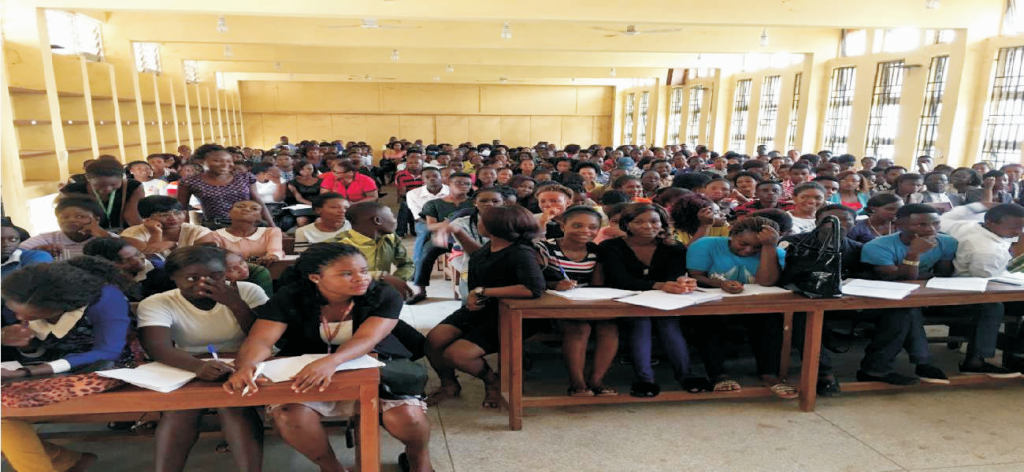
However, the challenges remain as there are yet roadblocks associated with some of the solutions being provided. For example, one of the conditions for accessing the student loan fund is a family’s annual income that is not less than 500,000NGN. This automatically locks out a student with a family monthly income of 50,000NGN, which is still not enough for catering to the education needs relative to the rising cost.

Data Inconsistencies

Other issues that feed into the access gap include inconsistencies of available data, which has made it more difficult to deeply understand the challenge. Different stakeholders of education use various methods of understanding the challenges that result in various data.

This inconsistency makes understanding the problem difficult and thus hinders the capacity to provide solutions. It is important that collaboration is deepened between stakeholders at diverse levels.

Recommendations

To address the complex OOSC challenge, there is the need for new approaches:

  • Accelerated Learning System: This is a promising approach particularly for older out-of-school children between ages 10-18 who might have more sociological challenges adjusting to a conventional school because of their age as compared to their colleagues. These challenges make it difficult for them to finish schooling even when they eventually access basic education, thereby spilling over into the low completion challenge. The accelerated learning approach can create an alternative education model for older out-of-school children to learn at a pace that can be faster than the usual 6 years of primary education by leveraging the knowledge they must have acquired informally by being active participants in their community. The accelerated learning approach is already being piloted on smaller scales by local NGOs such as The Destiny Trust which hosts the Bridge Learning Centre (BLC). BLC provides a 3-year accelerated education programme that enables over-aged out-of-school children (usually ages 10-18) to acquire basic education, reintegrate into conventional schools at age-appropriate levels, and acquire vocational skills. Alternative models like BLC can be extended more nationally to address the rising OOSC challenge.
  • Vocational Education: Vocational institutes can be strengthened and modernized in a way that makes them rival the established formal education tertiary systems and deliver similar intellectual development even if within the context of a specialized vocational skill. There is a growing person-to-person vocational education system in Nigeria, where individuals are trained by more skilled individuals or small business organizations. This existing framework can be tapped into and better structured through public-private partnership models to be able to take in even more people and produce better-skilled human capital.
  • Virtual Learning: More investment should be made into the new models of virtual skill-specific education, where people are skilled for a specific role, usually in technology-related fields, and connected with industries where their skills are needed. This self-directed open model of learning can be accessible to anyone with basic education skills and required facilities.
  • Poverty Alleviation Incentive Approach: The OOSC and Low Completion Rate challenges to access to education can be addressed by making school enrolment of children a condition for participation in cash transfer programs aimed at fighting poverty.

Conclusion

The youth population of Nigeria can be of major benefit for the socioeconomic development of the nation (demographic dividend) if the human capital is well harnessed. A commitment to maximize human capital must be premised on the foundational commitment to invest more in strengthening the Nigerian education system, starting from increasing and bridging the access gap. The more Nigerians can access education, the higher the chances they can contribute to nationhood and development.

Categories
Policy Briefs Featured

Nigeria Election 2023: A Comparison and Brief Assessment of The Economic Agendas of Leading Presidential Candidates.

I. INTRODUCTION

Nigeria’s 2023 general elections, scheduled to commence with the presidential election on February 25, will be make or break for Africa’s most populous country and largest economy. It is the first since 2007 in which an incumbent president was not on the ballot. The Institute for Governance and Economic Transformation (IGET) has undertaken the following highly summarized comparison and assessment of the positions of the top four presidential candidates (out of 18 candidates overall) on the important subject of the national economy.

The candidates whose economic policy agendas we have profiled here are: Ahmed Bola Tinubu of the All Progressives Congress (APC), the political party that formed the present Federal Government of Nigeria following its electoral victory in 2015, and again in 2019, Atiku Abubakar of the opposition Peoples Democratic Party (PDP), Peter Obi of the opposition Labour Party (LP), and Rabiu Kwankwaso of the opposition New Nigerian Peoples Party (NNPP). Although most of the positions ascribed to the candidates are taken from their formal manifestos or policy documents, we have also referred to other, on the-record policy presentations on the economy the candidates have delivered to professional and business groups across the country.

While the candidates also have addressed many other issues in addition to the Nigerian economy in their policy documents, we have chosen to focus on their economic blueprints because of the gravity of the country’s present economic challenges and their implications for both the eventual winner of the election and the country in the immediate future. Whoever becomes the next President of the Federal Republic of Nigeria will confront the heavy, combined challenges of a national debt crisis in which Nigeria now spends all its earnings on servicing its debt, high unemployment of 33%, a high inflation of 21%, and 133 million persons out of the 200-million population living in multidimensional poverty. Nigeria, despite its high levels of potential to achieve prosperity, ranks low on several indices of human development.

And yet, the potential for a turnaround with competent governance and economic policy is precisely partly why the 2023 presidential election has assumed such a unique importance. The ability – or the lack of it – of Nigeria’s next president to restore the country to a path of inclusive economic growth will be decisive for the country’s future.

IGET, being a nonpartisan think tank, takes no position for or against any candidate. What this policy brief seeks to achieve is to set out the candidates’ policy positions on the economy as an indication of what Nigerians and the business investor community can expect from each one of them, should he emerge victorious in the election.

The brief therefore summarizes the economic policy thrusts of the candidates, briefly analyses the strengths and potential pitfalls of each candidate’s manifesto, and concludes with a brief analysis of the importance, not just of the stated policy positions, but just as importantly, factors outside of these positions and how they may influence success or failure. These factors include the substance and style of governance, as well as the character of the politics of the Nigerian state itself.

IGET, being a nonpartisan think tank, takes no position for or against any candidate. What this policy brief seeks to achieve is to set out the candidates' policy positions on the economy as an indication of what Nigerians and the business investor community can expect from each one of them, should he emerge victorious in the election

II.HIGHLIGHTS FROM PRESIDENTIAL CANDIDATES' POLICY PLEDGES

Bola Tinubu's (APC) Policy Thrust

Hope Renewed”: Selected Highlights

Optimize government revenue using “Lagos model”.

  • Optimize government revenue using “Lagos model”.
  • National Industrial Plan.
  • Import substitution.
  • Eliminate petrol subsidy.
  • Education Reform focused on: accreditation standards and curriculum, teacher training, school management, technological and vocational education.
  • Assist farmers with enlightened agricultural policy that promotes productivity and assures decent incomes.
  • Rural infrastructure – farm to market roads
  • Support autonomy of the Central Bank of Nigeria
  • Supports deficit budgeting.
  • National Broadband Plan to deliver broadband service to 90% of the population by 2025.
  • Interest-free loans for university/technical school students who meet entry qualifications; to be funded by providing guarantees to the banking sector and Government paying off the interest.

Atiku Abubakar (PDP) Policy Thrust

My Covenant with Nigerians: Selected Highlights

  • Constitutional restructuring to achieve a decentralized, more workable federation.

  • Private sector-driven economy and greater sector participation in development; public sector repositioned to focus on its core responsibility.

  • Break government monopoly in all infrastructure sectors, including refineries, rail transportation and power transmission.

  • Eliminate petrol subsidies.

  • Eliminate current interventionist exchange rate policy to avert price distortions.

  • Raise Gross Domestic Product (GDP) to $900 billion by 2027 from the current $432.3 billion. Plans to move the economy from being dependent on oil to agriculture, manufacturing and micro, small and medium enterprises (MSMEs).

  • Infrastructure: Power Generation. Raise Nigeria’s electricity generation to 25,000MW, while also planning to increase oil refining capacity to two million barrels daily by 2027.

  • Optimize the fiscal space to generate more revenues for development; stable, predictable fiscal regime that bridges gap between national revenue yield and national expenditure.

  • Fiscal strategies to include domestic reforms to improve internally generated revenue (IGR), promoting export growth to improve foreign exchange earnings, blocking leakages and financing projects through strategic partnerships with the private sector.

  • Harmonize state and federal tax laws to avoid multiple taxation of businesses.

  • Promote Public-Private Partnerships (PPP) – 70% of government spending plans to be funded by private sector.

  • Privatization of State-Owned Enterprises (SOEs) including 3 government owned refineries and concessioning of Nigeria’s sea and airports to reputable and sound buyers and concessionaires with strong financial standing.

  • Promote the “New Economy” – Knowledge as a factor of production; streamline Intellectual Property Rights (IPR) through legislation.

"Power Generation. Raise Nigeria's Electricity Generation to 25,000MW while also planning to increase oil refining capacity to two million barrels daily by 2027."

Peter Obi (LP) Policy Thrust

It's Possible: Selected Highlights

Leapfrog Nigeria into the 4th industrial Revolution through scientific and technological innovations to create a digital economy

  • Shift from consumption to production by running a production centred agrarian revolution and export-oriented industrialization.

  • Restructure the polity through effffective legal and institutional reforms to entrench the rule of law, aggressively fifight corruption, reduce cost of governance, and establish an honest and efficient civil service.

  • Leapfrog Nigeria into the 4th Industrial Revolution (4IR), through the application of scientific and technological innovations to create a digital economy.

  • Build expansive, world-class infrastructure for efficient power supply, rail, road and air transportation, and pipeline network, through integrated public-private partnerships, and entrepreneurial public sector governance.

  • Enhance the human capital of Nigerian youths for productivity and

    global competitiveness

    through investment

    in world-class

    scholarship and

    research, quality healthcare, and entrepreneurship education.

  • Achieve 40,000 megawatts of electric power in 5 years.

  • Introduce hourly wage jobs into Nigerian economy

  • Eliminate petrol subsidy.

  • Guarantee the autonomy of the Central Bank of Nigeria.

  • Free, compulsory education up to 18 years of age.

  • Social security for the aged, unemployed, and persons with disability.

  • Fiscal incentives for high-value industries – rubber, oil palm, solid minerals, petrochemicals, cotton/textiles. Leather, gas, plastics, sugar.

  • Exploit Nigerian plants for local pharmaceutical manufacturing.

  • Strong support for role of trade unions.

  • Gender Equality. Women guaranteed 30% of all appointive and elective positions.

Rabiu Kwankwaso's (NNPP) Policy Thrust

Selected Highlights

  • Restore Fiscal Discipline. Reduce Deficit. Increase non-oil revenue.

  • Reform of Value Added Tax (VAT) and Company Income Tax (CIT) –

    will reduce CIT to 25% [from 30%]

  • CBN has become conflicted and lost focus, will be encouraged to focus on its core mandate of price and financial stability and move away from fiscal and trade policy.

  • Eliminate over-reliance on Ways and Means financing of the Federal Government by the CBN.

  • Key role for Federal Ministry of Industry, Trade, and Investment in addressing problems faced by businesses in Nigeria, the business environment, and in attracting Foreign Direct Investment into the Nigerian economy; will merge the Nigerian Investment Promotion Commission and the Nigerian Export Processing Council.

  • Will take advantage of the African Continental Free Trade Area (AFCFTA) to position Nigeria as a natural manufacturing hub for West and Central Africa.

  • Key portfolios whose performance will affect the overall performance of the economy identified, with a pledge to ensure that they will be “manned by the very best”.

  • Identified portfolios: Federal Ministry of Finance, Budget and National Planning, Federal Ministry of Industry, Trade and Investment, Central Bank of Nigeria, Nigerian National Petroleum Company Ltd, Federal Inland Revenue Service, National Customs Service, National Ports Authority, National Economic Advisor [Chief Economic Advisor to the President]

  • Education a priority; will establish a Federal Ministry of Higher Education and Human Capital; sees education as an investment not mere expenditure.

  • Increase electricity generation, transmission, and distribution to 15,000 – 20,000 megawatts by 2027. “Review” all subsidy regimes.

  • Targeted poverty alleviation, preventing those lifted out of poverty from returning into the poverty bracket will be a high priority.

"Education a priority; will establish a Federal Ministry of Higher Education and Human Capital; sees education as an investment not mere expenditure."

III. COMMENTARY

A general weakness observed in most of the candidates’ policy documents was the omission of a clear philosophical statement or vision on which their plans are anchored. The failure to anchor economic policy in Nigeria on a philosophical foundation is a major reason for inconsistency of policy and thus the inability to achieve, let alone sustain, long-term success in economic growth that lifts millions out of poverty. Economies that are clearly philosophically anchored, while retaining an element of pragmatism, tend to achieve structural economic transformation better and faster. Rising Asia and the economically advanced western countries offer helpful examples. Economics alone is inadequate to develop any society. Other factors such as values, belief systems (worldviews) matter, and influence the societies and their governments’ broader approach to governance that includes how the economy is managed.

Nevertheless, from a review of the documents we can “ascribe” the following philosophical leanings to each candidate’s thinking:

Bola Tinubu believes in a very strong role for the state, one in which it directs the economy without prejudice to the importance of the private sector. He is therefore a “command capitalist” or a social progressive.

Atiku Abubakar believes strongly in the marketplace as the creator of national wealth. He is not a fan of the Big (and, presumably, inefficient) State, and is therefore a believer in market capitalism.

Peter Obi, while clearly a believer in markets as the engine of wealth creation, emphases the importance of the downtrodden citizen, trade unions, civil society, and women. He therefore believes in “stakeholder capitalism”. This philosophical leaning will likely pay strong attention to achieving inclusive economic growth that carries different stakeholders along.

Rabiu Kwankwaso also strongly believes family-oriented, poverty eradication approaches to the economy, strongly favours the education of girls, while nevertheless recognizing the importance of business and the market economy. He is therefore also a stakeholder capitalist.

"Failure to anchor economic policy in Nigeria on a philosophical foundation is a major reason for policy inconsistency"

Tinubu’s Plan

Strengths:

  • Strong Revenue Generation Model: expanding taxation base (not necessarily raising taxes), savings from oil subsidy removal and exchange subsidy removal (“floating” the Naira).
  • Educational reform plan.
  • A clear National Industrial Policy, if successfully executed, will improve the structural foundation of the economy, and make the economy more competitive.

Possible Pitfalls:

Support for deficit spending (spending more than the Government is earning) is a major potential pitfall. While it might theoretically have benefits such as triggering higher levels of GDP growth , and has been the norm in many industrialized countries, it is problematic in a developing country such as Nigeria because it will likely deepen Nigeria’s debt crisis (including illegal Ways and Means Advances by the Central Bank to the FG), cause more inflation, and will not yet be supported by strong, diversified revenue streams including an efficient taxation system which is still absent in Nigeria. It could shut out productivity-led growth that Nigeria is yet to attain in the first place.

The state must have its hand on the steering wheel. But Nigeria today suffers from weak institutional capacity. The focus needs to be first on rebuilding the capacity and independence of Nigeria’s institutions before entrusting transformative responsibility to them.

Atiku’s Plan

Strengths:

  • Prioritization of constitutional restructuring to a more workable federal structure, if achieved, would address structural factors that inhibit Nigeria’s economic transformation.
  • Market-driven economy, private-sector transformation of power sector and privatization of ports, if transparently achieved, will renew economic confidence and growth.
  • PPPs could potentially create significant fiscal savings for the Federal Government, that could be invested in social infrastructure.

Possible Pitfalls:

Proposing constitutional restructuring, and even hastily submitting an Executive Bill to the National Assembly, runs the risk of rejection by vested interests considering representational imbalances in the NASS.

A predominantly market-led economy requires transparency, accountability, and the rule of law for true, inclusive capitalist economist growth. It will be important to avoid crony capitalism, in which corporate elites make all the money through state patronage, while poverty levels in the wider society remain high.

Obi’s Plan

Strengths:

  • The commitment to fight corruption and reduce the cost of governance goes to the heart of what has led to Nigeria’s dire condition – industrial scale corruption and waste in the public sector, which has left political leaders focused only on self enrichment and denied ordinary Nigerians development. Manifestos in themselves cannot solve this problem, no matter how elegant, if the mindset to truly fight corruption is not evident in a verifiable manner. Nigeria has lost trillions of dollars through corruption and waste in the public sector.
  • The proposal of hourly-wage jobs is transformational, if successfully implemented. It will improve the flexibility and productivity of labour – the most important component of inclusive growth that can create decent incomes for millions of Nigerians.
  • Emphasis on human capital, without prejudice to physical infrastructure, is the foundation for human development. This has been mainly ignored in Nigeria, where investment in social infrastructure such as education and healthcare have been extremely low relative to spending on physical infrastructure.

Possible Pitfalls:

  • Fiscal incentives for high-value industries could lead to crony capitalism if not transparently extended across sectors, rather than to individual businesses.
  • A promise of social security requires a more precise statement of concept, scope, and funding streams.

Kwankwaso’s Plan

Strengths:

  • Clear identification of the government ministries and departments that determine the economy’s performance and a clear statement of intent regarding the required calibre of managers is a sign of effective governance potential.
  • Strong and clear focus on steps to take for education reform; the proposed Ministry of Higher Education and Human Capital could potentially yield a greater focus and achievement in education reform.

Possible Pitfalls:

A target of 15,000 to 20,000 megawatts of electricity by 2027 does not appear to be at the required level of ambition to power the Nigerian economy.

IV CONCLUSION

“Politicians campaign in poetry, govern in prose” – Mario Cuomo, Former Governor of New York

Nigerians have become cynical about the promises of electoral candidates, as the pledges are often not faithfully executed upon victory. The fruit of the pudding is therefore in the eating when it comes to the manifestos of the leading presidential candidates. In Nigeria, the emphasis has been far more on obtaining political power than on actual governance. The 2023 presidential election nevertheless appears competitive. Candidates are therefore likely more serious about their pledges.

Poverty and illiteracy, however, have disempowered many voters. Such voters have substituted their right to hold leaders accountable in governance with selling their votes in the heat of elections. This has implications for the possible performance of candidates who procure votes, as they would feel less accountable to voters while in office than candidates who might seek power and responsibility through the “narrow” path of simply appealing to voter sentiments and judgments.

The critical factor regarding the economic agendas of Nigeria’s leading presidential candidates is that the economy’s performance depends more on the nature of governance they unfold if they win the election. It is impossible for an economy to thrive and take people out of poverty, for example, in institutionalized corruption or when the individuals appointed to important economic roles are not the best hands for such assignments because of subjective considerations. Building the right team to translate the laudable ideas into the dividends of democracy for Nigerians will be the acid test for the next President of Nigeria. The policy documents we have profiled in this policy brief are only the first step.

"Building the right team to translate the laudable ideas into the dividends of democracy for Nigerians will be the acid test for the next President of Nigeria."